Since eBay’s launch in the 1990s, the online marketplace has grown into a huge global market — from second-hand clothing and electronics to rare collectibles and hard-to-find vehicle parts, eBay has it all. However, anywhere big sums of money flow, bad actors follow. And, while eBay provides robust built-in protections like its Money Back Guarantee, scammers continuously find loopholes to trick unsuspecting users.
In this article, you’ll learn how eBay scams work and how to spot subtle red flags before you send money or ship a package.
Can you get scammed on eBay?
Whether you’re searching for deals on designer bags or downsizing your LEGO collection, both buyers and sellers can become targets for online scammers.
The main reason scammers love big e-commerce platforms like eBay is simple numbers. Millions of transactions happening every day make it easy for malicious users to blend in among legitimate deals. It’s also easy to exploit the excitement of a rare deal, urgency during an auction, or a seller’s eager desire to close a fast sale.
While eBay keeps cleaning up fraudulent accounts, bad actors often bypass automated filters by manipulating shipping details, tricking users into off-platform communication, or taking advantage of customer service policies.
While keeping all messaging and financial transactions within eBay’s native systems is your best protection, it’s helpful to know specific scam tactics so you can protect yourself even better.
Common eBay scams targeting buyers
Scammers often target buyers that look for bargain prices, vintage items, or popular, sold-out tech. Because shoppers usually search for a specific product rather than analyzing the seller’s history, cybercriminals take full advantage of quick impulse purchases. Here are the most common eBay scams aimed directly at buyers:
Fake or counterfeit listings
One of the oldest tricks in the digital book involves selling counterfeit goods, damaged merchandise, or items that simply do not exist. A seller might list a brand-new high-end camera, a luxury handbag, or a rare gaming console at a price well below market value.
To pull this off, the scammer usually uploads stolen or stock images rather than actual photos of the item. Once you submit payment, one of two things happens:
- You receive a broken item or a cheap knock-off;
- You receive nothing at all, and the seller deletes their account before you can request a refund.
If you are looking for something like an “eBay fake sellers list,” you will likely find that such databases quickly become outdated. Scammers regularly delete flagged accounts and create dozens of new profiles within minutes.
Instead of relying on a physical list of malicious accounts, you should check the listing details carefully: watch out for brand-new seller accounts selling multiple high-value items, generic product descriptions, and stock or stolen photos from official manufacturer websites.
Off-platform payment scams
When you buy an item, a seller might message you claiming that eBay’s payment processor is experiencing technical issues. They might ask you to complete the purchase via direct bank transfer, wire service, gift cards, or cryptocurrency, promising a discount if you agree.
This is a classic trap. Moving payments off the official portal forfeits all protection under eBay’s Money Back Guarantee. Once you send non-reversible funds via wire or gift cards, the seller disappears with your money, and eBay cannot intervene on your behalf.
Always stick to official eBay checkout options using the safest ways to pay online, like PayPal or digital wallets, to ensure every transaction remains protected.
eBay shipping scams
An eBay shipping scam relies on manipulating logistics systems to make it look like an item was successfully delivered when it actually wasn’t. Scammers accomplish this in a few sneaky ways:
- Empty package: the seller ships an empty package directly to your house. The shipping carrier marks the package as delivered, eBay’s automated system assumes you received the item, but you’re left empty-handed and having to prove to support that the box arrived completely empty;
- The wrong address trick: the seller ships an empty envelope or a cheap trinket to a random address in your ZIP code. Because tracking status shows “Delivered” to your town or city, eBay’s automated system assumes the order was completed properly, leaving you to prove you never got the package;
- Fake tracking numbers: the seller uploads a recycled tracking number from an unrelated shipment. The package moves through the carrier system, gets delivered somewhere completely different (but usually within your ZIP code), and leaves you with nothing while the seller claims the delivery was completed.
Because fake deliveries arrive at your address or somewhere nearby, with the carrier’s digital scan confirming it, scammers use that confirmation to deny your refund request.
If your order is marked as delivered but nothing arrives at your doorstep, request an official delivery confirmation report directly from the shipping carrier (such as USPS, FedEx, or UPS). This document shows the exact street address printed on the label, which you can submit to eBay to prove the seller tampered with the shipment.
If the box arrived empty, depending on the delivery company, the parcel’s actual transit weight might be noted on the label, which could help you prove there was nothing inside.
Triangulation scams
Triangulation scams are particularly clever because you actually receive the exact item you paid for — yet you still end up entangled in fraud. Here is how the three-way scheme operates:
- The scammer lists a popular item on eBay at a competitive price.
- You buy the item, and your payment goes directly into the scammer’s account.
- The scammer takes your delivery address, goes to a third-party retailer website, and buys the item using a stolen credit card, putting your address as the shipping destination.
- You receive your package directly from the retailer and assume everything went smoothly.
Some time later, the owner of the stolen credit card files a chargeback dispute, leaving the legitimate merchant to bear the financial consequences.
Unfortunately, triangulation scams are difficult to identify, especially on the buyer’s side, before making a purchase. The biggest red flag should be an unreasonably low price for products that sell for much more elsewhere. If you notice that you received an item directly from the original merchant and not the eBay seller, or the name on the package doesn’t match yours, consider reporting the seller directly to eBay for a suspicion of a triangulation scam.
eBay Motors scams
Vehicle listings require special caution due to the large sums involved. In an eBay Motors scam, fraudsters post pictures of cars, motorcycles, or boats at prices thousands of dollars under true market value.
The listing description typically includes an emotional story explaining the low price: an urgent deployment overseas, a sudden divorce settlement, or an inherited estate sale. The fake seller presses for a deposit, demands deposits or shipping fees to be paid in eBay gift cards, or insists on handling payment via third-party escrow services.
Watch out for unrealistically low prices for the specific year, make, and model of the vehicle. Don’t transfer any money before inspecting the vehicle in person. Be cautious if communications move off-site immediately. Also, remember that eBay does not use gift cards for vehicle purchases, nor does it hold vehicle payments in secret external accounts.
Phishing and fake eBay messages
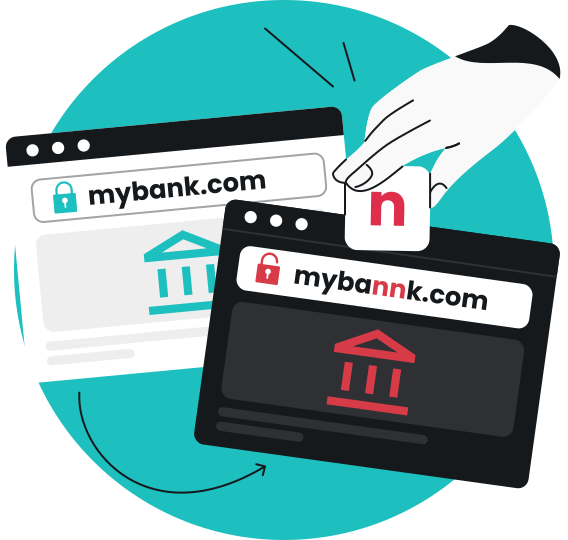
Fraudulent communications remain a massive cyberthreat across all digital platforms. Scammers often move their schemes outside eBay and send fake emails disguised as official platform alerts, claiming that your account has been suspended, a payment failed, or a buyer opened an urgent dispute.
Clicking the links inside these emails directs you to a credential-harvesting site designed to steal your passwords, credit card details, or personal data.
To protect yourself, learn what phishing is so you can recognize fake emails, and see how scammers get your info, so you can better safeguard your personal data and keep it out of malicious hands.
Common eBay scams targeting sellers
Buyers aren’t the only ones who need to stay alert. Merchants and everyday people clearing out unwanted belongings can also get cheated — scammers often target eBay sellers, exploiting return policies and platform guidelines. Here are some examples:
Fake payment or overpayment scams
In these scenarios, a potential buyer contacts you with an urgent request to purchase your item immediately. They send an official-looking email that appears to come from eBay or PayPal, claiming funds have been sent.
In an overpayment scam, there will also be a note saying the customer overpaid a certain sum of money, and in order to release the full payment into your bank account, you have to wire the overpaid amount back to the buyer.
In reality, no money ever entered your account. The email is completely fake. If you transfer money back or ship the item before verifying the transaction directly inside your official dashboard, you lose both your merchandise and your cash.
If you think you may have gotten scammed on eBay by a buyer in a fake payment scam, immediately pause all communications and double-check your official account balances.
Return and item-switch scams
Return fraud is a major headache for online merchants. A scammer buys an expensive, authentic item, such as an original designer bag or a new smartphone, and shortly after delivery requests a return, claiming the item is defective or not as described.
However, instead of shipping back your original item, the fraudulent buyer sends back:
- A cheap knock-off of the same item;
- A completely different item of similar weight, like a box of rocks or junk mail;
- An older, damaged version of the exact same product model.
Because tracking shows the return package arrived at your address, eBay’s system may automatically issue a refund to the buyer.
Documenting serial numbers, taking detailed photos of items before packaging, and keeping shipping receipts with official package weight details are critical ways sellers can fight back against false return claims.
False delivery or damage claims
A buyer receives your package in perfect condition but opens a case claiming the box arrived completely empty or damaged beyond repair. Some scammers even send photos of a broken item they found elsewhere to convince support agents to grant an immediate refund.
Without proper proof of shipping weight and other documentation, sellers can easily lose both the item and the money.
Fake eBay emails and payment notifications
Just as buyers receive fake notifications, sellers are often targeted with emails impersonating eBay Customer Service or payment processing networks. These fake emails state that funds are held in escrow and will only be released once you upload a valid tracking number showing the package has been shipped.
Always log into your official account directly through a clean browser tab to verify payment status — never rely strictly on incoming email notifications.
How to spot an eBay scam
Recognizing warning signs before entering into a transaction saves time, money, and hassle. Be on the lookout for these major red flags:
- Unbelievably low prices: if a brand-new $1,200 laptop is listed as a “Buy It Now” deal for $200, it is almost certainly a scam;
- Pressure tactics: scammers create a false sense of urgency, insisting you must make a payment immediately or move communication off the platform to lock in a special price;
- Suspicious account history: be cautious when dealing with brand-new accounts created the same day, or older accounts that suddenly started listing high-value electronics after years of complete inactivity (a sign of account takeover);
- Demands for non-standard payment methods: requests for unofficial payment methods, such as gift cards, wire transfers, direct crypto transfers, or payment apps like Venmo and Zelle, should trigger immediate alarm bells;
- Generic stock images: be extra careful with listings that only have polished corporate stock images rather than authentic photos of the item in hand;
- Mismatched contact info or shipping data: be wary if a seller’s location says, for example, United States in the description, but tracking updates indicate the package originated overseas.
What to do if you get scammed on eBay
If you suspect you have fallen victim to a scam, taking immediate action increases your chances of recovering lost funds and securing your identity.
If you’re a buyer:
- Contact the seller first: send a polite message through official eBay messaging requesting clarification or a resolution. This creates an official paper trail.
- Open an eBay Money Back Guarantee case: if the seller refuses to help or does not respond within three business days, escalate the issue directly to eBay Customer Support.
- Contact your payment provider: if eBay denies your request or the scam occurred off-platform, contact your bank, credit card company, or financial institution to request a chargeback dispute.
- Report suspicious behavior: submit an official report via eBay’s abuse channel to help get the fraudulent account suspended.
If you’re a seller:
- Gather documentation: collect all messaging logs, tracking numbers, postal receipts, photos showing serial numbers, and packaging records.
- Challenge the dispute: respond to the buyer’s claim within your seller dashboard and upload your evidence immediately.
- File carrier claims: if a package was stolen or damaged during transit, file an official claim with the shipping company using your shipping insurance.
- Report the buyer: use the “Report a Buyer” link inside your order details page to notify platform safety teams of abusive buyer tactics.
Protecting your account and identity
If your financial information or account credentials were compromised during a scam, take these immediate security steps:
- Change your eBay password and update passwords across any accounts that share similar login credentials;
- Enable 2FA (Two-factor Authentication) across your financial and shopping accounts;
- Monitor your bank statements for unauthorized charges;
- Consider using dedicated tools like Alert, scam protection services, and comprehensive identity theft protection to monitor whether your personal credentials have leaked onto dark web marketplaces and help recover in case of identity fraud.
How to protect yourself from eBay scams
Maintaining strong security habits allows you to shop and sell online with complete confidence:
- Keep everything on-platform: never agree to communicate via text messages, phone calls, or email outside eBay’s system, and don’t send payments outside official checkout channels;
- Verify transactions inside your account: ignore payment confirmation emails until you manually sign into your dashboard and see the funds marked as cleared;
- Use secure internet connections: avoid buying or selling goods while connected to unsecured public Wi-Fi networks where attackers can intercept sensitive data. Protect your connection — shop online with a VPN to encrypt your web traffic;
- Read detailed feedback: look beyond overall percentage scores — read recent reviews to check if other buyers complained about slow shipping, missing items, or poor communication;
- Inspect links carefully: learn about the various types of scams threatening internet users today so you can spot fake links, malicious downloads, and phishing attempts before clicking.
Conclusion: should you stop shopping online to avoid scams?
While scammers will always try to manipulate the policies of marketplaces like eBay for personal gain, you don’t need to avoid online shopping out of fear. By staying attentive, keeping all interactions on the platform, and relying on trusted online security tools, you can protect your money and enjoy a stress-free shopping experience. And remember: if a deal feels too good to be true, your instincts are usually right.
FAQ
Does eBay refund scams?
Yes. Under the eBay Money Back Guarantee, buyers are protected if an item is not received, arrives damaged, or does not match the seller’s listing description. However, this coverage only applies if the entire transaction was completed through eBay’s official checkout system. Payments made off-platform via wire transfer, gift cards, or external apps are not covered.
Does eBay side with the buyer or the seller?
Historically, eBay’s policies tend to lean toward protecting the buyer to maintain consumer confidence across the platform. However, sellers who keep meticulous documentation (such as tracking numbers showing delivery confirmation, clear photos of item serial numbers, and recorded packaging weights) can successfully win disputes against fraudulent claims.
Are eBay bids a scam?
Bidding on eBay is a legitimate feature, but fraudsters can manipulate auctions using “shill bidding.” This occurs when a seller uses a second account (or asks friends and family) to place fake bids on their own item, artificially driving up the price for real buyers. If you notice an account repeatedly driving up bid prices without ever winning items, report the listing to platform administrators.
How do you know if you are chatting with a scammer?
Key warning signs include:
- Attempts to move the conversation off the platform to private email, text messages, or external chat apps;
- Requests to change payment methods or send payment via non-traceable options like gift cards;
- Pushy, urgent language demanding immediate decisions or quick shipping before payment verification;
- Generic responses that seem copy-pasted or fail to answer basic questions about the item’s condition.