

Child identity theft can go undetected for years, with most parents finding out about it long after the damage is done. Since children usually don’t apply for loans, rent apartments, or file tax returns, a stolen identity can sit in a thief’s hands for a long time without raising a single red flag.
But there are clear warning signs — and steps you can take to stay ahead of it.
This guide breaks down what child identity theft is, how it happens, what to watch for, and exactly what you can do to protect your kids.
What is child identity theft?
Child identity theft is when someone uses a child’s personal information to commit fraud. Most cases involve a child’s SSN (Social Security number), as this can be used to:
- Open a credit card account;
- Apply for a car loan;
- File a tax return;
- Set up a cell phone account;
- Claim government benefits like nutrition assistance.
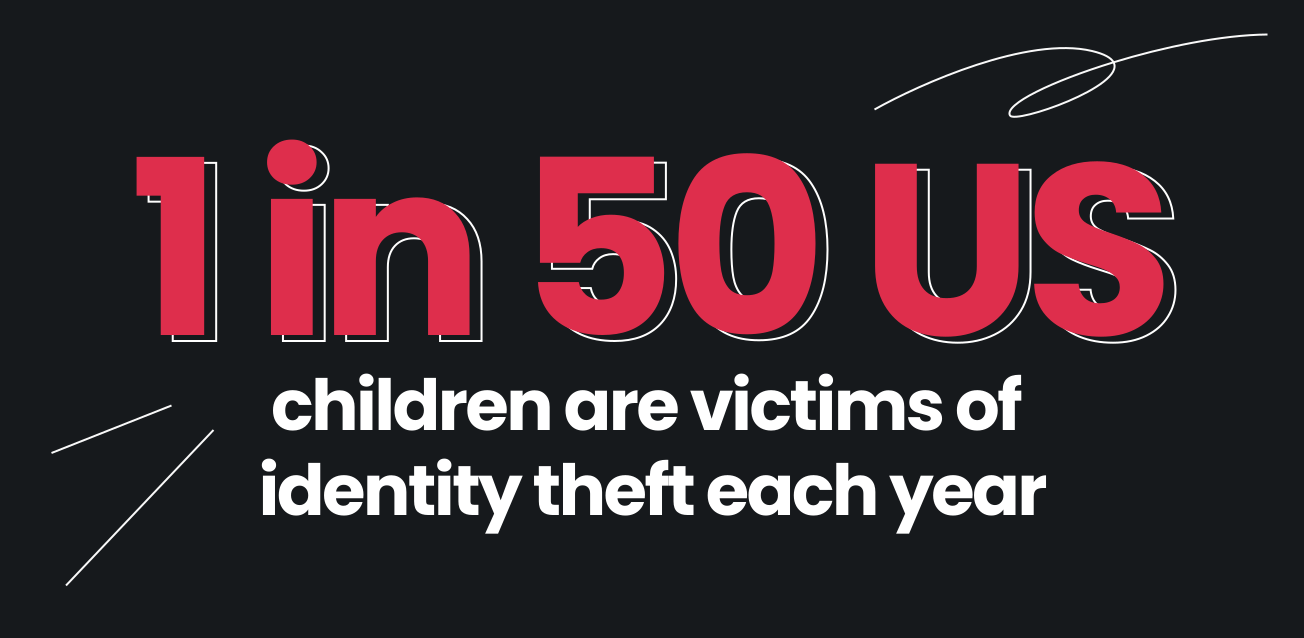
Around 1 in 50 children in the US are victims of identity theft each year — and their clean credit histories are a big reason why.
A child’s SSN is a clean slate that no one is monitoring. Since children under 18 typically don’t have a credit report, fraudulent activity can go unnoticed or even look like legitimate credit-building to anyone who stumbles upon it.
That’s why this crime — one of the main types of identity theft — often goes undetected until adulthood. A young adult who applies for a student loan or tries to rent their first apartment may discover that their credit is wrecked by debts they never knew existed.
Read more: Explore how identity thieves can get your child’s SSN in the first place in our in-depth guide, How do scammers get your info?
How does child identity theft happen?
Here are the most common ways identity thieves get hold of a child’s information:
Data breaches
Schools, medical offices, and government agencies all store children’s Social Security numbers. And it doesn’t matter how reputable an organization is — any system that stores personal data can be breached.
When that happens, children’s data is exposed. Usually, nobody is monitoring a seven-year-old’s credit, so stolen records can go unnoticed for years.
Stolen mail
Tax forms, medical records, and government correspondence containing your child’s SSN can be stolen right from your mailbox. A single piece of mail with the right information is all a thief needs to open fraudulent accounts.
Social engineering and phishing
Social engineering is when scammers manipulate people into handing over personal information. It’s often achieved by posing as someone trustworthy, like a school administrator or a doctor’s office.
Phishing is a common type of social engineering that uses fake emails, phone calls, or text messages to trick you into sharing sensitive data.
Parents, teachers, and other caregivers can all be targets. Children are also at risk once they start using their own computers and cell phones since they’re more likely to encounter phishing attempts firsthand.
The dark web
Children’s SSNs are sold in bulk on the dark web, sometimes for as little as a few dollars. Fraudsters look to buy them precisely because they’re less likely to be monitored than an adult’s Social Security number.
A child’s SSN paired with a fake name, date of birth, or address makes it easy for thieves to create entirely new synthetic identities that don’t trace back to anyone real.
Family members or acquaintances
The perpetrator of child identity theft isn’t always a stranger. Research shows that someone the child knows, like a family member or trusted adult, is responsible for about 75% of child identity theft cases.
This is an uncomfortable reality that often catches parents off guard. People with legitimate access to a child’s Social Security card, birth certificate, or other documents may fraudulently use them to open accounts or claim benefits in the child’s name.
Warning signs of child identity theft
The earlier you catch identity theft, the less damage you’ll deal with. Watch out for these red flags:
- Pre-approved credit offers or financial mail addressed to your child. Children receiving credit card offers is highly unusual;
- Collection calls or notices arriving in your child’s name for debts you know nothing about;
- Denied government benefits. You may be told your child has already claimed benefits like nutrition assistance that they never actually received;
- IRS notices stating that your child’s SSN was used on a tax return or that income taxes are owed;
- Medical bills or insurance statements for services your child never received;
- A credit report that already exists for your child, especially when they’re too young to have a financial account;
- A utility bill or cell phone account that’s in your child’s name.
Any one of these is worth investigating, but multiple red flags together should prompt immediate action.
Read more: For a closer look at how scammers can exploit you, check out What can someone do with your SSN?
How to check if your child’s identity has been stolen
Here’s how to find out if your child has fallen victim to identity theft:
1. Request a manual search from all three credit bureaus
Contact Equifax, Experian, and TransUnion individually. Ask each bureau to run a manual search for any credit file associated with your child’s SSN. You’ll typically need to provide your child’s birth certificate and proof that you’re the child’s parent or legal guardian.
A child under 16 shouldn’t have a credit file. If one exists, it’s worth investigating.
2. Check with the Social Security Administration
It’s often a good idea to contact the SSA (Social Security Administration), the government agency that issues and oversees SSNs.
Reach out to them to find out whether earnings have been reported under your child’s SSN. If someone is using your child’s number for employment purposes, the SSA’s records will show it.
3. Review IRS correspondence
If someone filed a tax return using your child’s SSN, the IRS (Internal Revenue Service) may have already sent a notice.
Don’t dismiss anything unexpected from the IRS as junk mail. Open this mail to confirm whether or not someone has filed taxes or claimed income under your child’s name.
How to protect your child from identity theft
Preventing identity theft is far easier than recovering from it. These steps can significantly reduce your child’s risk:
1. Freeze your child’s credit
Also called a security freeze, a credit freeze prevents identity thieves from opening new accounts in your child’s name. Simply put, it blocks lenders from accessing any credit file needed to approve applications.
You can request a free credit freeze for children under 16 by contacting each of the three credit bureaus. Freeze with all three individually to fully protect your child.
2. Guard your child’s Social Security number
Only share your child’s SSN when it’s legally required. When your child’s school asks for it, or a doctor’s office requests it, feel free to ask why it’s needed and how it’ll be stored.
If possible, offer a different identifier instead.
3. Protect your documents
Keep your child’s Social Security card, birth certificate, and other sensitive documents in a safe or locked file cabinet. If you want to throw away any documents that contain personal information, shred them first.
Be just as protective of documents that may be stored on electronic devices. Deleting personal files and information from computers or cell phones before disposing of them is a smart move. A factory reset alone usually isn’t enough, so consider using a dedicated data-wiping tool.
4. Monitor for unexpected mail
If your child starts receiving financial offers, a utility bill, or collection notices, don’t ignore them. Any kind of mail that’s usually meant for adults could signal that someone is using your child’s information.
If anything seems off, request a credit report to check for fraud.
5. Be careful on social media
Oversharing details like your child’s full name, date of birth, school name, or daily routine gives identity thieves more information to work with when trying to build convincing profiles. Sharing as little information as possible on both your public and private social media accounts reduces your attack surface for criminals.
6. Consider family identity theft protection
Identity theft protection may be worth it because it adds a layer of defense for threats you likely wouldn’t catch on your own. Here are some tools and services you should look into:
- Data leak monitoring: ID monitoring tools scan financial, criminal, and dark web databases for details like your child’s SSN and alert you if it shows up where it shouldn’t;
- Personal data masking: generates alternative details like email addresses that you can use when signing up for services, filling out forms, or creating accounts online. Entering these alternative details online keeps your family’s real information hidden, so even if a database is breached, your child’s actual data isn’t exposed;
- Scam protection: features like scam text protection, an email scam checker, and a web content blocker help your family spot fraudulent messages and dangerous sites before anyone clicks, shares information, or falls for a phishing attempt. Since social engineering is one of the main ways thieves get hold of a child’s data, catching scams early can be a powerful defense;
- Data removal: identifies which data brokers have your family’s personal information and helps get it taken down;
- Identity theft coverage: if the worst happens, identity theft coverage can help with recovery. For example, Surfshark’s plan includes up to $1M in reimbursement for eligible theft-related expenses, $1,000 for mental health counseling, and access to a licensed identity theft investigator.*
A once-a-year credit check is better than nothing, but ongoing monitoring lets you catch threats and take action before identity theft attempts become successful.
How Surfshark can help: You can get all the identity theft protection tools listed above with a single Surfshark subscription. Data leak monitoring, personal data masking, and scam protection are included with Surfshark One. Add data removal and identity theft protection with Surfshark One+, which bundles everything into a single plan with full family coverage.
*Identity theft coverage is available for new Surfshark One+ customers residing in the US, including US territories and the District of Columbia, except for New York State residents. Surfshark is not a licensed insurance producer. Benefits under the Master Policy are issued and covered by HSB Specialty Insurance Company. You can find further details and exclusions in the summary of benefits for the state of Washington and the rest of the US.
What to do if your child is a victim of identity theft
Discovering that your child’s identity has been stolen is stressful, but acting quickly limits the damage. Follow these steps:
1. Contact the credit bureaus
Reach out to all three credit bureaus. Place a fraud alert and request a credit freeze on your child’s credit file with each of them.
Ask each bureau to remove any fraudulent accounts from your child’s credit report by filing a dispute. Finally, request written confirmation that the accounts have been removed.
2. Close fraudulent accounts
Contact each company where fraudulent accounts were opened. Explain that the account was opened using a minor’s stolen identity, and ask the company’s fraud department to close the account immediately. Also, make sure you get written confirmation that your child isn’t responsible for any charges.
If you received any collection notices, contact the appropriate collection agencies as well. Provide documentation showing the fraudulent activity in question.
3. File an Identity Theft Report
Report the identity theft to the FTC (Federal Trade Commission) at IdentityTheft.gov. The FTC will help you create an Identity Theft Report, which you’ll need when communicating with creditors and disputing fraudulent accounts.
4. File a police report
Not only will a police report support your fraud claims, but it may also be required by some companies before they can close accounts or remove charges.
Provide as many details as possible when filing, as a more in-depth report can help you take more corrective measures. Try to include information like account inquiries, mailing address discrepancies, and any evidence you’ve gathered.
5. Contact the SSA
If you suspect widespread misuse of your child’s SSN, such as tax or employment fraud, contact the SSA (Social Security Administration). While rare, the SSA may even issue a new Social Security number in severe cases.
6. Keep records of everything
Clearly document every call, letter, and report number. When doing so, note dates, the names of people you spoke with, and what you agreed upon with them.
These records can protect you if any disputes arise later on.
Key takeaway: protect your child’s ID from theft
Child identity theft thrives on silence. The good news is that a few straightforward steps can dramatically reduce the risk.
Freezing credit and safeguarding your child’s SSN are great places to start, and family-wide identity theft protection keeps watch around the clock, monitoring for threats you might not catch on your own.
The important thing? Start now. Don’t wait until your child turns 18 to find out their credit history has been hijacked.

Frequently asked questions
What happens if your child’s identity is stolen?
Once a child turns 18, undetected identity theft can make it harder to get student loans for college, damage their credit history, and affect their ability to rent an apartment.
Victims of identity theft may also face complications with government benefits and find themselves dealing with collection agencies over debts they never incurred.
How do I see if someone is using my child’s SSN?
Contact each of the three credit bureaus (Equifax, Experian, and TransUnion) and request a manual search for any credit file tied to your child’s Social Security number. You’ll need to provide proof of identity and your child’s birth certificate.
If a credit report exists for a minor who has never applied for credit, someone is likely using their information fraudulently.
Can I put a PIN on my child’s Social Security number?
You can’t place a PIN directly on an SSN, but you can request an IRS IP PIN (Identity Protection PIN) for your child to prevent someone from filing a tax return using their number. You can also freeze your child’s credit with all three credit bureaus to block anyone from opening new accounts in their name.
Can you give me an example of child identity theft?
Here’s a common child identity theft scenario: a relative uses a child’s Social Security number to open a credit card or apply for a utility service because their own credit is damaged. The child has no idea about this happening.
Years later, when that child becomes a young adult and applies for a student loan, they discover they have bad credit and outstanding debts from accounts they never opened. In some cases, victims have even been denied government benefits or health care coverage because records show they already receive them.