
AI identity theft occurs when criminals use artificial intelligence tools to steal and misuse someone’s personal information to commit fraud.
Identity theft has always been a serious threat, but AI has supercharged it. Criminals can now create synthetic identities, clone voices, and develop highly targeted scams at a scale and speed that simply weren’t possible before.
Understanding how these attacks work is the first step toward protecting yourself.
How AI is being used for identity theft
Criminals have always adapted to new technology. But generative AI has handed them an especially potent set of tools. That’s why different types of identity theft attacks are increasing with every passing day.
Here are the key tactics currently used to trick victims and steal their identities.
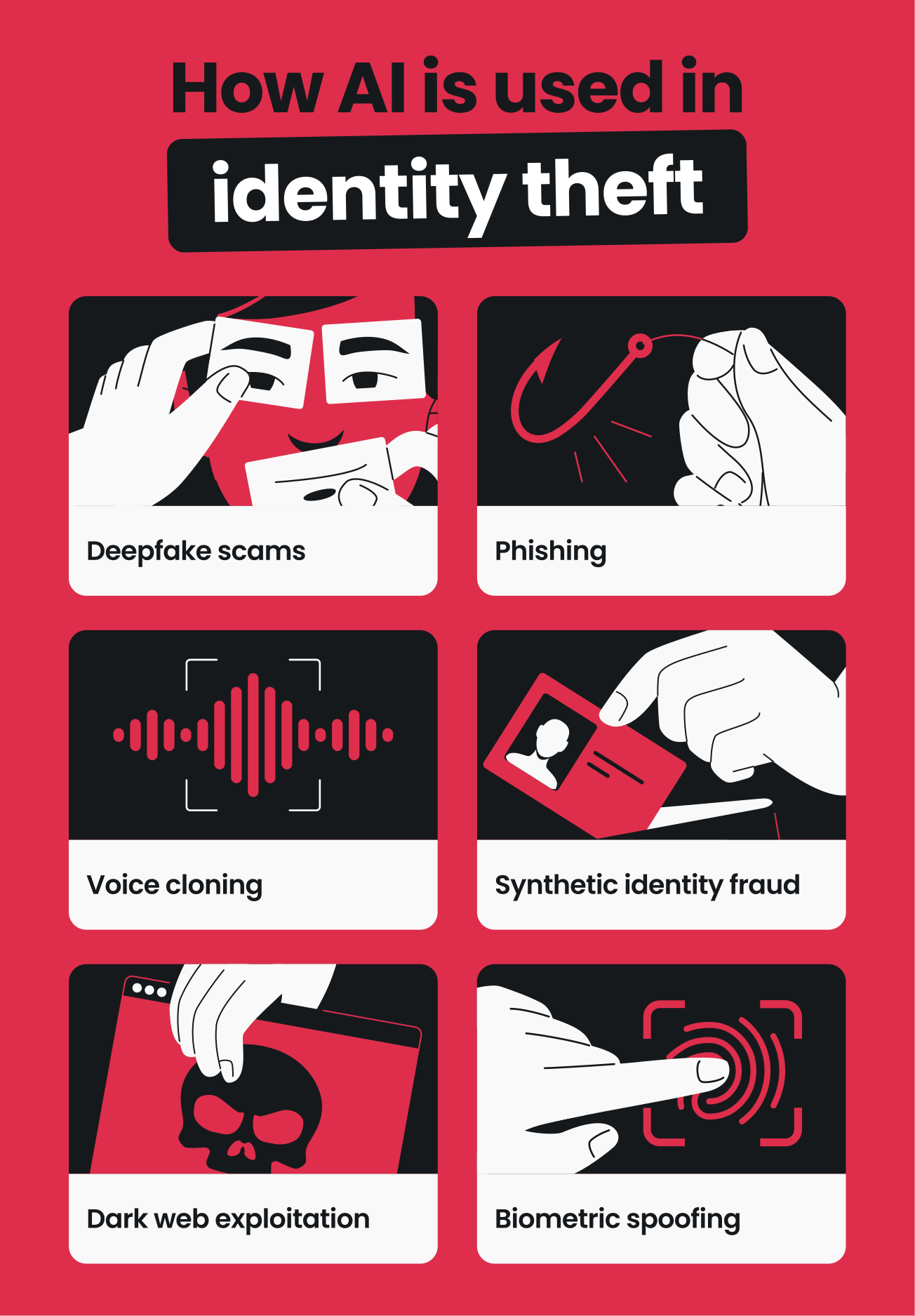
Deepfake scams and video fraud
AI deepfake technology can generate realistic video and audio of a real person, saying things they never actually said.
Criminals use deepfakes to impersonate executives, family members, or government officials to pressure victims into transferring money or handing over sensitive information.
AI-powered phishing and social engineering
AI-powered phishing messages are now personalized, grammatically flawless, and written in a tone that mirrors legitimate organizations. Criminals use AI to scrape data from social media and create messages that reference your real name, employer, or recent activity.
This is what makes AI-driven social engineering so dangerous; the attack feels personal. Unlike the obvious spam emails of the past, these messages make you act without thinking.
There are a few warning signs to watch for:
- Urgent language pressuring you to act immediately;
- Requests arriving through unusual channels, like a work request sent via personal WhatsApp;
- Links or attachments you weren’t expecting, even from a name you recognize.
If something feels off, trust that instinct. Verify the request through a separate channel before doing anything else.
Voice cloning attacks
AI tools can now replicate a person’s voice from just a few seconds of audio, often publicly available on social media or YouTube. This is called voice cloning.
Scammers use voice cloning to impersonate a family member in distress or a company executive requesting an urgent wire transfer.
These attacks are particularly effective because the voice feels unmistakably real.
Synthetic identity fraud
Synthetic identity fraud involves combining real and fabricated personal info to create a new, fictional identity.
For example, criminals might pair a legitimate SSN (Social Security Number), often stolen from a child or someone with minimal credit history, with a fake name, date of birth, and address. Machine learning algorithms help them generate plausible synthetic identities that can pass basic identity verification systems.
These synthetic identities are then used to open bank accounts, apply for credit cards, or access government services. Because no single real person is being directly victimized in an obvious way, synthetic identity fraud often goes undetected for much longer than traditional identity theft.
It’s worth noting that synthetic fraud is now the fastest-growing financial crime in the United States.
AI-assisted data theft and dark web exploitation
Data breaches generate massive amounts of stolen information, including usernames, passwords, SSNs, biometric data, and more.
Criminals use AI tools to quickly sift through and correlate this data, matching fragments from multiple data breaches to build complete profiles of victims. These profiles are then sold on the dark web or used directly to commit fraud.
Imagine your email and password were exposed in a retail data breach three years ago, and your phone number leaked in a separate telecom breach last year. On their own, neither fragment is enough to do much damage.
But AI tools can automatically cross-reference thousands of breach databases, link those two records to your name and home address from a third source, and within seconds produce a complete profile: your full name, contact details, passwords, and more.
That profile could then get packaged and sold on the dark web for as little as a few dollars.
Biometric spoofing
Many identity verification systems now rely on biometric data such as facial recognition or fingerprints to confirm that a person is who they claim to be.
But AI can generate synthetic faces and voices realistic enough to fool these systems. That’s called biometric spoofing.
AI-generated images and videos may be used to bypass facial recognition checks on financial platforms. While spoofing is still technically difficult to pull off, it would allow criminals to open accounts or access services in another person’s name if successful.
This is one of the more alarming shifts because it weakens security measures that organizations and consumers have come to rely on.
How to protect yourself from AI identity theft
AI identity theft often starts with exposed personal data, weak account security, or convincing impersonation attempts. Taking steps to protect your identity can help reduce your exposure and make it harder for criminals to misuse your identity.
Remove your data from data brokers
AI scammers often use information from data brokers to create detailed dossiers on their targets.
These data brokers collect and sell your name, address, phone number, and more to third parties. That data can end up in the wrong hands, with criminals using it to build profiles for identity theft or social engineering attacks.
Using a data removal service like Incogni to automatically scrub your info from these databases makes it much harder for AI tools to find the personal details needed to craft a convincing impersonation.
Mask your identity with alternative contact details
Stop sharing your real personal info in the first place. Instead, use alternative options.
Alternative identity generators like Surfshark’s Alternative ID let you create an alternative persona, with a different name, email address, and phone number, that you can use when signing up for websites you don’t fully trust.
This way, your primary personal info stays out of circulation. If the alternative persona is compromised in a data breach, your main accounts remain secure.
Set social media profiles to private to prevent data scraping
AI scraping tools can crawl public social media profiles to collect your name, location, employer, family members, and daily habits. This data is often used to make phishing attempts feel more personal and legitimate.
By setting your profiles to private, you drastically limit the amount of source material an automated scraper can harvest.
Limit public posting of high-quality audio and video of yourself
Modern voice-cloning and deepfake tools only need a few seconds of audio or a handful of photos to replicate you convincingly. The more high-quality material you post publicly, the easier you make it for criminals to build a fake version of you.
To reduce this risk, think twice before sharing long video clips or voice recordings on public-facing profiles. The less publicly available media you have, the harder it is for criminals to replicate you convincingly.
Use strong, unique passwords and a password manager
AI has made credential stuffing — where hackers use automated scripts to test leaked passwords across thousands of sites — faster than ever. Reusing passwords across multiple accounts is one of the fastest ways to become a victim.
If criminals obtain your credentials from a data breach and you’ve reused those passwords elsewhere, they’ll have access to much more than one account.
To prevent this, use strong, unique passwords for every website and use a password manager to keep track of them so you don’t have to.
Enable two-factor authentication everywhere
2FA (Two-factor Authentication) is a security method that requires you to verify your identity in two separate ways before accessing an account. It’s typically your password plus a one-time code sent to your phone or generated by an authentication app.
It adds a critical second layer of security to your accounts. So even if a scammer has your password, whether stolen in a data breach or captured through a phishing scam, they won’t be able to access your account without the second factor.
Make sure to enable it on your email, bank accounts, social media, and anywhere else it’s available.
Be skeptical of AI-generated content and requests
AI-generated emails, texts, and voice calls are difficult to distinguish from genuine communications. So you should develop healthy skepticism.
If you receive an urgent request for money or sensitive information, even if it appears to come from a trusted source, verify it through a separate channel before acting:
- Call the person back on a number you know to be real;
- Check the email address carefully;
- Don’t click links or download attachments until you’ve confirmed they’re legitimate.
Monitor your online info
You can’t protect yourself from threats you don’t know about. That’s why monitoring your personal information online is one of the most important habits you can build.
While you can check for leaks manually, AI-driven attacks move fast. Using a dedicated data leak monitoring tool like Surfshark Alert ensures you’re quickly notified when data like your email, passwords, credit card numbers, and ID documents hit the dark web. This allows you to change your passwords, freeze cards, or secure affected accounts before an automated script can exploit these details.
You can even run your email through a free data leak checker to see whether it’s already appeared in any known data leaks.
Use a VPN on public networks
If you connect to public Wi-Fi without protection, criminals may intercept and harvest your data to build impersonation profiles or train phishing models.
A VPN (Virtual Private Network) can help prevent this by encrypting your internet traffic. As a result, it’s much harder for anyone snooping on the same network to access your sensitive details. Even the most advanced AI tools will have a hard time deciphering anything from your connection.
Look for a reliable VPN like Surfshark that’s easy to set up and available across all your devices to get an extra layer of protection whenever you’re online.
AI identity theft statistics
The scale of AI identity theft is hard to ignore. Here are the numbers that show just how serious the threat has become:
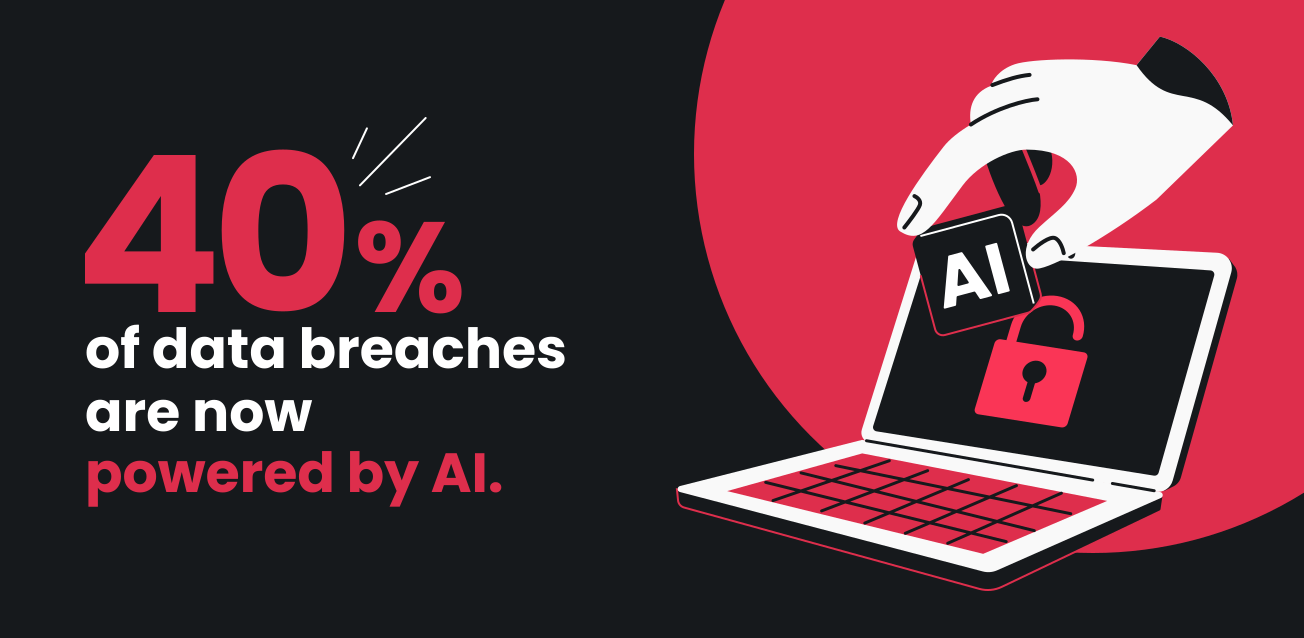
- 40% of data breaches are now powered by AI;
- The FBI reported $893 million in losses tied to AI-driven fraud in 2025;
- That same year, the FBI received over 22,000 complaints related to AI scams;
- 81% of survey respondents said they experienced some kind of AI-powered scam;
- The FTC received over 1.1 million reports of identity theft in 2024, marking the second consecutive year of growth;
- Synthetic identity fraud is the hardest-to-detect form of identity theft in the United States;
- Synthetic identity fraud exposed US lenders to more than $3.3 billion in losses in 2024 alone;
- Fraud attempts involving AI deepfakes have surged 2,137% over the past three years;
- Financial losses from deepfake-related fraud have reached nearly $900 million;
- Impersonation scams, a primary delivery method for AI identity theft, rose 148% between April 2024 and March 2025.
Stay ahead of AI-driven identity threats
AI identity theft is getting harder to spot. But you don’t need to be a cybersecurity expert to protect yourself. You just need to act before something goes wrong.
Use a password manager, enable two-factor authentication on your key accounts, and find out whether your personal info has already been exposed in a data breach. If it has, act on it.
FAQ
Is AI stealing my information?
AI itself doesn’t steal information, but criminals use AI tools to do so more effectively. Generative AI helps them create more convincing phishing emails, automate credential stuffing attacks, generate synthetic identities, and exploit data breaches at a scale that wasn’t possible before.
What is the first thing you should do if your identity is stolen?
Report the theft to the Federal Trade Commission, which will walk you through a personalized recovery plan.
In addition, change the passwords on your key accounts, especially your email and bank accounts, and enable two-factor authentication wherever possible.
What is the #1 most common form of identity theft?
Credit card fraud is consistently the most commonly reported form of identity theft. Criminals use stolen personal info, often obtained through data breaches or social engineering, to open new credit card accounts or make unauthorized charges on existing ones.
How do I check if my SSN has been compromised?
Use an identity monitoring tool like Surfshark Alert to check if your SSN has been compromised. It scans the web and data breach databases for your personal info, including your SSN.