

Tax season is stressful enough without the IRS claiming you owe money on a job you’ve never heard of.
That’s employment identity theft in a nutshell — someone else earns the paycheck, and you get stuck with the tax bill. It’s one of the quietest forms of fraud out there, and victims can go years without knowing anything is wrong.
This guide breaks down what employment identity theft is, how it happens, the warning signs to watch for, what to do if you’re a victim, and how to protect yourself going forward.
Key takeaways
- Employment identity theft: someone is working under your SSN, leaving you a tax bill for income you never earned;
- Common red flag: an IRS notice or W-2 from an employer you’ve never heard of;
- Popular targets: children, since their SSNs often go unmonitored for years;
- If it happens to you: report to the IRS, contact the SSA, freeze your credit, and file at IdentityTheft.gov;
- Prevention: lock your SSN with E-Verify, get an IRS IP PIN, and use an identity theft protection solution like Surfshark.
What is employment identity theft?
Employment identity theft happens when someone uses your SSN (Social Security number) or other personal information to get a job, earn wages, or pass an employment verification check under your identity.
The person committing the fraud earns a paycheck, and their employer reports those wages to the IRS (Internal Revenue Service) and SSA (Social Security Administration) under your SSN. That leaves you responsible for taxes on income you never received and pollutes your earnings record with work history that isn’t yours.
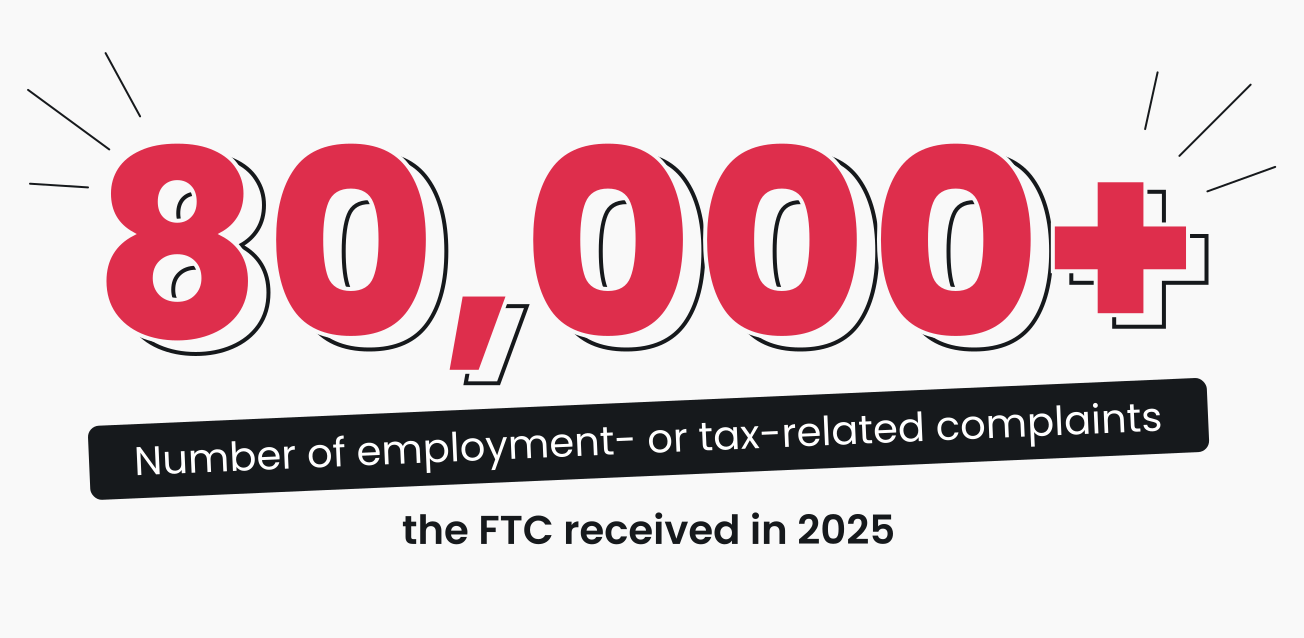
And employment identity theft is on the rise, with the FTC (Federal Trade Commission) receiving over 80,000 employment- or tax-related complaints in 2025.
Why does employment identity theft happen?
An identity thief may use your SSN for employment purposes to:
- Pass a background check they’d otherwise fail due to a criminal record or poor employment history;
- Work without legal authorization by borrowing a valid ID;
- Hide income from child support orders, court judgments, or tax obligations;
- Avoid detection, as using someone else’s SSN makes the thief harder to trace.
Employment identity theft involves a unique problem: the fraud itself may not directly affect your financial information or credit accounts. Instead, the damage shows up in tax records and government benefit systems, which is why it often goes undetected for so long.
Read more: Take a closer look at how scammers can exploit you with our in-depth guide, What can someone do with your SSN?
How does employment identity theft happen?
Fraudsters need enough personal and financial information to pass an employment verification process. Here’s how they get it:
- Data breaches: this is the most common source. When companies storing employee or customer records are breached, names, SSNs, dates of birth, and addresses can be exposed in bulk. One breach can fuel years of employment fraud;
- Phishing scams and fake job postings: criminals post fraudulent job listings or send text messages posing as recruiters, asking applicants for their SSN and other sensitive information during a fake onboarding process. Job seekers are especially vulnerable because sharing personal details during hiring feels normal;
- Document theft: a stolen wallet, intercepted mail, or lost Social Security card gives a thief physical access to your identity documents;
- Insider theft: employees with access to HR systems or payroll records sometimes misuse that access to steal coworker or applicant data;
- Data brokers and public records: criminals supplement a compromised SSN with details from people search sites, social media, and public records to build a more convincing identity package.
Even deceased persons aren’t safe. Their SSNs can remain active in databases for years, making them targets for employment identity fraud.
Employment identity theft vs. tax identity theft vs. unemployment fraud
These three types of identity theft frequently overlap but operate differently. The recovery steps for each are also distinct. Here are the key differences:
|
Type
|
What it is
|
How it’s detected
|
|
Employment identity theft
|
Someone uses your SSN to get a job; their wages are reported under your identity
|
IRS notices about unreported income; unfamiliar W-2 forms; SSA earnings discrepancies
|
|
Tax identity theft
|
Someone files a fraudulent tax return using your SSN to steal your refund
|
Your tax return is rejected because one was already filed; unexpected IRS correspondence
|
|
Unemployment fraud
|
Someone files false unemployment claims under your identity
|
You receive a Form 1099-G for benefits you never claimed
|
Employment identity theft often triggers tax problems as a downstream effect, which is why it’s frequently confused with tax identity theft. However, in the context of employment identity theft, the fraud originates in hiring, not tax filing.
Warning signs of employment identity theft
Because this type of fraud doesn’t directly hit your bank account or credit cards, the warning signs tend to come from government agencies. Here’s what to watch for:
Tax and IRS red flags
Any of the following may be a sign of employment identity theft:
- A W-2 or 1099 form arrives from an unknown employer;
- You receive an IRS CP01E notice, signaling that your Social Security number may have been used for employment by someone else;
- The IRS sends a CP2000 notice proposing additional tax owed for wages you didn’t earn;
- You discover unreported income on your IRS transcript that you can’t account for.
Social Security and benefits red flags
Employment identity theft can also be detected through your interactions with the SSA, such as:
- Your Social Security earnings record shows wages from unfamiliar employers;
- Your Social Security benefits calculation seems adjusted without explanation;
- You’re denied government benefits because records show income you didn’t earn.
Employment and background check red flags
You may also spot signs of fraud while looking for a new job via the following:
- A background check reveals work history you don’t recognize;
- A prospective employer flags discrepancies in your employment record.
Consequences of employment identity theft
The damage from employment identity theft can ripple across multiple areas of your life:
- Tax liability: the IRS may hold you responsible for taxes on fraudulent wages reported under your SSN. Disputing this takes time and documentation;
- IRS audits: discrepancies between what you report and what employers report under your SSN can trigger an audit;
- Social Security benefits problems: inflated or inaccurate earnings records can affect your benefit calculations when you retire or file for disability;
- Credit damage: while the fraud itself doesn’t directly affect your credit, unpaid tax debts or related fraudulent activity on your credit accounts can. An identity thief who has your SSN for employment purposes may use it for other fraud too;
- Criminal record implications: if the thief commits crimes while employed under your identity, those records could become associated with you;
- Ongoing risk: once your SSN is circulating, it can be shared, resold, or reused for years.
What to do if you’re a victim of employment identity theft
If you suspect identity theft tied to your employment records, act quickly. Here’s your step-by-step recovery plan:
1. Report it to the IRS
Respond to any IRS notices immediately. File IRS Form 14039 (the Identity Theft Affidavit) and check the box indicating your SSN was used for employment.
Contact the IRS at the number listed on any notice you’ve received to dispute fraudulent wages on your tax account.
2. Request an IRS IP PIN (Identity Protection PIN)
An IP PIN is a six-digit number that verifies your identity when you file your federal tax return. Once you have one, no one can file a return using your SSN without it.
You can apply for an IP PIN online on the IRS website.
3. Contact the Social Security Administration
Review your earnings record at SSA.gov for wages you didn’t earn. Report discrepancies to the SSA to get your record corrected. Errors left in place can affect your future Social Security benefits.
4. File a report with the FTC
Go to IdentityTheft.gov to file an official report. The FTC will provide you with a personalized recovery plan.
This complaint will also generate an identity theft affidavit you may need for disputes with employers, creditors, or law enforcement.
5. Place a security freeze on your credit reports
Contact one of the three credit bureaus (Equifax, Experian, or TransUnion) to place a fraud alert. While that bureau is legally required to notify the other two, you can place a full credit freeze with all three for stronger protection.
This freeze reduces the risk of the thief using your SSN to open credit accounts or commit other fraud.
6. Lock your SSN through E-Verify
Create an E-Verify account through the Department of Homeland Security. Use the Self Lock feature in your account to prevent anyone from using your SSN in E-Verify employment checks. You can unlock it temporarily when you start a new job.
7. File a police report
If you know who stole your information, you can file a police report. Even without a suspect, a report can be useful when disputing fraudulent debts or employment records.
8. Document everything
Keep copies of every notice, form, phone call log, and correspondence. You’ll need this paper trail for disputes with the IRS, SSA, employers, and credit bureaus.
How to prevent employment identity theft
No single step makes you invulnerable, but these habits sharply reduce your exposure:
- Monitor your Social Security earnings record: check your record annually at SSA.gov. Unfamiliar wages are often the earliest warning sign, sometimes surfacing before the IRS even sends a notice;
- Freeze your credit with all three credit bureaus: a credit freeze doesn’t prevent employment identity theft directly, but it stops the thief from opening credit accounts with your SSN;
- Safeguard your SSN: only share your Social Security number when legally required. Never say your SSN aloud in public or send it over unsecured channels. Avoid putting it on job applications until an employer has made a written offer;
- Verify job listings before applying: confirm that the company and the posting are legitimate before sharing any personal or financial information. Fake job postings are one of the most direct pipelines to employment identity fraud;
- Watch for phishing: be skeptical of unsolicited emails, phone calls, or text messages from “recruiters” or “employers” requesting your SSN or other sensitive information;
- Get identity theft protection with dark web monitoring: a service that monitors the dark web for your SSN and personal data can alert you to exposure long before it turns into employment fraud. Surfshark’s identity theft protection includes data leak monitoring, dark web monitoring, ID monitoring, and scam protection tools to give you early warning and ongoing visibility into whether your data is circulating where it shouldn’t be;
- Shred documents: run documents containing your SSN, tax year information, or other sensitive details through a shredder before discarding them.
Key takeaway: protect your SSN from theft
Employment identity theft is hard to catch because it leaves a quiet paper trail in systems that most people never check. Thankfully, the warning signs are detectable, the recovery steps are clear, and the prevention tools actually work.
Combining common-sense measures with Surfshark’s identity theft protection and data leak monitoring puts you in a strong defensive position.

Frequently asked questions
Can an employer steal your identity?
Yes, employees with access to HR systems, payroll databases, or personnel files can misuse that access to steal personal information from coworkers or applicants. This is known as insider theft and is one of several ways employment identity theft occurs.
Always be cautious about which employers and job applications you share your SSN with.
What happens if someone uses my SSN for employment?
If another person uses your SSN to get a job, their employer reports those fraudulent wages to the IRS and SSA under your name. You may receive unexpected tax forms, get IRS notices about unreported income, or discover unfamiliar employers on your Social Security earnings record.
The IRS might also believe you owe additional tax on income you never earned.
How long does it take to resolve employment identity theft?
Resolution timelines for employment identity theft vary. Simple cases may take a few months once you’ve filed IRS Form 14039 and contacted the SSA. More complex situations, like those involving multiple tax years, can take a year or longer.
Are children at risk of employment identity theft?
Yes, children are among the most vulnerable groups to employment identity theft. Children’s SSNs often go unmonitored for years, making them attractive to fraudsters. Parents should check their child’s Social Security earnings record periodically and consider freezing their child’s credit.