
More people than ever are choosing to change their addresses online, but this convenience comes with a risk: the change-of-address scam.
A change-of-address scam happens when criminals reroute your mail to an address they control or trick you into paying inflated fees on a fake USPS website. Either version can expose both your identity and your money.
This article explains how change-of-address scams work, the warning signs to watch for, and what to do if you’ve already fallen victim.
What is a change-of-address scam and how does it work?
A change-of-address scam is a type of fraud where a scammer either files a fraudulent change of address in your name or creates a fake website that mimics the official USPS change-of-address form. Both can be considered address fraud, but one targets your mail, and the other targets your wallet.
Whenever a change-of-address form is submitted, whether online or at a local post office, the postal service sends a confirmation letter to both the old and new addresses. This step is meant to catch fraud early, but it only works if you notice it.
Address fraud like this generally falls into two categories: mail rerouting and fake website fraud.
1. Mail rerouting scam
In this version of the scam, an identity thief uses your name and current address to redirect your mail to a location they control. It usually follows these steps:
- The fraudster obtains your name and address. Data leaks, public records, or discarded junk mail containing your details are some of the most common ways scammers get your info.
- They submit a change-of-address form at a post office or online, listing your name and their own forwarding address.
- The postal service sends a move validation letter to confirm the request. If it is sent to the scammer’s new address instead of yours, you may never receive the confirmation letter at all.
- Your mail starts arriving at the scammer’s address instead of yours. This includes bank statements, credit card statements, pay stubs, and other sensitive information.
- The scammer uses this stolen mail to commit identity theft, such as opening new credit cards, applying for loans, or draining your bank account.
Because a standard change-of-address form only requires basic address information, this scam can be surprisingly easy for criminals to attempt. It’s also a common gateway into broader types of identity theft.
2. Fake USPS website scam
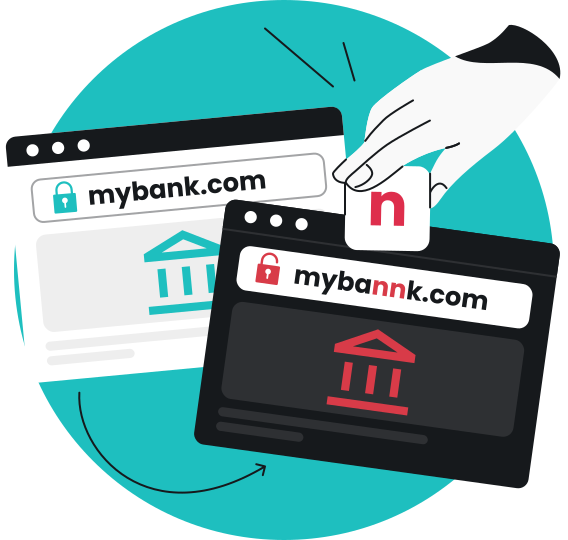
The second version of this scam targets your money instead. A lookalike website copies the design of the USPS (United States Postal Service) website, USPS.com, and fraudulently offers to process your change of address for a much higher fee. Here’s how it works:
- You search online for how to submit a change-of-address form and visit one of many fake websites that aren’t run by USPS. These can have deceptive domains like usps-parcel.com.
- The fake website may charge an abnormally high fee for a service that typically costs about $1.00 through the real USPS.
Some websites enroll you in a recurring charge you never agreed to. Others send a fake change-of-address confirmation email and then never actually submit the request to USPS. Because the confirmation looks legitimate, victims often don’t realize anything is wrong until their mail eventually stops arriving.
Pro tip: To prevent such scams, always submit a change of address online directly through USPS.com or visit your local post office in person.
Warning signs of a change-of-address scam
Address scams aren’t obvious right away, so watch for these signs:
- Missing mail: you stop receiving mail you normally expect, such as bills or paychecks, for several days in a row, or you start to receive mail meant for someone else instead;
- A move validation letter you didn’t request: USPS sends notices to both your old and new addresses whenever a change of address is filed, so an unexpected USPS notice is a red flag;
- Billing address changes you didn’t make: a credit card or debit card statement suddenly lists a different billing address;
- New account notifications: you get a notice about accounts, credit cards, or loans opened in your name;
- Overdue bills for accounts you normally pay on time: collection letters start arriving because your real bills were rerouted elsewhere;
- A confirmation you never asked for: you receive a USPS confirmation, text, or email about a change of address you never submitted.
How to protect yourself from address fraud
To stay protected and lower your risk of a change-of-address scam, build these habits into your routine:
- Submit any change of address only through USPS.com or in person at your local post office;
- Sign up for USPS Informed Delivery so you get a daily preview of incoming mail and can notice quickly if something’s missing;
- Collect your mail daily and set a vacation hold with the Postal Service if you’ll be away for more than a day or two;
- Use a locking mailbox if your building or street allows it, so scammers can’t intercept your mail before you get to it;
- Go paperless for bank statements, credit card statements, and other sensitive information whenever you can;
- Shred pay stubs, bank statements, and junk mail that include your name or account numbers before you throw them out;
- Monitor your credit report regularly for accounts or inquiries you don’t recognize;
- Contact your bank and other financial accounts as soon as anything looks like address fraud;
- Ask your local post office about extra verification options if you’ve dealt with a change-of-address scam before;
- Be cautious of search ads when looking for USPS services. They may take you to phishing websites instead of the legitimate USPS.com domain. Surfshark’s scam protection tools can help you block categories of unsafe pages, detect scam messages, and more.
Pro tip: The official USPS website ends in .com, not .gov. While most federal agencies use the .gov suffix, the Postal Service chose .com to make their resources easier for the general public to find and use online. Always verify you’re at USPS.com to avoid high-fee copycat sites and phishing scams.
What to do if you're a victim of a change-of-address scam
If you already suspect fraud, don’t panic. What you do next depends on which type of change-of-address scam you’re dealing with.
If your mail was rerouted:
- Contact your local post office immediately to check whether a change-of-address request was filed in your name and ask them to reverse it;
- Report mail fraud to the Postal Inspection Service at 1-877-876-2455 or file a report online through your local postal inspection service office;
- Place a fraud alert or credit freeze with the three major US credit reporting bureaus: Equifax, Experian, and TransUnion;
- Review your bank account, credit card statements, and credit report closely for unexplained activity;
- File a report with the Federal Trade Commission at identitytheft.gov if your personal information was exposed;
- Protect your identity with cybersecurity tools. For example, Surfshark’s identity theft protection lets you monitor for data leaks, request online data removal, and get identity theft coverage.
Disclaimer: Identity theft coverage is available for new Surfshark One+ customers residing in the US, including US territories and the District of Columbia, except for New York State residents. Surfshark is not a licensed insurance producer. Benefits under the Master Policy are issued and covered by HSB Specialty Insurance Company. You can find further details and exclusions in the summary of benefits for the state of Washington and the rest of the US.
Read more: For a deeper look at the benefits and potential trade-offs, check out our Is identity theft protection worth it? guide.
If you were charged by a fake website:
- Dispute the charge with your bank or credit card company right away;
- Report the website to the Federal Trade Commission and your local Better Business Bureau, and include any confirmation emails as additional information;
- Check directly on USPS.com to confirm whether your real change-of-address request went through;
- Watch your debit card and credit card statements closely for any repeat charges from the same website;
- Warn friends or family who might have visited the same fake websites that targeted you.
Key takeaway: act against change-of-address scams today
A change-of-address scam relies on speed and unsuspecting victims not noticing until real damage has already been done. Thankfully, most protective measures only take a few minutes and can pay off for years.
If something feels off with your mail, your billing address, or a USPS notice, act on it. It’s far easier to reverse a fraudulent change of address in the first few days than after an identity thief has had weeks with your information.
FAQ
Can someone change your address without you knowing?
Yes, a scammer only needs your name and current address to file a change-of-address request, whether in person or online. That’s the core of such scam cases, which is why it’s important to watch for move-validation letters you didn’t request or mail that suddenly stops arriving.
Why is the USPS asking me to verify my change of address in person?
The USPS may ask you to visit a local post office and show ID if your online change-of-address request looks unusual or if there have been recent reports of address fraud in your area. This extra verification step exists specifically to make it harder for a thief to redirect your mail and steal your identity.
What should I do if someone is using my address who doesn’t live there?
Contact your local post office to monitor mail that’s being misdirected to your address. If you think your identity is also being used elsewhere without your consent, file a report with the Postal Inspection Service and check your credit report for related fraud.
What is the official site to change your address with the post office?
The official portal for updating a postal address with the USPS is USPS.com, the postal service’s homepage. From there, you can search for how to change your address or visit their dedicated moving guide at USPS.com/move.