PayPal is generally safe because it relies on strong encryption, 24/7 fraud monitoring, and buyer and seller protection programs that go beyond what many credit card companies offer.
Still, PayPal isn’t completely immune to financial fraud. Phishing attempts, common PayPal scams, and risky payment choices can put your money or personal details in danger.
This guide covers how PayPal works, what keeps your PayPal account secure, where the real risks come from, and tips for using PayPal safely.
What is PayPal?
PayPal is an online payment platform that lets you send and receive money without sharing your card or bank account number directly with the other party.
Instead of typing your credit card information into every online retailer you shop with, you link a payment method once, and PayPal acts as an intermediary between you and the seller.
This setup is one of the main reasons PayPal is safe: the person or business you’re paying never actually sees your card or bank account details. They only see that a payment came through PayPal, along with basic account information like your name and email address.
How does PayPal work?
Here’s how PayPal works:
- You create a PayPal account and link a bank account, debit card, or credit card.
- When you shop online, choose PayPal at checkout instead of entering your card details.
- PayPal processes the transaction and transfers funds from your PayPal balance, bank account, or card to the seller.
You can also send and receive money directly to and from another PayPal user’s email address.
Is PayPal safe to use?
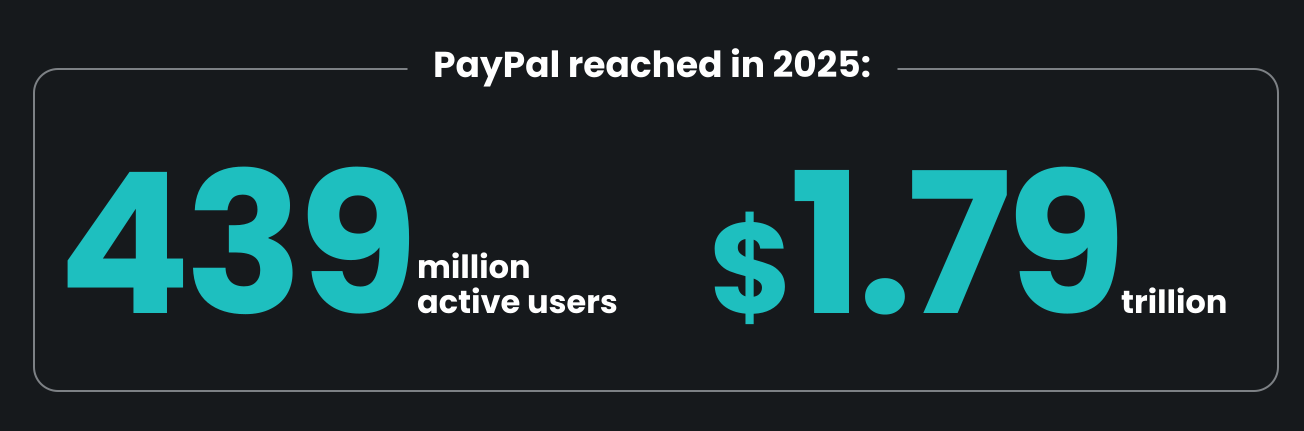
Yes, PayPal is safe to use for most transactions. It’s a legitimate, widely used payment option, with 439 million active users and a total payment volume of $1.79 trillion as of year-end 2025.
That said, how safe your PayPal account is depends largely on how you use it. PayPal’s security protects your account and data. But it can’t protect you from a decision you make, like who you’re paying and why.
The platform gives you the tools to send and receive funds safely — it’s on you to use them correctly.
How secure is PayPal?
PayPal secures your account and transactions through several layered features, most of which run automatically in the background:
Data encryption
Every PayPal transaction and payment is encrypted, and PayPal doesn’t sell or share your full financial information with sellers or merchants.
According to PayPal, connections between your device and PayPal’s servers use TLS (Transport Layer Security) and HTTPS, so your sensitive information can’t be seen by anyone else along the way.
Fraud monitoring
PayPal monitors activity and transactions across its own platform and tens of millions of merchant sites worldwide, around the clock, to catch suspicious activity before it affects your account.
Any eligible debit or credit card you add to PayPal also gets automatic early fraud alerts, so you’re notified in real time if PayPal detects or blocks unusual activity.
Account protection
You can add 2FA (Two-factor Authentication), which PayPal calls 2-step verification, to your account. This requires you to enter a code from an authenticator app in addition to your password when logging in.
PayPal also supports passkeys that use your device’s biometrics or screen lock instead of a password at all. This step helps protect you from phishing attacks and closes off one of the most common ways accounts get broken into in the first place.
Together, these features are a big part of why PayPal is considered a safer payment option than handing your card number directly to every online retailer you shop with.
Does PayPal protect against scams?
Yes, PayPal offers protection against some scams, but this defense has its limits.
Buyer protection
If you pay online for an eligible item through PayPal and it never arrives or arrives differently from how it was described, PayPal’s Purchase Protection program can reimburse you for the full cost of the item, including the original shipping.
To qualify, your PayPal account needs to be in good standing, you generally need to try resolving the issue with the seller first, and you need to open a dispute within 180 days of the payment.
Seller protection
PayPal’s Seller Protection program helps sellers avoid losses from false claims, disputes over unauthorized transactions, or chargebacks, as long as they meet the program’s eligibility requirements. In general, this includes shipping to the address on the transaction and keeping valid proof of shipment or delivery on hand.
Limitations
According to PayPal’s Purchase Protection terms, personal payments sent via the service’s Friends and Family functionality are explicitly excluded from coverage. Things like real estate, vehicles, and items you arrange to pick up in person rather than have shipped also aren’t covered.
So, if you send money to a stranger via Friends and Family, or if you fall for one of the common PayPal scams that look like legitimate transactions, you may not be covered at all.
If something does go wrong on an eligible transaction, report the problem to PayPal’s Resolution Center, communicate with the other party, and escalate to a formal claim if you can’t resolve it directly.
When is PayPal safe, and when is it risky?
PayPal’s safety usually comes down to which payment option you use and who you’re sending money to, not the platform itself.
|
PayPal is safe when you:
|
PayPal is risky when you:
|
|
Pay through Goods and Services: this activates Purchase Protection, so you’re covered if the order never arrives or isn’t as described.
|
Use Friends and Family with people you don’t know: this option is explicitly excluded from Purchase Protection, so there’s no dispute process if anything goes wrong.
|
|
Buy from verified sellers: only send money to accounts with a real transaction history and reviews.
|
|
|
Stay on the PayPal platform: don’t complete a transaction outside PayPal. The platform keeps a record that can be officially reviewed if there’s a dispute.
|
Send money to strangers outside PayPal: there’s no protection if the seller or recipient turns out to be a scammer.
|
Common PayPal risks
PayPal itself is a legitimate platform, but scammers work hard to exploit the trust people place in its name. Here are the most common risks associated with using PayPal:
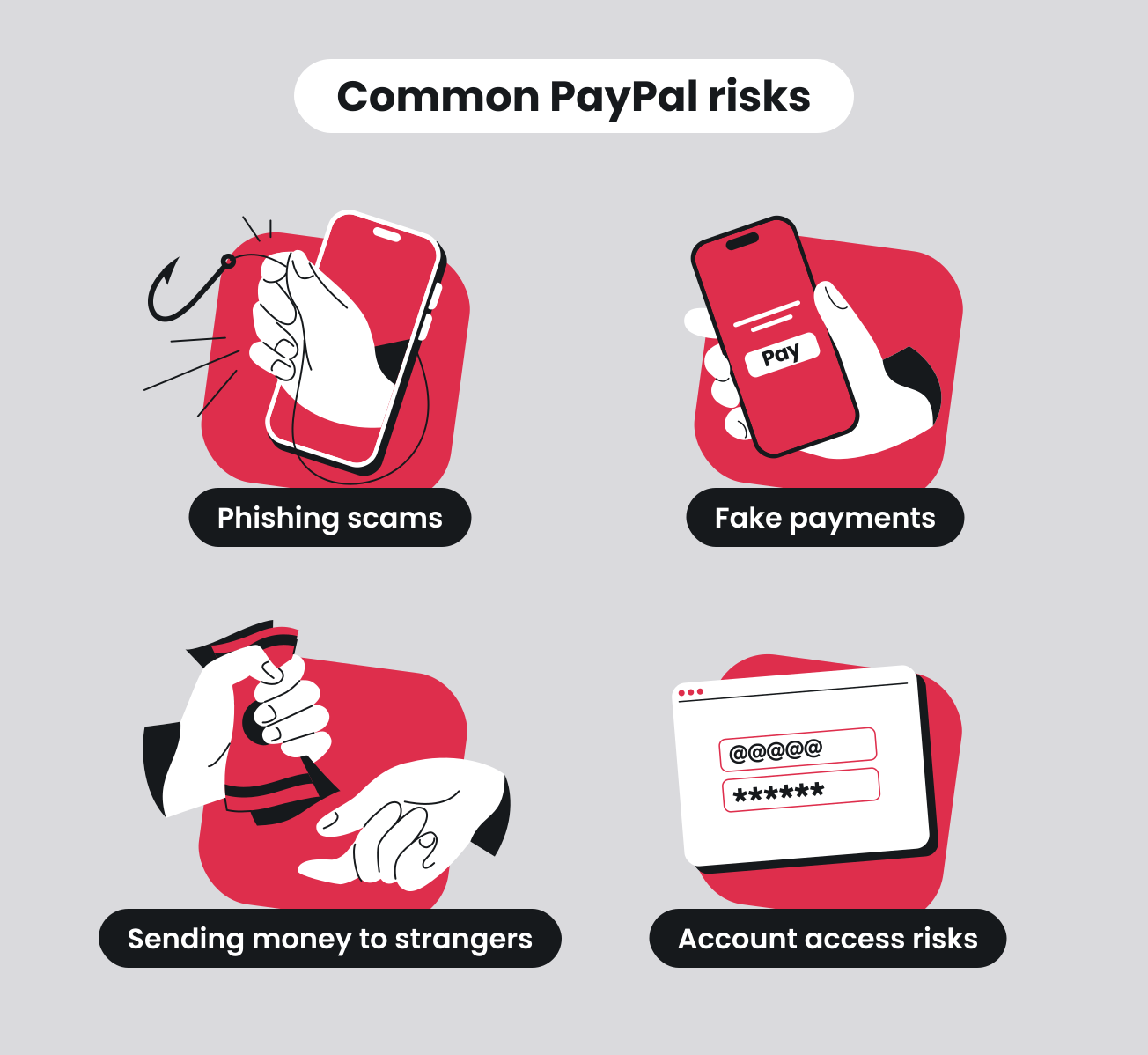
Phishing scams
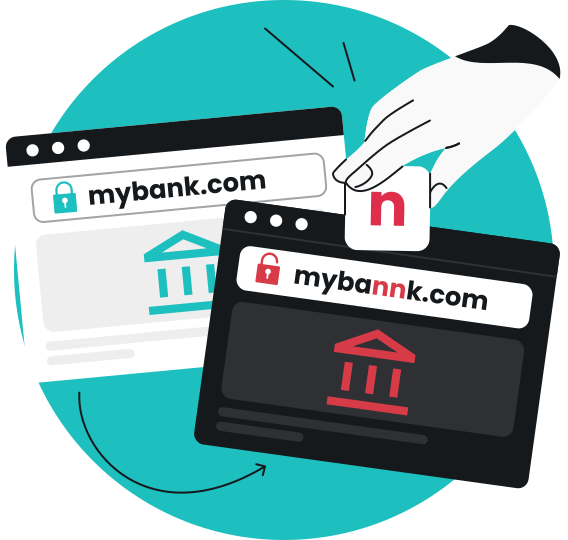
Scammers send fake emails or messages that pretend to be from PayPal, urging you to click a link and verify your account. These brand impersonation scams are common, with data from 2025 showing that PayPal was among the top 10 most impersonated companies in the US.
PayPal itself has publicly acknowledged the scale of the problem, issuing a consumer alert in October 2025, urging vigilance against an increasing number of fraudsters impersonating its brand.
Fake payments
Scammers send fake payment confirmation emails, hoping the seller ships the item before realizing no real money ever arrived.
In 2025, the BBB (Better Business Bureau) tracked a fake invoice scam that generated over 200 reports in just two weeks, using spoofed PayPal emails to claim recipients owed money to a real business that had nothing to do with the scam.
Sending money to strangers
Sending money to someone you’ve never met offers no protection in many cases.
Scammers frequently request PayPal’s Friends and Family option specifically because it skips the small transaction fee and, more importantly, carries no purchase protection. So if the person turns out to be a scammer, there’s no dispute process to fall back on.
Account access risks
Weak passwords and reused credentials are still among the simplest ways a PayPal account can be compromised.
Attackers routinely test username-password combinations leaked from breaches on other, unrelated websites against PayPal logins, a technique known as credential stuffing. So, reusing a password across multiple sites puts your PayPal account at risk, even if PayPal itself was never breached.
Is it safe to use PayPal with strangers?
The safety of payments to strangers on PayPal depends entirely on your chosen payment option. If you’re buying something from a stranger — let’s say, off a marketplace listing — and you pay through Goods and Services, you’re covered by PayPal’s Purchase Protection program if the item never arrives or isn’t as described. That’s the payment type PayPal designed for transactions with people you don’t already know and trust.
Sending that same stranger money via Friends and Family is riskier because PayPal’s own Purchase Protection terms exclude personal payments sent this way. There’s no dispute process if the item never shows up or the seller simply disappears.
Scammers know this, which is why they often ask specifically for Friends and Family, sometimes claiming they simply want to “avoid fees” or “make things faster.”
Rule of thumb: If you want to buy something from a stranger using PayPal, send funds through Goods and Services. If someone you don’t know is pushing for Friends and Family, take that as a warning sign rather than a convenience.
Is it safe to link your bank account to PayPal?
Yes, linking a bank account to PayPal is generally safe.
PayPal connections use TLS, so information can’t be intercepted between your device and PayPal’s servers. PayPal also doesn’t share your account number with sellers during a transaction — it only tells them the payment went through.
For especially sensitive data like bank account numbers, PayPal limits access even internally. Its own support staff can typically see only the last four digits of a financial account number.
The real risk is what happens if your PayPal account is compromised. If someone gets into your account through a weak or reused password or a successful phishing attempt, they’d have access to whatever payment methods you’ve linked, including your bank account.
That’s why account-level security measures, such as a strong, unique password and 2FA, are more important.
How to use PayPal safely
To use PayPal safely, follow this checklist:
- Enable 2FA and passkeys, so a stolen password alone isn’t enough to get into your account;
- Use strong, unique passwords (at least 12 characters) and avoid personal details like birthdates or pet names in your passwords;
- Don’t click links in unexpected emails or texts claiming to be from PayPal. Log in directly through the PayPal app or paypal.com to check for real account activity;]
- Use Goods and Services for purchases from anyone you don’t personally know;
- Verify recipients before sending money, especially for large or unfamiliar transactions.
Pro tip: If you use PayPal on public Wi-Fi, such as at a coffee shop or airport, it can expose your connection to others on the same network. You can encrypt your traffic with a VPN (Virtual Private Network) to enjoy greater data privacy when accessing PayPal. VPN usage makes it harder for bad actors to intercept your data while sending funds, shopping online, or just browsing.
Protecting your personal data online
Here are a few general practices to protect your sensitive information, no matter which payment platform or online retailers you use:
- Use a different, complex password for every account instead of one you reuse everywhere;
- Turn on 2FA wherever it’s offered, not just on PayPal;
- Don’t enter sensitive financial information into a form you reached through an email link rather than typing the address yourself;
- Check whether your email, passwords, or credit card information have shown up in a known data leak, and change your credentials if they have;
- Avoid logging into financial accounts over public Wi-Fi without added protection.
None of these steps makes you completely immune to fraud, but together, they add better security and make you a much harder target.
Key takeaway: your habits decide how safe PayPal is
PayPal is generally a safe platform that offers real protection through encryption, fraud monitoring, and buyer and seller protections that most credit card companies don’t provide.
But that protection only applies when you pay through Goods and Services, buy from a trustworthy seller, and stay on the platform. Treat every unfamiliar payment request on PayPal the way you’d treat a stranger asking to borrow your car keys. Pause, check who’s really asking, and choose the option that protects you before you send the money.
For extra protection, you can also use a VPN like Surfshark to help keep your data secure, especially on public Wi-Fi.
FAQ
What is the risk of paying with PayPal?
The main risks come from how a transaction is set up rather than PayPal itself. Using Friends and Family to send money to a stranger, reusing passwords, or falling for phishing emails that steal your login credentials are all risky moves.
Can someone access your bank account through PayPal?
Not directly. PayPal doesn’t share your account number with sellers, and a linked account is protected by encryption. Someone could only access your bank account if they first gained access to your PayPal account, usually through a weak password or a successful phishing attack.
What are common PayPal scams?
PayPal users primarily face scams related to social engineering, account impersonation, and policy loopholes. The most frequent fraud tactics involve:
- Friends and Family abuse;
- Phishing and fake alerts;
- Falsified invoices;
- Overpayment scams;
- Address switching.