Depop app is a popular resale marketplace where millions of people buy and sell secondhand fashion. It’s generally safe, but it depends on how you and the people you deal with use it: most scams start the moment a conversation or payment moves off the app, taking your protection and your personal data with it. This guide breaks down how safe Depop really is, where the risk sits for buyers and sellers, and how to keep every deal and your data protected.
What is Depop?
Depop is a peer-to-peer online marketplace for secondhand fashion, clothing, accessories, and other personal items. It is similar to Vinted, but is more popular outside of Europe, at least for now.
Depop sellers list their own inventory, set their own prices, and negotiate directly with buyers through in-app messaging. Depop doesn’t hold or ship any of that stock itself. The platform merely provides the marketplace, the payment rails, and the dispute process for each deal. That direct, person-to-person setup is also where most of Depop’s safety questions start.
Is Depop legit?
Depop itself is a legitimate platform, not a scam. It launched in London in 2011 and was acquired by Etsy in 2021 for $1.625 billion. It now processes millions of transactions a year through its own marketplace infrastructure.
What people usually mean by “is Depop a scam?” is whether individual Depop users can be scammed on it, and the answer is yes, the same way they can on eBay, Facebook Marketplace, or any other peer-to-peer platform. Those scams come from other users, not the platform itself. If anything, the platform leans the other way: Depop moderates listings for prohibited items, verifies your identity and bank details before releasing a payout, and gives you in-app tools to block or report another user directly.
Why do scams happen on Depop?
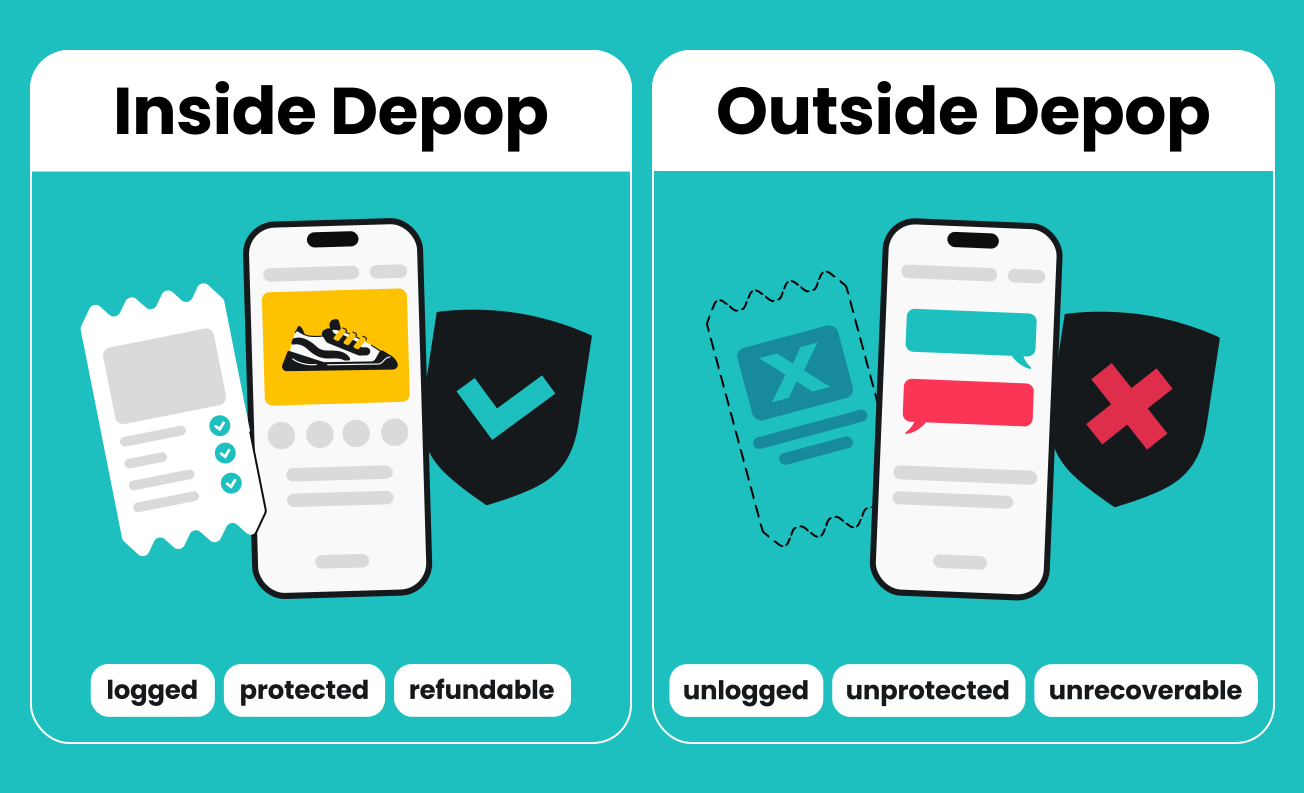
Every scam on Depop traces back to the handoff or when a conversation or a payment leaves the app.
Inside Depop, a transaction is safe by design. Messages are logged, payments run through Depop’s own processor, and eligible purchases are covered by Depop Protection. However, Depop’s ability to help ends exactly where its app does. The moment either side steps outside it, into a text message, a personal email, a bank transfer, or a PayPal payment, Depop can no longer see what’s happening. If it can’t see the transaction, it can’t verify it, refund it, or investigate it.
That’s precisely why scammers push for the handoff. A low barrier to entry means anyone can create a listing or a buyer profile in minutes, and because users interact directly, one scammer only needs one person willing to step outside the app. This isn’t unique to Depop — every peer-to-peer marketplace has the same structural gap — but it’s worth understanding before you buy or sell a single item, since it shows up a little differently depending on which side of the deal you’re on.
Picture a seller who messages, “My Depop’s acting up, can you just send it through Venmo instead?” Agreeing may seem like being a nice and understanding person, but this is exactly when you lose Depop’s buyer protection.
Is Depop safe to buy from?
Buying is safe as long as the deal stays in the Depop app. The risk comes down to two things:
- Fake listings or no-shows — usually resolved by Depop as long as the whole deal happened within the app. However, if a seller convinces you to pay outside of Depop’s checkout, there’s no order record and nothing to fall back on if the item’s fake or never turns up;
- Payments made outside Depop Payments — this is what voids your cover if something does go wrong.
Paying through Depop’s in-app checkout keeps the record intact and buyer protection in place. Under Depop’s official Depop Protection policy, you can file a claim within 30 days of your order if an item never arrives or turns out different from its listing, but only if you paid through Depop Payments to begin with.
Is Depop safe to sell on?
Similar to buying, selling is generally safe too, but the risk looks different from this side:
- A buyer disputing a card charge after the item’s already shipped;
- Asking you to send it to an address that doesn’t match the order.
Both are just another way of pulling part of the transaction outside what Depop can actually verify. Depop’s seller protections only cover the app’s official buy flow, so shipping to the address on the order, using tracked shipping, and keeping every message inside Depop’s chat are what make your side of a claim provable if something goes wrong.
Common risks on Depop
The most common Depop scams reduce to a handful of tactics.
Fake listings
Photos of items that don’t exist, don’t match the listing, or were stolen from another seller entirely. These sorts of listings are bait, but the scam only works once it gets you to pay off-platform.
Off-platform payments
As mentioned several times already, any request to pay by bank transfer, Cash App, or PayPal instead of Depop’s in-app checkout is the single biggest predictor of a scam, because it’s the exact point where Depop’s protection stops applying.
Phishing attempts
Messages or emails claiming to be “Depop Support” and asking you to confirm your login or payment details through a link. It works by impersonating Depop through a channel it doesn’t use and contacting you outside the app, so it’s worth learning how phishing scams work to spot the same pattern elsewhere, too.
Data exposure
The one risk that isn’t really about money: a convincing fake buyer or a phishing link that’s after your address, your login, or your card number for later use. It’s common enough, and different from a simple refund problem, to deserve its own section further down.
Safer vs. riskier behaviors on Depop
TL;DR: the safe column recommends keeping a deal inside Depop’s system; the unsafe column warns against it.
|
Safe
|
Unsafe
|
|
Paying through Depop’s in-app checkout
|
Paying via an external link, app, or bank transfer
|
|
Checking a seller’s or buyer’s reviews and account age
|
Ignoring a history of bad reviews or complaints
|
|
Keeping every message inside Depop’s chat
|
Moving the conversation to text, email, or social media
|
|
Reporting requests to pay off-platform
|
Sharing personal details “just to speed things up”
|
|
Pairing a low price with Depop’s normal in-app checkout
|
A steep discount paired with pressure to pay outside the app
|
How to stay protected on Depop
To summarize, staying safe online on Depop is a short checklist:
- Use in-app payments only, since it’s the one habit that keeps every other protection active;
- Verify profiles and reviews before you buy from or accept an offer from someone new;
- Avoid suspicious offers, especially ones that push you to communicate or pay off the app;
- Don’t share personal info like your email, phone number, or bank details in chat;
- Report suspicious users to Depop as soon as you spot a red flag, rather than waiting to see what happens.
This won’t stop someone from messaging you off-platform, but using a VPN (Virtual Private Network), like Surfshark VPN, can still help secure your connection if you’re browsing listings or checking out on public Wi-Fi, since open networks make it easier for someone nearby to intercept your traffic.
Is it safe to use your card on Depop?
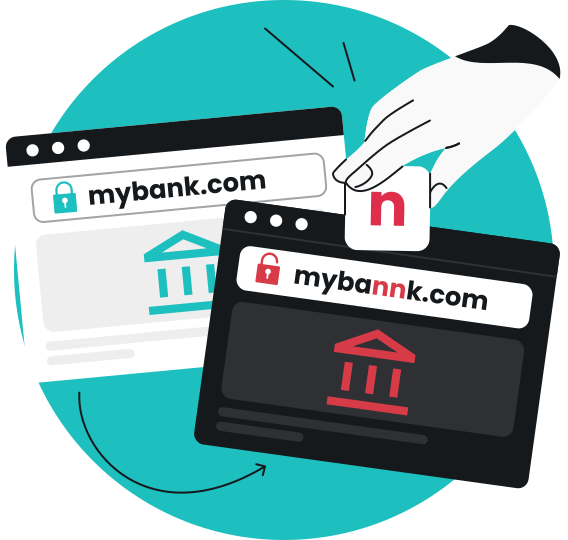
Card safety follows the same logic: Depop Payments processes transactions through standard, encrypted payment infrastructure, so using your card in Depop’s checkout is safe. The realistic risk isn’t Depop’s payment system — it’s being talked into entering card details somewhere else, like a phishing page designed to look like Depop’s checkout.
Many banks, like Revolut, offer disposable cards for internet purchases, which adds extra protection and is ideal for shopping on Depop.
What to do if you get scammed on Depop
If a deal does go wrong despite all that, it’s crucial to move fast:
- Report it to Depop through the app’s Resolution Centre within 30 days of your order.
- Contact your payment provider (your card issuer or PayPal) to dispute the charge if Depop can’t resolve it.
- Secure your accounts by changing your Depop password, enabling 2FA (Two-factor Authentication), and updating any reused passwords elsewhere.
Protecting your personal data online
There’s another part of Depop scams that’s easy to miss, going beyond money. A convincing fake listing or a phishing message rarely stops at a single payment — it’s often also logging for your shipping address, your login credentials, or enough personal details to open accounts in your name elsewhere. That second layer, identity exposure, is what makes recovering from a Depop scam more than a refund problem.
This exposure isn’t unique to Depop. Any marketplace where strangers exchange messages and shipping details carries some version of the same risk. A few things make it more acute on such platforms:
- Selling and buying require handing over a real shipping address to someone you’ve never met;
- Your profile, username, reviews, and sales history are public by design, so anyone can see enough about you to build a convincing pretext;
- Because DMs come from strangers by default, a scammer already has an opening line and a reason to ask for “just one more detail” before completing a deal.
None of this means selling requires oversharing. It means treating information you’d normally hand over freely — your full name, an email, a phone number — as something to keep private by default rather than share on request. Tools like Surfshark Alert can monitor whether your email or personal details show up in a data breach or leak, and Alternative ID can reduce what you hand over in the first place by masking your real email. Neither one prevents a Depop scam itself, but both reduce what a scammer walks away with once the conversation moves beyond the sale.
Conclusion: use Depop smartly
We all love sustainability and vintage gems, but it’s important to stay smart and critical even on trusted platforms like Depop. While it’s a legit and generally safe app, the risk comes from individual users. In short: keep payments, messages, and shipping details inside Depop’s checkout, and its protections stay active; step outside it, and every safeguard turns off at once.

FAQ
Will Depop refund me if I get scammed?
Yes, if the purchase went through Depop Payments and you report it within 30 days of your order. Depop Protection covers items that never arrive, arrive damaged, or are significantly different from their listing, but it doesn’t cover payments made outside the app.
How do I make sure I don’t get scammed on Depop?
Keep every payment and message inside the app, and treat any request to move off-platform as a red flag. Checking reviews, using tracked shipping, and reporting suspicious accounts early cut most of the remaining risk.
What should you avoid on Depop?
Avoid paying through bank transfers, cash apps, or PayPal, and avoid moving conversations to text, email, or social media. Both moves take the deal outside what Depop can verify or refund.
Is Depop safe to put your card information into?
Yes, Depop’s own checkout uses standard encrypted payment processing, so entering your card there is safe. The risk comes from entering card details on lookalike phishing pages, not from Depop’s actual payment system. Still, it’s smart to use a disposable card for online shopping.