Finding the best personal VPN can be challenging, as you have to consider factors such as speed, price, and security. The right guide, though, can simplify your search and point you in the right direction.
This article explains how a personal VPN protects you, what to look for when choosing the best VPN, and how the top VPN services compare.
How can a personal VPN protect you?
A personal VPN protects you by doing two basic things.
First, a VPN encrypts your traffic. It uses encryption protocols to disguise your online traffic, making the data you send and receive unreadable to anyone trying to snoop on your internet activity.
A VPN also masks your IP (Internet Protocol) address. When you connect to a remote VPN server, your real IP address — which shows your approximate geographic location and other identifying information — is concealed and replaced with the server’s IP. As a result, the websites you visit will only see the server’s IP address, not your own.
Now, how do encryption and IP address masking translate into practical protection? Here are some ways that a VPN helps keep you safe:
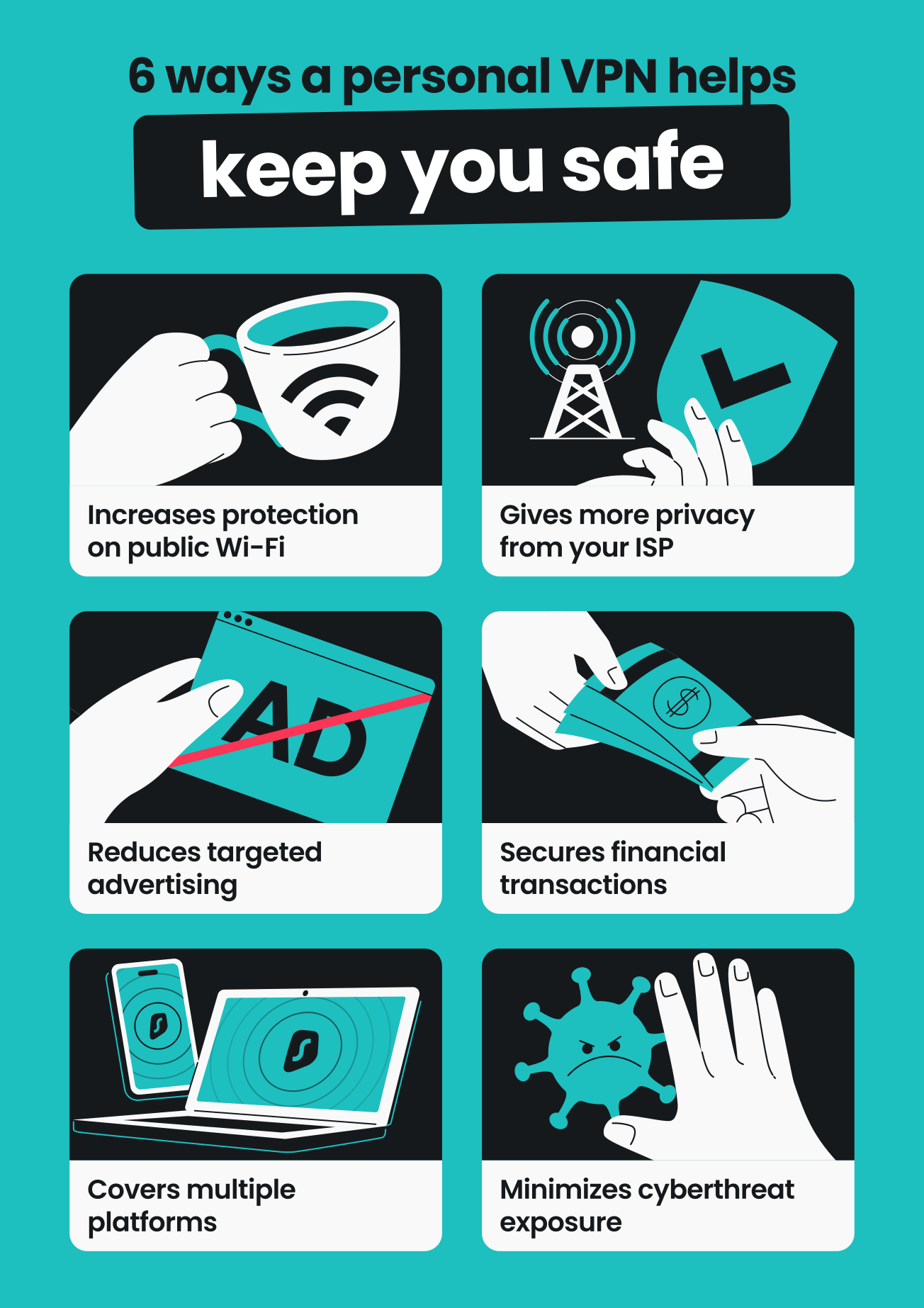
Increases protection on public Wi-Fi
Public Wi-Fi at places like cafés, airports, and hotels is notoriously risky. These networks often lack proper encryption, making it easy for hackers to capture your login credentials or eavesdrop on your browsing.
When you connect to a VPN before using public Wi-Fi, anyone trying to intercept your data will only see scrambled, unreadable information. Whether you’re checking emails or your bank account, a secure VPN tunnel makes your activities more private.
Gives more privacy from your ISP
Your ISP (Internet Service Provider) can typically track what websites you visit, how long you spend on them, and what you download. In many countries, ISPs are legally allowed to collect this data and sell it to advertisers.
A VPN prevents your ISP from monitoring what you do online. Since all your traffic is encrypted and routed through a VPN server, your ISP only sees that you’re connected to a VPN — not what you’re doing.
This gives you control over your personal browsing and keeps your IP address and internet habits private.
Reduces targeted advertising
Advertisers use your IP address, cookies, and browsing behavior to build detailed profiles about you and show you personalized ads. This constant tracking can feel invasive and raise legitimate privacy concerns.
A VPN significantly reduces the amount of information advertisers can gather about you. IP masking makes it harder for ad networks to associate your activity with your location or identity. Leading VPN services also have built-in ad blockers to make your surfing experience even smoother.
Secures financial transactions
Online banking and shopping require the transmission of highly sensitive information, such as credit card numbers and passwords. If this falls into the wrong hands, you could face problems like identity theft or fraudulent charges to your account.
A VPN adds a crucial layer of security when handling money online. With an encrypted VPN connection, your payment information and login credentials are better protected from prying eyes. These safeguards are especially important when you’re away from home and need to use unfamiliar networks to access your bank account or make a purchase.
Covers multiple devices and platforms
You don’t have to limit your VPN software to a single device or operating system. Leading providers offer user-friendly apps that are supported by all major platforms. Whether it’s PC, macOS, Android, iOS, Linux, or more, a VPN helps you enjoy greater protection wherever you connect to the internet.
Some VPN companies go one step further and support router-level installation, meaning every device connected to your home Wi-Fi network automatically benefits from VPN protection.
Minimizes cyberthreat exposure
From phishing attempts to malware distribution, the internet is full of threats that can compromise your security and privacy. By encrypting your connection and masking your real IP address, a VPN makes it hard for cybercriminals to target you.
But a VPN service shouldn’t be your only line of defense. Taking a comprehensive approach and combining VPN protection with strong passwords and safe browsing habits is key to boosting your online security.
Note: No tool — including a VPN — can guarantee complete safety online. If you take actions such as clicking a phishing link or downloading malware, a VPN won’t be able to stop these threats from harming your device.
How to choose the best VPN for personal use
When choosing the best personal VPN, consider each of the following factors:
Security
AES-256 and ChaCha20 are the industry standards for encryption, so look for a VPN provider that uses them. Surfshark, for example, offers both AES-256 for OpenVPN and ChaCha20 for WireGuard.
Also, look for a VPN that operates on 100% RAM-only servers. These wipe all data when rebooted, so none of your private information stays on them.
VPN protocols
A VPN protocol is a set of rules that defines how your data moves through the VPN server and onto the internet. Modern VPN companies use WireGuard, OpenVPN, IKEv2, or their proprietary protocols.
Some older protocols, like PPTP and SSTP, are no longer considered secure, so choose a VPN provider that comes with these newer, streamlined options.
Privacy
A reliable VPN should have an independently verified no-logs policy. This ensures the provider doesn’t track, store, or sell your data to third parties.
Server count
Both the number of servers and the number of server locations impact the quality of a VPN’s infrastructure.
With a larger server count, you’re more likely to avoid server overcrowding, making you less likely to suffer from slow download speeds. Meanwhile, having more server locations increases your chances of finding a server close to your physical location, which also helps you enjoy a faster connection speed.
Simultaneous connections
You likely access the internet from multiple devices — whether it’s smartphones, tablets, laptops, smart TVs, and more — every day. Each represents a potential entry point for threats, so using a VPN on just one of them likely isn’t that effective.
Reputable VPN providers let you protect multiple devices at the same time under a single subscription. Surfshark stands out for offering unlimited simultaneous connections.
Advanced features
Top-rated VPNs go the extra mile by providing additional security features to enhance your experience. These include:
- A kill switch that cuts your internet if your VPN connection unexpectedly drops;
- A double VPN that routes your traffic through two VPN servers instead of just one, applying two layers of encryption;
- A split tunneling feature that divides your internet traffic into an encrypted path with VPN protection and an unprotected path with direct internet access.
Bundled products
Along with VPN features, leading tools come bundled with extra products as part of a comprehensive cybersecurity suite. Surfshark, for example, offers plans that include:
- Alternative ID: an online ID generator to mask your contact information;
- Antivirus: antivirus software with scheduled and real-time protection against viruses and malware;
- Alert: instant personal data leak notifications;
- Incogni: a data removal tool that minimizes your risk of spam and scams.
Pricing
The best personal VPN services aren’t free, but that doesn’t mean they have to break the bank.
Free VPNs often offer a small number of congested servers, and some may even store or share your data. That’s why it’s better to choose a paid VPN with a broader server infrastructure and stronger data privacy protections.
You can look for the cheapest monthly VPN that fits your budget and still get excellent value.
User reviews
Many people are looking for the best VPN services on the internet, and they frequently turn to online communities to seek out advice or share their experiences.
Reddit discussion boards about VPNs are a great place to start when choosing the best VPN. You can see what users who have already tried a specific service have to say and gain valuable insights from shoppers just like you.
What is the best personal VPN service?
To find the best VPN for personal use, you’ll need to compare market-leading VPN services.
First, take a glimpse at what Surfshark has to offer below, and then see how other personal VPN companies stack up against it.
|
|
Surfshark
|
|
Security
|
AES-256-GCM encryption, RAM-only servers, verified no-logs policy
|
|
VPN protocols
|
WireGuard, OpenVPN, IKEv2
|
|
Servers
|
4,500+
|
|
Simultaneous connections
|
Unlimited
|
|
Lowest monthly price
|
$1.99
|
Note: The comparisons were updated on February 1, 2026, and the information listed is subject to change. Prices are in USD.
Surfshark vs. NordVPN
Both Surfshark and NordVPN put security first with robust AES-256 encryption, RAM-only servers, and independently audited no-logs policies. Both providers also offer features such as a kill switch, private DNS, obfuscated servers, and double VPN.
You’ll see a slight difference in their protocols. Surfshark offers WireGuard alongside OpenVPN and IKEv2, while NordVPN uses its proprietary NordLynx protocol, which is built on the WireGuard framework. As for servers, NordVPN has a larger server count and covers more locations worldwide, but Surfshark still has an extensive, reliable server network. For effective use, it’s a good idea to choose a VPN provider with many server locations near you to ensure the best internet speed.
Surfshark stands out for the number of simultaneous connections it supports. Not only is Surfshark cheaper than NordVPN on long-term plans, but it also allows unlimited simultaneous connections to cover all your devices. In contrast, NordVPN limits you to 10 devices at a time.
|
|
NordVPN
|
|
Security
|
AES-256-GCM encryption, RAM-only servers, verified no-logs policy
|
|
VPN protocols
|
NordLynx, OpenVPN, IKEv2
|
|
Servers
|
8,400+
|
|
Simultaneous connections
|
10
|
|
Lowest monthly price
|
$2.69
|
Surfshark vs. ExpressVPN
Surfshark and ExpressVPN offer AES-256 encryption, RAM-only servers, and strict no-logs policies for privacy protection. Both VPN providers let you choose from roughly 100 server countries, but Surfshark has more servers overall — 4,500+ compared to 3,000+.
When it comes to VPN protocols, Surfshark supports OpenVPN, IKEv2, and WireGuard, while ExpressVPN uses Lightway instead of WireGuard. Surfshark lets users connect unlimited devices simultaneously, but ExpressVPN allows 10 to 14 devices at the same time, depending on the plan.
The most significant difference between the two VPN companies, though, might lie in their pricing. Surfshark is the cheaper option across all plans, yet it still comes with many additional features. Conversely, ExpressVPN has a higher price point, but it lacks security features like a double VPN.
|
|
ExpressVPN
|
|
Security
|
AES-256-GCM encryption, RAM-only servers, verified no-logs policy
|
|
VPN protocols
|
Lightway, OpenVPN, IKEv2
|
|
Servers
|
3,000+
|
|
Simultaneous connections
|
10–14
|
|
Lowest monthly price
|
$2.44
|
Surfshark vs. CyberGhost
Surfshark and CyberGhost help keep you protected with AES-256 encryption, RAM-only servers, and independently verified no-logs policies. The two also support OpenVPN, IKEv2, and WireGuard protocols.
However, each of the two VPN companies has its own strengths. Surfshark offers lower prices for long-term plans, but CyberGhost’s massive count of over 11,690 servers minimizes your risk of overcrowding or a slower internet speed. Surfshark also comes with added features that CyberGhost lacks, such as obfuscation and a double VPN.
Moreover, users with multiple devices will appreciate Surfshark’s unlimited simultaneous connections, a sizable advantage over CyberGhost’s limit of seven.
|
|
CyberGhost
|
|
Security
|
AES-256 encryption, RAM-only servers, verified no-logs policy
|
|
VPN protocols
|
WireGuard, OpenVPN, IKEv2
|
|
Servers
|
11,690+
|
|
Simultaneous connections
|
7
|
|
Lowest monthly price
|
$2.03
|
Surfshark vs. PIA
When comparing Surfshark vs. PIA, you can see that both VPN service providers prioritize online privacy and security, protecting you with 256-AES encryption, RAM-only servers, and audited no-logs policies. Both also allow unlimited simultaneous connections to keep all your household devices secure.
PIA offers AES-128 in addition to AES-256 encryption, but AES-256 is much more secure, so offering AES-128 isn’t much of an advantage.
PIA has 35,000+ VPN servers, giving it a larger server network than most providers in the VPN industry, but Surfshark still offers more server locations. PIA costs slightly less, but Surfshark’s plans include a more comprehensive cybersecurity solution.
|
|
PIA
|
|
Security
|
AES-128 and AES-256 for encryption, RAM-only servers, verified no-logs policy
|
|
VPN protocols
|
WireGuard, OpenVPN, IKEv2
|
|
Servers
|
35,000+
|
|
Simultaneous connections
|
Unlimited
|
|
Lowest monthly price
|
$1.98
|
Surfshark vs. IPVanish
Surfshark and IPVanish are both strong VPN apps for personal use. Their plans include industry-leading AES-256 encryption, verified no-logs policies, and helpful features like obfuscation. Plus, unlimited simultaneous connections are also included to sweeten the deal.
However, they’re far from identical and have distinct characteristics that set them apart. For instance, Surfshark has transitioned to 100% RAM-only servers for enhanced online privacy. Meanwhile, IPVanish hasn’t fully transitioned yet.
While Surfshark has more servers and broader global coverage, IPVanish has more servers concentrated in the Americas. Depending on your location, this distinction could be a deciding factor when weighing between the two.
IPVanish doesn’t offer a two-year subscription, so Surfshark gives you the lower monthly price overall.
|
|
IPVanish
|
|
Security
|
AES-256 encryption, verified no-logs policy
|
|
VPN protocols
|
WireGuard, OpenVPN, IKEv2, and IPSec
|
|
Servers
|
3,200+
|
|
Simultaneous connections
|
Unlimited
|
|
Lowest monthly price
|
$3.33
|
Surfshark vs. ProtonVPN
Surfshark and ProtonVPN are both reputable VPN options, but only Surfshark has transitioned to 100% RAM-only servers.
While ProtonVPN offers more servers and server locations, your true server access depends on your plan. Surfshark gives you unrestricted access to all of its 4,500+ servers, but users on ProtonVPN’s Free plan are limited to specific servers in a few countries.
Maximum simultaneous connections is another important factor if you want to protect multiple devices with a VPN. With Surfshark, you can secure an unlimited number of devices at a time, while ProtonVPN allows 10 connections at once.
|
|
ProtonVPN
|
|
Security
|
AES-256 encryption, verified no-logs policy
|
|
VPN protocols
|
WireGuard, OpenVPN, IKEv2
|
|
Servers
|
15,000+
|
|
Simultaneous connections
|
10
|
|
Lowest monthly price
|
$2.99 (free plan available)
|
Surfshark vs. Mullvad
Both Surfshark and Mullvad prioritize privacy, offering AES-256 encryption and RAM-only servers. Surfshark offers three protocol options: WireGuard, OpenVPN, and IKEv2. In contrast, Mullvad only offers WireGuard and OpenVPN.
Server-wise, Surfshark has 4,500+ servers across 100 countries, whereas Mullvad has a much smaller server infrastructure with 600+ servers in roughly 50 countries.
When it comes to pricing, Surfshark boasts the lowest monthly cost. That said, Mullvad allows cash payments, which is a good option if you prefer to purchase your VPN with greater anonymity.
|
|
Mullvad
|
|
Security
|
AES-256-GCM encryption and RAM-only servers
|
|
VPN protocols
|
WireGuard and OpenVPN
|
|
Servers
|
600+
|
|
Simultaneous connections
|
5
|
|
Lowest monthly price
|
$5.90
|
Key takeaway: what’s the best VPN for personal use?
Choosing the best personal VPN is, naturally, a very personal decision. It all boils down to your specific needs, priorities, and preferences.
Just remember that a solid VPN is, first and foremost, and online security tool. Accordingly, go with a tool like Surfshark that has strong encryption, modern protocols, and advanced features to elevate your internet safety.
FAQ
Are personal VPNs worth it?
Yes, personal VPNs are worth it. They provide an essential layer of security and privacy by encrypting your online traffic, masking your IP address, and shielding your data from tracking.
What’s the difference between a VPN and a personal VPN?
While VPN and personal VPN are often used interchangeably, VPN is the umbrella term for the technology. It covers personal VPNs as well as VPNs for businesses, remote access VPNs, and site-to-site VPNs.
A personal VPN is meant for individual users to encrypt internet traffic and mask their IP addresses.
What is the best free personal VPN?
There’s no best free VPN. Free VPN services typically struggle to provide quality protection due to their limitations, which can include subpar security, data caps, and limited server selections. Even worse, some free VPN providers compromise user privacy and security by selling browsing data to finance their services.
What is the best personal VPN for Windows?
The best personal VPN for Windows depends on your individual needs and preferences. However, a VPN for Windows should offer a range of security features, AES-256 encryption, RAM-only servers, and a no-logs policy. It’s also important to consider the server network, the maximum number of simultaneous connections, and whether the Windows app is user-friendly.