People now often work from home, coffee shops, airports, and across different countries, so keeping their devices and data secure has never been more important. When considering secure access, two technologies stand out: VPN (Virtual Private Network) and SASE (Secure Access Service Edge).
While both technologies aim to protect data and provide safe access, they work very differently and are designed for different needs. Let’s break down these differences, so you can decide which one makes the most sense for you or your organization.
What is SASE?
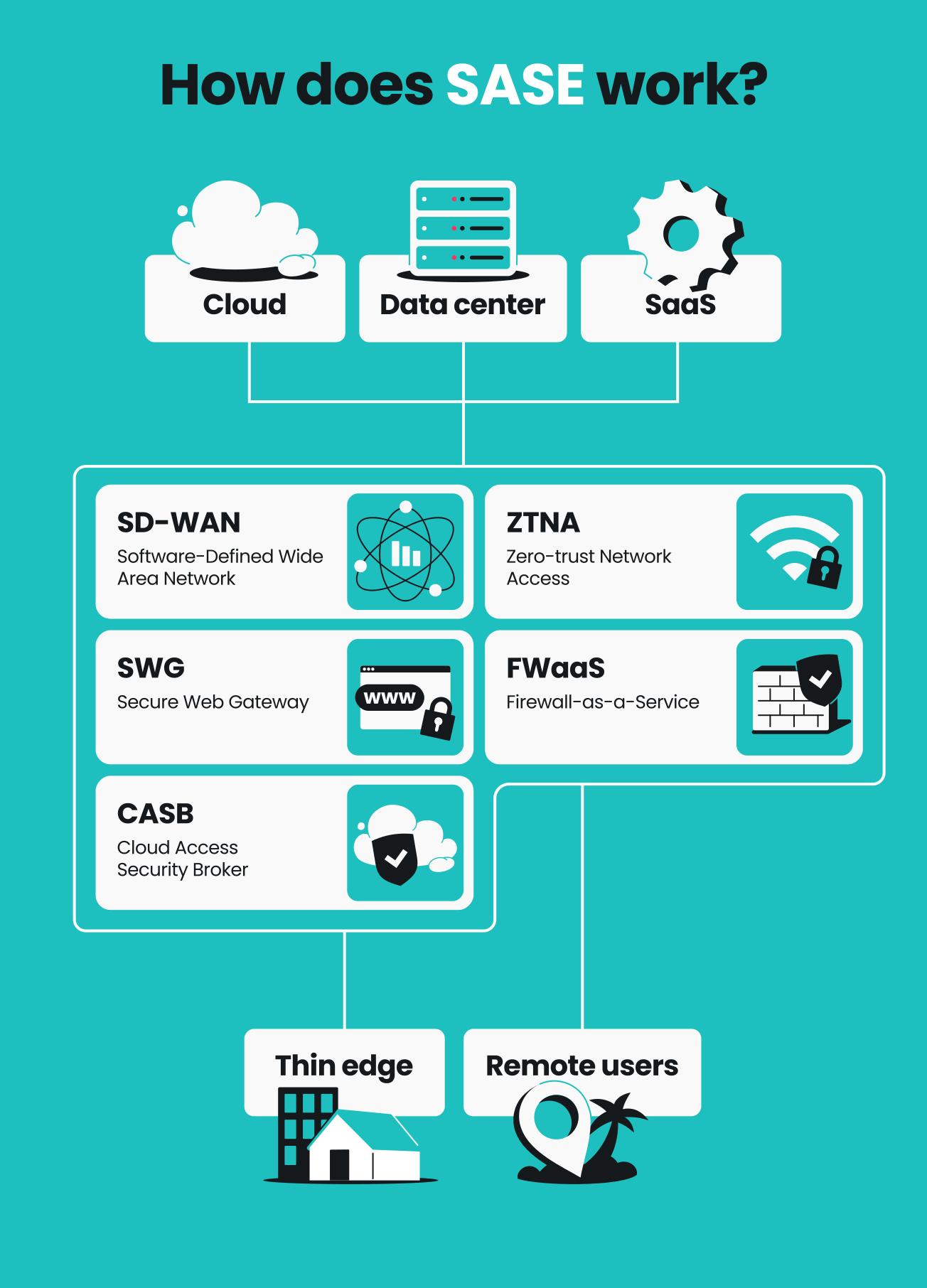
Secure Access Service Edge, or SASE, is a modern security framework that bundles multiple tools into one service. And, instead of routing all traffic through a central office or data center, SASE delivers networking and security services via the cloud. The result is a unified platform that enables better support for remote and hybrid work models.
Some of the SASE benefits include:
- Secure access from anywhere;
- Better performance for cloud apps;
- Centralized security management.
Another advantage that SASE provides is the combination of multiple tools into one, each playing a specific role in keeping users and data safe:
- SD-WAN (Software-Defined Wide Area Network) — chooses the best path for data based on performance and security policies, rather than relying on fixed routes, improving speed and reliability;
- ZTNA (Zero-trust Network Access) — works on the “never trust, always verify” principle, giving users access to the specific applications they are allowed to use, and not the entire network;
- SWG (Secure Web Gateway) — protects users from malicious websites, phishing attempts, and unsafe downloads by filtering web traffic and enforcing browsing policies;
- FWaaS (Firewall-as-a-Service) — provides firewall protection through the cloud. It inspects traffic, blocks threats, and enforces security rules without needing on-premise firewalls;
- CASB (Cloud Access Security Broker) — monitors and controls how users access cloud applications, helping prevent data leaks and ensure compliance with security policies.
What is a VPN?
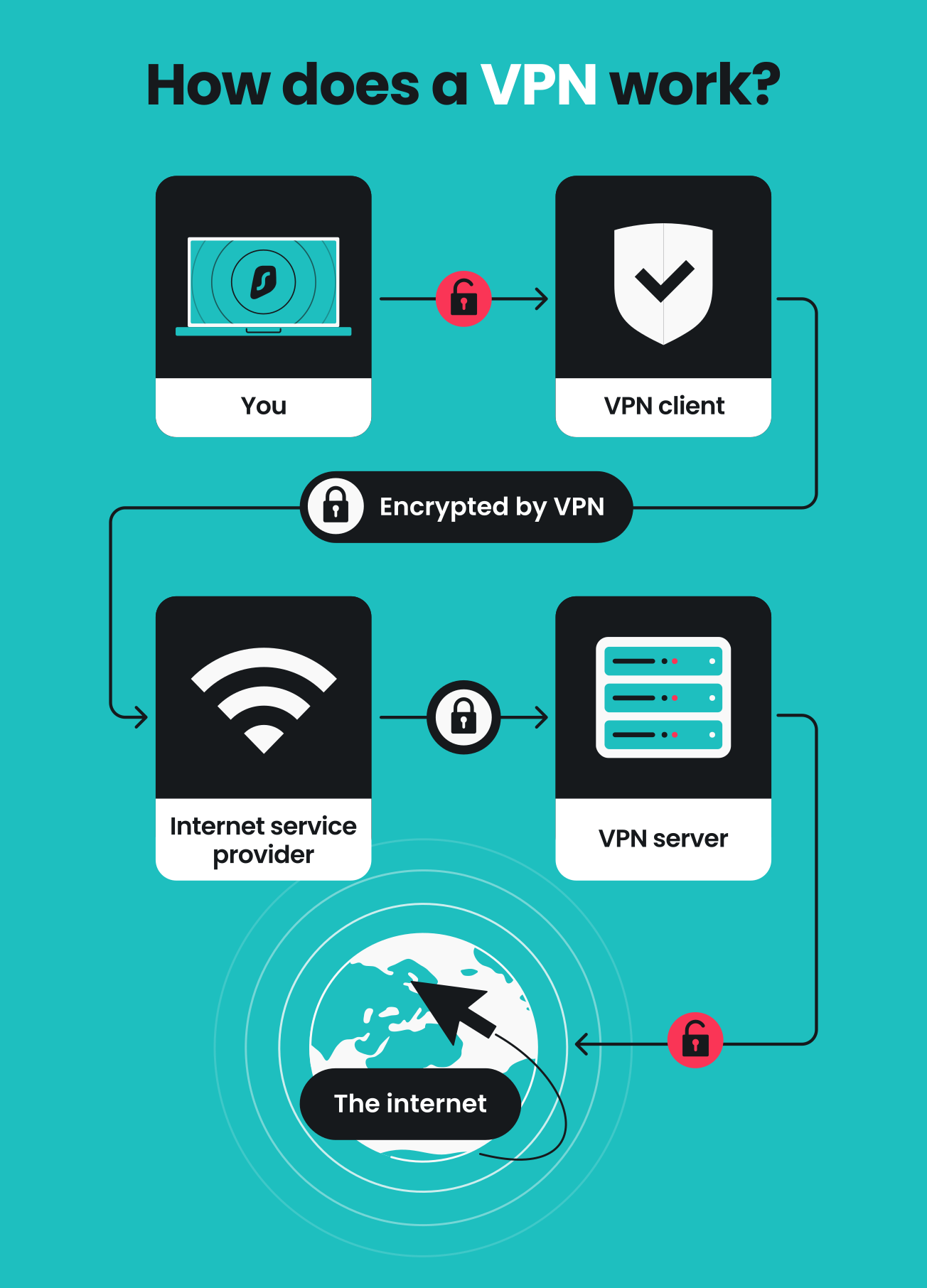
VPNs have been a standard solution for remote access for many years. A VPN creates a secure, encrypted tunnel between a user’s device and a private network or server. When you connect to a VPN, your internet traffic is encrypted and routed through a VPN server. This helps protect your data from interception and makes your traffic appear to be coming from the VPN server rather than your actual location.
Some of the VPN benefits include:
- Encrypting data in transit;
- Allowing remote access to private networks;
- Hiding your IP (Internet Protocol) address;
- Protecting data, especially on public networks;
- Enhancing privacy online.
For individuals and organizations alike, VPNs offer a practical way to strengthen network security without complex infrastructure.
SASE vs. VPN: a detailed comparison
Although SASE and VPNs both aim to secure access, they are built for different environments and challenges.
Core purpose:
Both VPN and SASE securely connect users to a network and provide safe access to digital resources.
Who they’re designed for:
- VPNs work well for individuals, teams, or simple remote access needs;
- SASE is designed for widely-distributed workforces and cloud-heavy environments.
|
|
VPN
|
SASE
|
|
Architecture
|
Client-server setup
|
Cloud-native
|
|
Security model
|
Network-based trust
|
Mostly zero-trust, identity-based
|
|
User access
|
Network-level access
|
Mostly app-level access
|
|
Management
|
Requires periodic hardware and software upgrades
|
Centralized, reduces hardware requirements
|
Key differences between SASE and VPN
Here are the main differences between SASE vs. VPN:
- Trust model: VPNs verify every VPN packet and reverify connection periodically. SASE verifies every request;
- Access scope: VPN users often access the entire network, while SASE users only see what they’re allowed to use;
- Security coverage: a VPN by itself mainly focuses on encrypted network connectivity and access control, though modern VPN providers often include multiple additional security tools. SASE integrates capabilities like web filtering, FWaaS, ZTNA, and cloud access security.
Key similarities between SASE and VPN
Despite their differences, SASE and VPN share some common ground, too. They both:
- Encrypt data in transit;
- Enable secure remote access;
- Help protect users from cyberthreats;
- Improve privacy and security on open Wi-Fi networks.
How to choose between SASE and VPN
Choosing between SASE and VPN depends on your specific needs, not just the technology itself.
Consider a VPN if:
- You need protection online for personal use;
- You have a small team;
- You need simple, occasional remote access;
- Most company resources are on a private network;
- Budget and complexity are major concerns.
Consider SASE if:
- Your workforce is dispersed globally;
- You rely heavily on cloud applications;
- You need easy scaling and centralized management.
Overall, VPNs are perfect for personal use and work well for organizations with globally dispersed teams. With the wider enterprise expansion, SASE becomes a better option, as it’s built to scale naturally.
Final thoughts: choosing a path to secure access
On the one hand, VPNs are typically better for individuals and small teams that need a simple, secure connection and strong privacy. On the other hand, SASE is better aligned with environments that require large-scale network management and secure access to cloud services.
Both tools offer enhanced security when used appropriately, so, at the end of the day, the best choice is the one that aligns with your goals, resources, and approach to network security and management.

Choose a trusted VPN to secure your connection
Strong privacy, encrypted access, and security you can rely on
Get SurfsharkFAQ
What is the difference between an always-on VPN and SASE?
An always-on VPN automatically connects a device to a secure tunnel at all times and relies on network-level trust. SASE, by contrast, evaluates each access request individually and applies security policies continuously.
Does SASE include VPN?
Some SASE platforms include VPN-like tunneling as part of their offering, but it’s not the core feature. SASE focuses on zero-trust, application-level access rather than traditional network tunnels.
What are the disadvantages of SASE?
SASE can be more complex to adopt initially. It may require changes in how access policies are designed and how networks are structured. For very small teams, it may feel like more than what’s needed.
What is the difference between IPsec, VPN, and SASE?
- IPsec is a protocol used to encrypt network traffic;
- VPN is a solution that often uses IPsec or similar protocols;
- SASE is a broader framework that includes security, networking, and access controls delivered via the cloud.