Klarna is a legitimate, licensed financial company with strong security measures, and its services are generally considered safe.
But safe doesn’t mean risk-free. Sharing your financial information with Klarna and similar payment platforms can expose you to data breaches, and missing Klarna payments might affect your credit score.
Here’s a breakdown of how safe Klarna is and the steps you can take to stay secure while using it.
What is Klarna?
Klarna is a Swedish fintech company founded in 2005 that offers BNPL (Buy Now, Pay Later) services. The idea is simple: instead of paying for an online purchase all at once, Klarna lets you split your payments into smaller installments. In many cases, payments have no interest or service fee.
In Klarna’s popular “Pay in 4” plan, for example, you divide a purchase into four payments that are made every two weeks. Other flexible payment options that Klarna offers let consumers pay immediately, after 30 days, or via monthly financing for up to 36 months.
Here’s how Klarna works in practice:
- You shop at a participating online store or use the Klarna app.
- You choose Klarna at checkout. Klarna will pay the merchant on your behalf.
- You pay Klarna back in scheduled installments. As long as you pay on time, there’s no impact on your credit history.
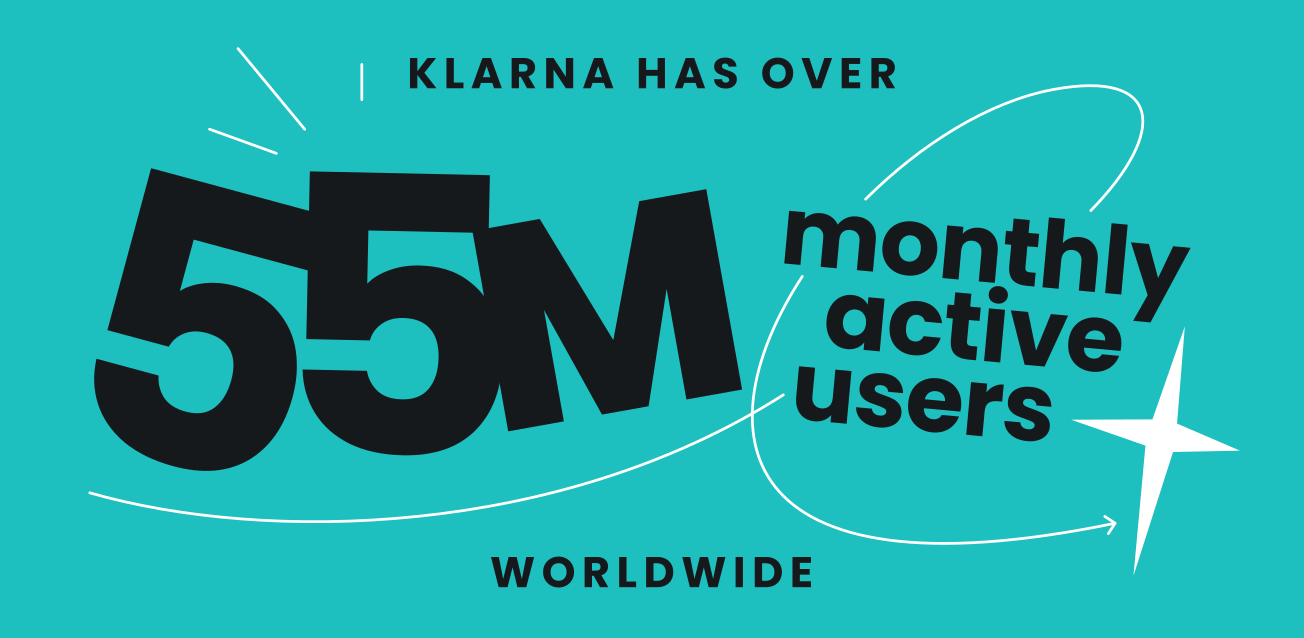
Using this framework, Klarna has grown massively over the past few years. As of 2026, the app has over 55M monthly active users worldwide and works with more than 1M merchants, including major retailers such as Nike, H&M, and Sephora.
Klarna also holds banking licenses in both Sweden and the UK, which means it’s required to follow strict financial regulations — the same kind traditional banks must adhere to.
So, is Klarna legit? The short answer is yes. It’s been accredited by the BBB (Better Business Bureau) since 2015 with an A+ rating. Klarna isn’t some sketchy fly-by-night operation — it’s quickly grown into one of the most widely used payment platforms in the world.
Is Klarna safe?
Klarna is generally a safe service to use with your personal and payment information. The company takes your security seriously, and the Klarna platform comes with several built-in protections:
- Bank-level encryption: Klarna uses 256-bit, TLS (Transport Layer Security) encryption to protect all data transmitted between you and their servers. Your credit card details are tokenized, meaning the actual numbers on them are never shared with merchants;
- 2FA (Two-factor Authentication): you can add an extra layer of protection every time you log in by enabling 2FA through SMS or an authenticator app;
- Biometric login: the Klarna app supports Face ID and fingerprint authentication on mobile devices. Even if someone gets their hands on your phone, they won’t be able to access your account easily;
- Real-time fraud monitoring: Klarna continuously monitors transactions and flags any suspicious activity. As a result, the chances of someone fraudulently using your account to make payments remain low;
- Buyer protection: Klarna’s Buyer Protection Policy gives consumers a 120-day window to dispute a purchase if an order never arrives or shows up damaged. Klarna will pause payments until the issue is resolved;
- Data privacy: Klarna doesn’t share your financial data with merchants. When you pay through Klarna, everything runs through their own secure payment system.
Klarna’s security risks
Klarna may be safe on the technical side, as its security measures are on par with what you’d expect from a traditional bank.
But no platform is bulletproof.
Klarna has had a couple of security hiccups worth knowing about:
- In 2021, a technical glitch briefly exposed the account information of some users to others within the app. Nevertheless, the issue was quickly patched, and no card details or bank information were compromised;
- In late 2025, a bug involving recycled phone numbers potentially exposed login credentials for a small number of users. Klarna confirmed the incident affected limited data and found no evidence of misuse;
- Also in 2025, rumors started spreading online about using the “Klarna method” to get free products. In reality, scammers were using stolen Klarna accounts to make fraudulent purchases without paying, but Klarna assured users they were safe if they kept their login credentials private.
None of the above incidents can be described as traditional hacks or data breaches, but they’re a reminder that no digital service is completely immune to safety concerns. The good news is that Klarna quickly responded to these incidents and has since introduced strict security protocols.
What are the pros and cons of using Klarna?
Klarna is largely a safe way to pay for your online shopping, but you should look at the full picture before deciding if it’s the right choice for you. Here’s a balanced snapshot of Klarna’s strengths and weaknesses:
|
Pros
|
Cons
|
|
Interest-free payments when you pay on time
|
Late fees if you miss a payment
|
|
Standard “Pay in 4” plans only require a soft credit pull
|
Advanced financing options may require a hard credit check
|
|
Strong encryption and fraud monitoring
|
Past security incidents have taken place in 2021 and 2025
|
|
Buyer protection with a 120-day dispute window
|
Easy to overspend when payments feel small
|
|
Your payment details aren’t shared with stores
|
Missed payments can hurt your credit score
|
|
Available at 1M+ merchants worldwide
|
Not all payment methods offer the same protections
|
|
BBB A+ rating and licensed in multiple countries
|
Klarna collects your browsing data through its app and browser extensions to personalize offers
|
The bottom line is that Klarna is a reliable and trustworthy payment platform. Your biggest issue with it will likely revolve around your spending, not your security. BNPL is a form of debt, and it’s easy to rack up multiple payment plans across different purchases. Before you know it, you can owe more than you thought.
However, like with any online service, there’s always the risk that your private information can somehow wind up in the wrong hands.
How to shop safely with Klarna
If you want to make your experience with Klarna even safer, protect yourself with these smart precautions:
1. Use a VPN when shopping online
A VPN (Virtual Private Network) encrypts your internet connection, which is especially important when you’re shopping on public Wi-Fi, like at a coffee shop or airport. Without a VPN, someone on the same network could potentially intercept your data.
Online shopping with a VPN adds an extra security layer to every transaction, making it harder for hackers to steal your information.
2. Use a strong, unique password
Don’t reuse a password from another site for your Klarna account. Create a unique one that’s at least 16 characters long and include a mix of uppercase and lowercase letters, numbers, and symbols.
3. Turn on two-factor authentication
Klarna lets you use 2FA when logging in, so be sure to enable it to take advantage of the added protection it provides. With 2FA enabled, even if someone gets your phone and guesses your password, they still can’t get into your account without the second verification step.
4. Watch out for phishing scams
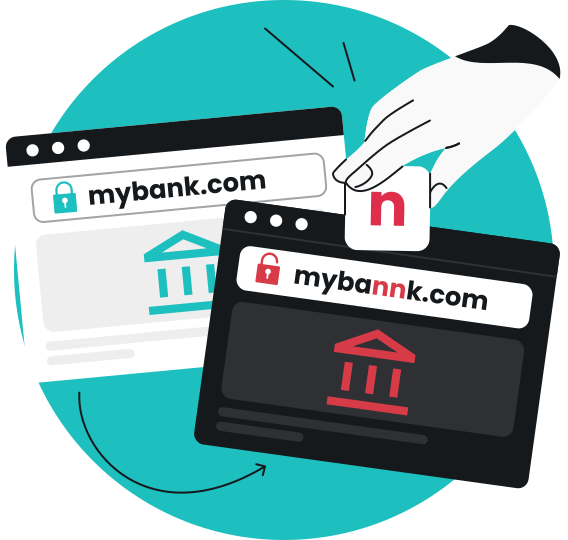
Scammers commonly impersonate financial services like Klarna. If you get an email or text claiming to be Klarna asking for your password or personal details, don’t respond or open any links. These are likely part of a phishing attack trying to get you to give up your credentials.
Real Klarna messages come from @klarna.com addresses and will never ask for sensitive information like your password or take you to a page outside the Klarna website or app.
5. Monitor your payment schedule
Keep track of your monthly payments and due dates. Missed installments can result in late fees and may even show up on your credit report. Klarna’s app sends reminders, but setting your own calendar alerts is a smart backup.
6. Stick to verified merchants
Only use Klarna through the official app or on retailer sites where Klarna is listed as a payment option. If something feels off about a store or checkout process, trust your gut and walk away.
7. Review your payment method
If you’re worried about unauthorized charges, credit cards are safer than debit cards because they offer better fraud protection. A linked bank account offers even less default security, so if something goes wrong, clawing money back from a direct debit can be difficult.
Review the safest ways to pay online to get a broader look at which payment methods keep you most protected on Klarna and other services.
Final thoughts
For most users, Klarna is a safe, well-regulated platform with strong security features that protect your data and money.
That said, safe is partly in your hands. The payment app can’t fully protect you from phishing emails, prying eyes, and other cyberthreats.
Take advantage of Klarna’s built-in features — like 2FA and biometric login — along with online privacy tools like a VPN, and you’ll be in a much safer position.
FAQ
Is Klarna bad for your credit score?
No, Klarna isn’t necessarily bad for your credit score. Klarna’s “Pay in 4” option uses a soft credit check, which doesn’t affect your score. Longer-term payment plans may involve a hard credit inquiry, and missed or late payments on these can negatively affect your credit score.
Klarna reports your payment activity to credit bureaus like Experian and TransUnion, so it’s important to stay on top of your payments.
Is Klarna safe to use on Amazon or eBay?
Klarna is generally safe to use on major e-commerce sites like Amazon or eBay if it’s available. On Amazon, Klarna can be used through the Klarna app or browser extension, but it isn’t natively integrated into Amazon’s checkout. On eBay, Klarna availability varies by region.
Does Klarna sell my personal information?
No, Klarna doesn’t sell personal data for financial benefit. However, like most digital services, it collects usage data — including browsing data through its extensions — to offer personalized deals and ads. You can control these permissions in your account and browser settings.
What are the risks of Klarna?
The top risks of using Klarna are phishing scams, data collection, overspending, late fees, and a negative impact on your credit score. Keep in mind that Klarna itself is mostly trustworthy, so many of the real risks come down to how you use it.
Is Klarna secure for debit cards?
Yes, using your debit card with Klarna is safe. Your card details are encrypted and tokenized, so the merchants you purchase from never see them.
However, keep in mind that, unlike credit cards, debit cards draw directly from your bank account. If there’s an unauthorized charge, getting the money back can take longer than it would with a credit card.
Credit cards typically offer stronger fraud protection than debit cards. Therefore, if you have the option, use a credit card with Klarna to add an extra safety net.
Is Klarna a scam?
No, Klarna isn’t a scam. Founded in 2005, Klarna holds banking licenses in Sweden and the UK, has an A+ BBB rating, and went public on the NYSE in 2025. Used by over 55M people worldwide, it’s a trustworthy payment service.
The real risk is scammers impersonating Klarna through fake emails and texts. Never share your login details or open links in unsolicited messages — always use the official app or website.