VPNs encrypt your internet traffic and help you mask your IP address, preventing third parties — ISPs, advertisers, or hackers — from monitoring your online activity. Beyond basic privacy, VPNs can also help reduce ISP throttling, improve access to home content while traveling, and protect you on public networks. VPNs are not without their limitations too, which we also cover below.
8 benefits of using a VPN
Here are the eight main benefits of using a VPN (Virtual Private Network), from privacy and online security to everyday practical advantages.
1. Enhanced privacy
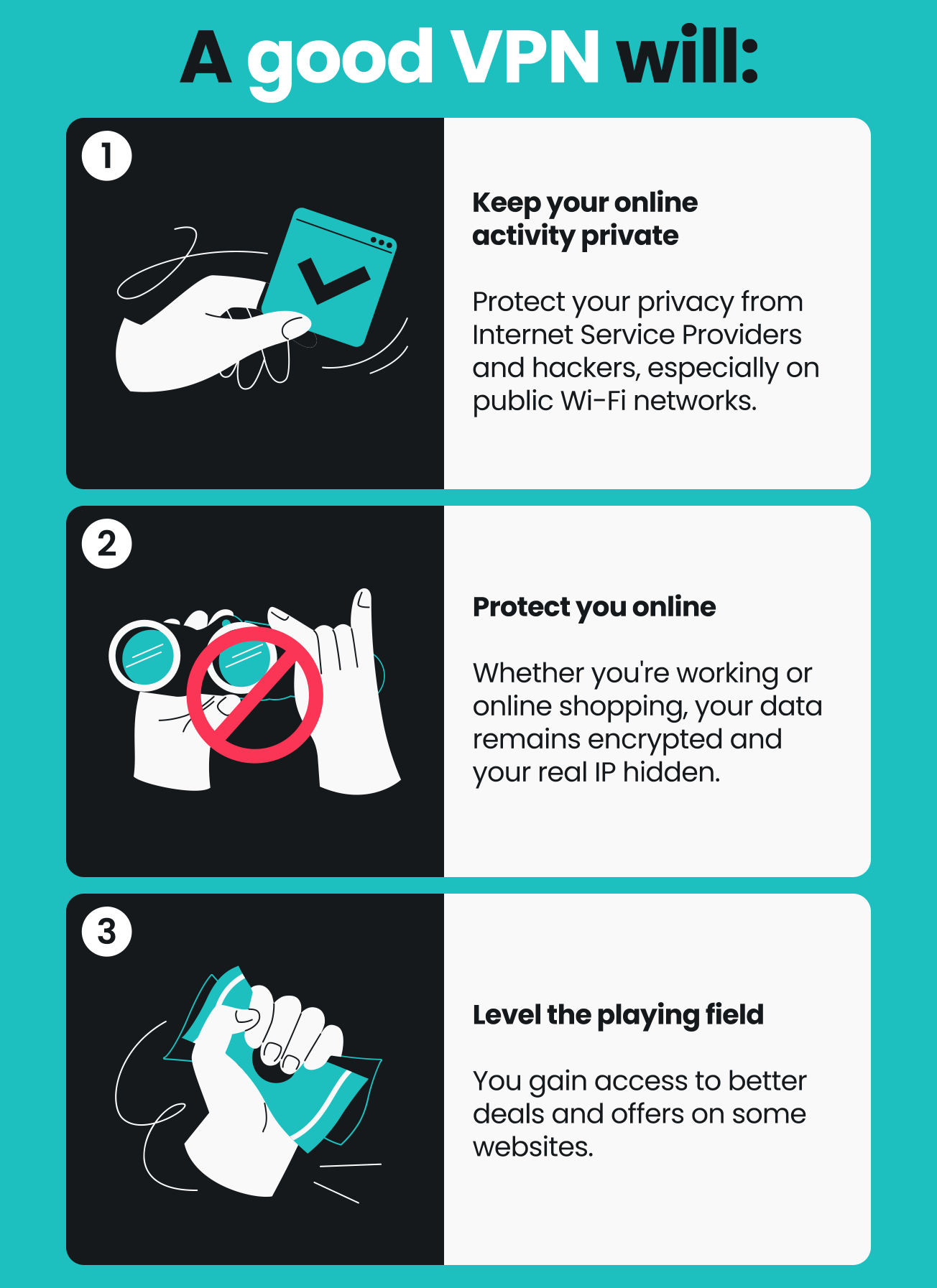
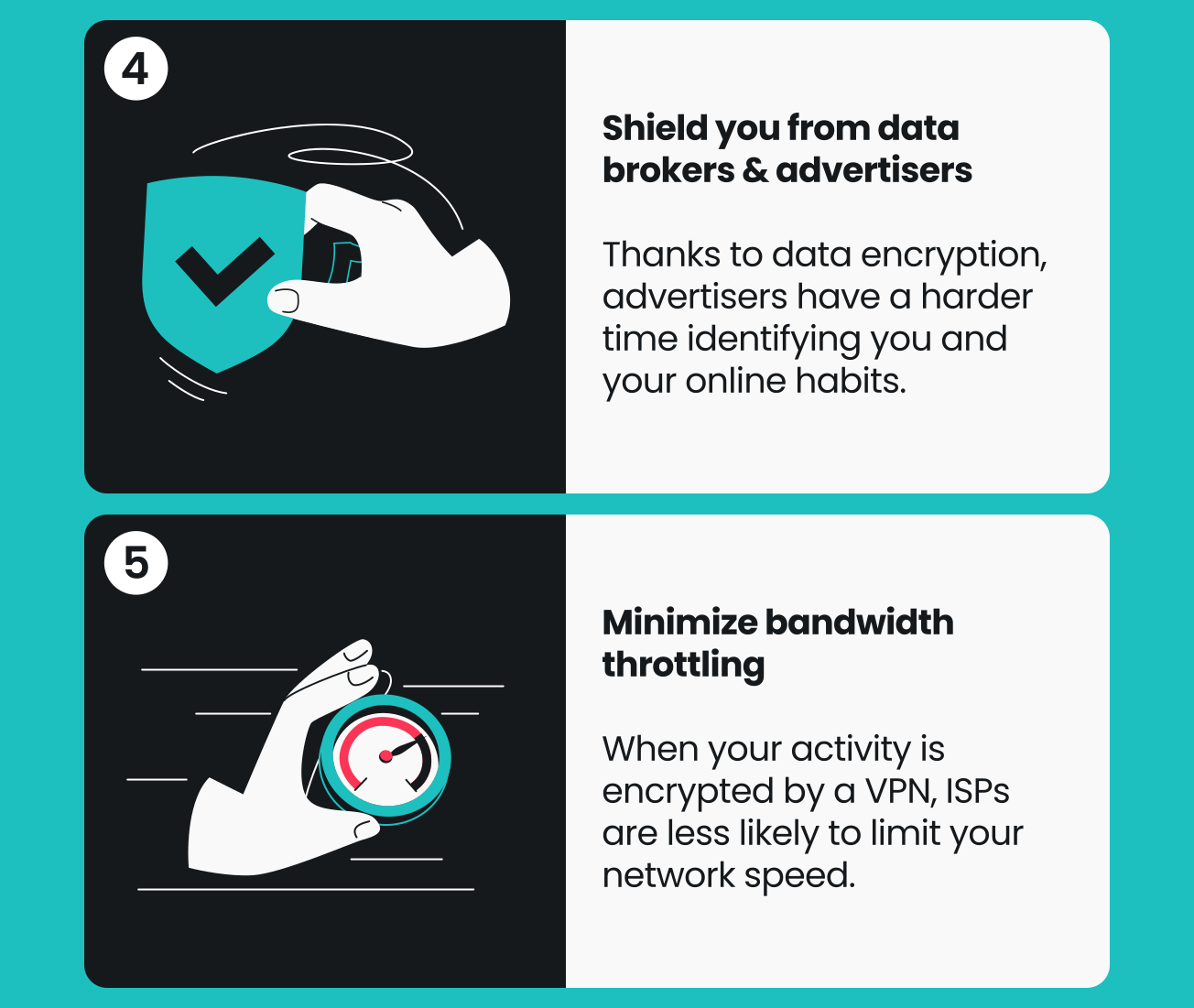
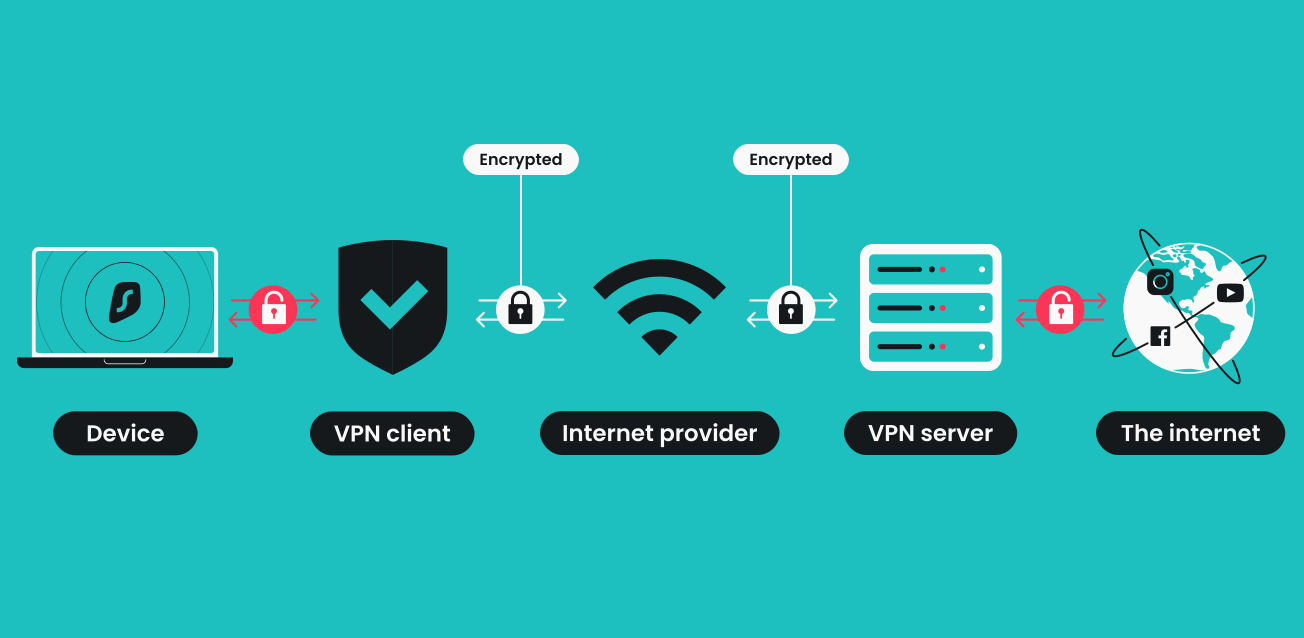
A VPN masks your IP (Internet Protocol) address, making it harder for websites, advertisers, and data brokers to track your identity and location. By replacing your IP address with that of a VPN server, the link between your behavior and identity is severed, reducing the amount of data that companies can gather about you.
2. Improved security
A VPN encrypts your internet traffic, blocking hackers and ISPs (Internet Service Providers) from inspecting your data, even if they manage to intercept it. This, in turn, prevents them from logging, analyzing, and trading it further.
3. Secure access on public Wi-Fi
A VPN’s ability to block most eavesdropping and interception attempts is especially important on unprotected networks. Public Wi-Fi is notoriously vulnerable to cyberattacks — in a survey conducted by All About Cookies, one in four Wi-Fi users reported experiencing a security issue on a public network at least once. This is especially relevant in airports, hotels, cafés, and coworking spaces, where the network is shared within a constantly changing pool of strangers.
4. Reduced activity-based bandwidth throttling
ISPs sometimes throttle speeds based on traffic type — limiting you if you download a lot of large files, regularly stream high-resolution video, or put a strain on your connection in other ways. However, since a VPN masks traffic type, your ISP has nothing to act on, significantly lowering your likelihood of getting throttled.
5. Access to home content abroad
A VPN lets you connect to a server in your home country from abroad, so you don’t get cut off from your usual sites and services when traveling. That means you can read your regional news, access your subscriptions, and catch local sports coverage uninterrupted, almost anywhere you go.
6. Finding better deals online
Some retailers and travel sites personalize prices based on your location or browsing history. A VPN will allow you to change your virtual location, which can surface lower regional prices — particularly useful when booking flights or online shopping.
7. Safe remote work connections
A VPN encrypts your connection to company networks, protecting sensitive data whether you’re working from home or a café. It also gives remote workers secure access to internal tools and resources — the same kind they’d have if they were physically on site.
8. Greater internet freedom
In countries with strict internet censorship, using a VPN can help restore access to blocked news sites and social media platforms. This is especially important for activists, whistleblowers, journalists, and everyone else in need of reliable access to information untainted by government interference.
Disclaimer: Please note that using Surfshark services for any illegal activities is strictly forbidden and violates our Terms of Service. Make sure that any use of Surfshark services for your particular activities conforms to all relevant laws and regulations, including those of any service providers and websites you access using Surfshark.

Who benefits most from a VPN?
Some people will likely find themselves using a VPN less often than others — it all comes down to how you use the internet:
- Frequent travelers get the most immediate value: a VPN secures connections on unfamiliar networks and keeps home content accessible from abroad;
- Remote workers benefit from encrypted access to company systems, especially on non-office networks;
- Privacy-conscious everyday users: anyone uncomfortable with ISPs selling their browsing data or advertisers building profiles on them will find that a VPN reduces their exposure significantly, even during routine browsing.
VPN cons: potential disadvantages
Although a VPN is a powerful tool, it’s not without its trade-offs. The good news: most of them are limited to specific providers or setups. Understanding what causes them can help you use VPNs more effectively.
1. Potential speed reductions
Routing traffic through a VPN server adds distance and encryption overhead, which can slow your connection. To keep your speeds up, make sure the server you’re connected to is geographically near you, or use split tunneling to specify the traffic you don’t want routed through the VPN.
2. Compatibility issues
Some smart TVs, consoles, and IoT (Internet of Things) devices don’t natively support VPN apps. To work around this, you can set up a VPN directly on your router, which will cause all devices connected to that network to get VPN coverage, including those that can’t run a VPN client on their own.
3. Quality varies between providers
Not all VPNs provide the same level of protection — weak encryption, a lack of kill switch functionalities, and IP leaks are all too common in lower-quality services. Free VPNs are especially prone to these issues, with some even offsetting their costs by way of selling user data to advertisers — the opposite of what a privacy tool should do.
4. Cost
Since free VPNs tend to carry the abovementioned risks, paid services are the more reliable and recommended choice. The price of a VPN subscription can vary between $2–$15, with the price falling alongside subscription time, making high-quality VPN protection accessible on most budgets.
5. Increased device load
Running a VPN adds processing load, which can drain your phone’s or laptop’s battery life. That said, most modern VPNs are optimized to minimize this impact, making the performance trade-off minor for most users, especially when compared to the privacy and security gains.
6. Legal concerns
VPNs are legal in most countries; however, some authoritarian governments restrict their use or outright ban it. If you travel to or live in such regions, remember to always check the local laws.
VPN pros and cons at a glance
Here’s a quick overview of the VPN benefits and drawbacks listed above:
|
VPN pros
|
VPN cons
|
|
Masks your IP from ISPs, advertisers, and trackers
|
May reduce internet speed
|
|
Encrypts traffic on public Wi-Fi
|
Not natively supported on all devices
|
|
Reduces ISP bandwidth throttling
|
Quality and protection vary by provider
|
|
Keeps remote work connections secure
|
Reliable VPNs typically cost money
|
|
Lets you access home content while traveling
|
Can increase device load and drain battery
|
|
Helps you find better deals across regions
|
Restricted or illegal in some countries
|
|
Keeps the open internet accessible under restrictive regimes
|
|
How to choose a VPN that actually delivers
The cons above — speed drops, IP leaks, data selling — are largely problems stemming from choosing low-quality options, not with VPNs as a category.
When deciding on a VPN provider, look for a verified no-activity-logs policy backed by an independent audit, a kill switch (a baseline security feature that activates in case your VPN connection drops), and a server network large enough to maintain high speeds and operation when you travel.
Final thoughts: are VPNs worth it?
For most users, getting a VPN is worth it — whether you’re traveling, working remotely, or just want more control over your privacy, the advantages of a VPN firmly outweigh the trade-offs. The key lies in picking a provider you can trust — with a verified no-logs policy, advanced encryption, and a stellar track record.

FAQ
What is the primary purpose of a VPN?
A VPN encrypts your internet traffic and masks your IP address, preventing third parties from monitoring your online activity. This gives you stronger privacy and security across all your devices and connections.
What are the benefits of a VPN for business?
A VPN protects sensitive business data by encrypting remote connections to company networks. It also keeps internal communications private and gives distributed teams secure access to shared resources.
What are the benefits of a VPN for personal use?
For personal use, a VPN keeps your browsing activity private from ISPs and advertisers, making it harder for trackers to link your behavior to your identity. It also adds protection for online transactions and public Wi-Fi use.
What are the benefits of using a VPN on my phone?
On mobile, a VPN secures your connection on public Wi-Fi and keeps your browsing activity private from ISPs. It also adds protection when you shop or bank on the go.
What are the benefits of a VPN for online gaming?
A VPN can protect gamers against DDoS (Distributed Denial of Service) attacks by masking their real IP address. It can also reduce ISP throttling triggered by high-bandwidth activity, and it keeps your connection private when gaming on public or hotel Wi-Fi.
What are the benefits of a VPN for streaming?
A VPN lets you access streaming content from your home country while traveling by connecting through a local server. It also keeps your viewing habits private from your ISP.
What are the negatives of VPNs?
The main downsides of using a VPN are potential speed reductions, subscription costs, and legal restrictions in some countries. However, VPNs are legal in most places, and a reputable provider shouldn’t meaningfully impact your connection speed.
Can you be tracked while using a VPN?
A VPN makes tracking significantly harder by encrypting your activity and hiding your real IP address, but it doesn’t make you completely anonymous. Using a provider with a verified no-logs policy reduces — but doesn’t eliminate — the risk of exposure.