Yes, a VPN is worth it for anyone who wants more security on public Wi-Fi, greater privacy from their ISP, and easier access to home content while traveling. By masking your IP address and encrypting your traffic, a VPN offers many cybersecurity advantages.
Let’s explore why VPNs are worth the investment for many internet users and which VPN provider is the best for you.
Is having a VPN worth it?
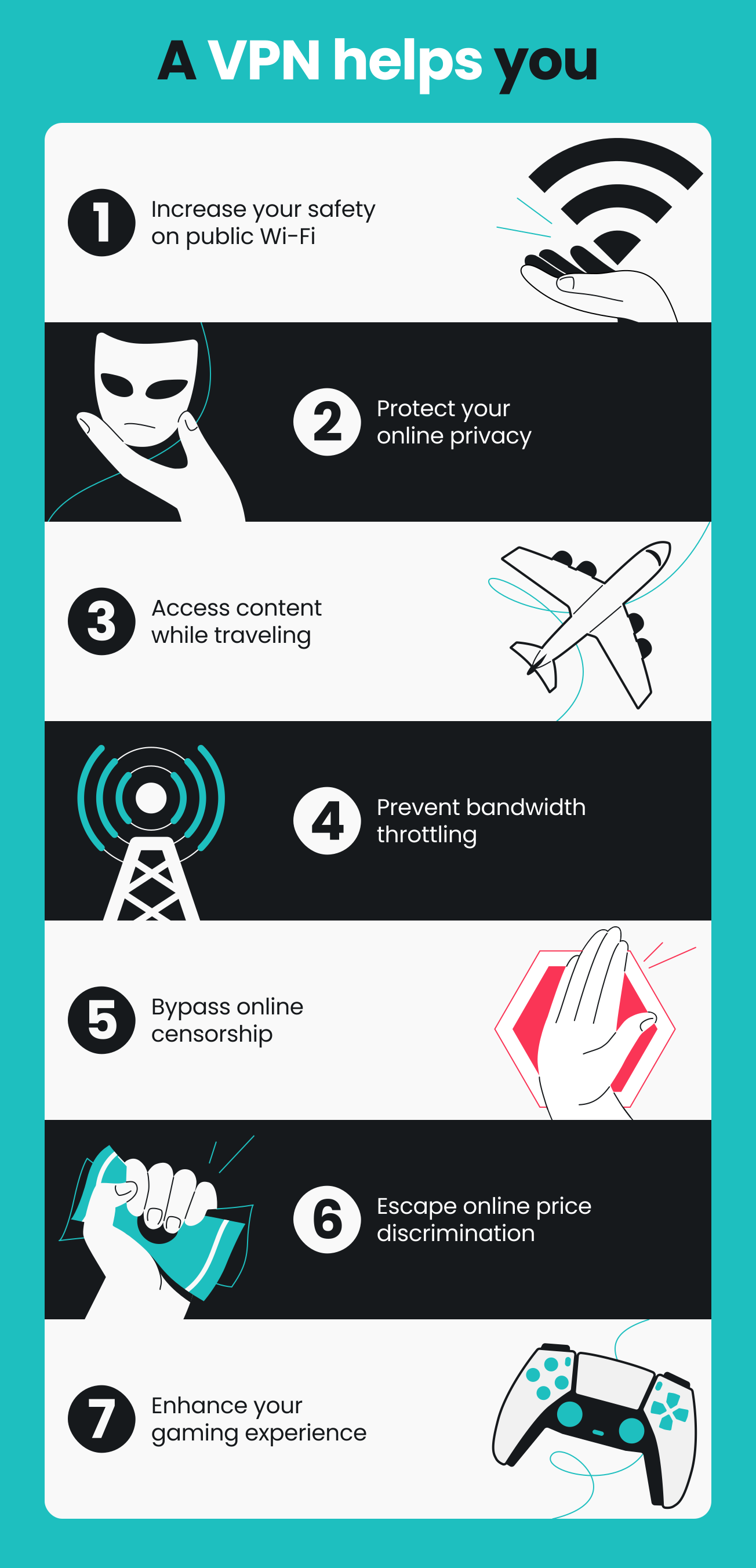
A VPN (Virtual Private Network) is worth it for most internet users because it helps you do the following:
Increase your safety on public Wi-Fi
Free public Wi-Fi hotspots are convenient, but they can be compromised in several ways. The network administrator might skim data as it passes through the hotspot. A hacker can set up a fake hotspot or clone a legitimate one to trick your device into automatically connecting to theirs.
A VPN client makes it much harder for any prying eyes to access your data. A VPN encrypts any internet traffic that’s routed through it, making your information unreadable to anyone who tries to monitor it.
Protect your online privacy
Your IP (Internet Protocol) address is like your home address on the internet, and it’s linked to all your online activity. Your ISP (Internet Service Provider) and other snoops might be able to see what websites and services you visit and build profiles of your behavior. They can even sell your info to data brokers, marketers, and other interested parties.
However, a VPN hides your real IP address, so it’s much harder to profile you based on your online activity. Better yet, you can set up a VPN on your router to assign the same IP address to every device on your home network. Rather than needing to install a VPN on each device separately, you can automatically enjoy network-wide protection.
Access content while traveling
One of the most frustrating things about traveling abroad is discovering that you can’t access your online accounts, banking apps, or streaming services.
A VPN solves this problem by masking your actual IP address. By making it appear as if you’re browsing from your home country, a VPN helps you seamlessly access the content and services you rely on daily. This capability transforms lengthy layovers and hotel downtime into opportunities to keep up with your favorite content.
For frequent flyers and digital nomads, this convenience alone makes getting a VPN worth it.
Prevent bandwidth throttling
Bandwidth throttling happens when an ISP slows your internet connection, especially if you’re streaming, gaming, or doing other high-intensity activities during peak hours. For an ISP, it’s a way to provide internet services to more users without investing in infrastructure expansion.
Using a VPN makes activity-based bandwidth throttling almost impossible. Your ISP can’t see what you’re doing thanks to online data encryption, and they’ll only see the IP address of the remote VPN server you’re connected to.
As a result, VPN users can experience unthrottled internet speeds, whether they’re downloading, gaming, or streaming video.
Bypass online censorship
A VPN helps you bypass censorship in countries with oppressive governments that pursue restrictive internet policies.
Some destinations block access to news outlets, messaging apps, social media platforms, and many other everyday services you may depend on for information and communication. The same applies to business travelers, as corporate networks, cloud services, and region-specific tools often become inaccessible when you’re connecting from a foreign IP address.
A VPN lets you get around internet restrictions so you can maintain your regular online routine, whether you’re checking email, video calling family, or staying informed about current events.
Escape online price discrimination
Many shoppers want the best deal online, but internet shopping can be tricky. Many internet stores practice dynamic pricing and change prices based on your geographic location or online behavior. This often means users in some regions and returning visitors can see inflated prices.
When you connect to a VPN, though, your server’s IP address replaces your own. You can check the prices a website shows you for different server locations and compare these with the price you see without a VPN to make sure you get the best deal.
This is particularly useful when booking hotels and flight tickets.
Enhance your gaming experience
Online gamers have more to fear than just cheaters and high ping.
DDoS (Distributed Denial of Service) attacks occur when malicious actors flood a game server with excessive traffic, causing lag and disconnections that make the game unplayable.
But to carry them out, attackers must have your IP address. When you’re connected to a VPN, a DDoS attack hits the VPN server, not your own. A reliable VPN is built to handle such attacks, and your personal internet connection won’t be affected.
What a VPN can’t do
A VPN is a valuable cybersecurity tool, but it doesn’t guarantee total safety online — no tool can. It’s worth noting that a VPN doesn’t provide:
- Malware protection: VPNs don’t scan for viruses or infected files. You need reliable antivirus software to detect or remove malware from your device;
- Complete anonymity: a VPN doesn’t make you entirely anonymous. For example, websites you visit can still track you through cookies and your device’s browser fingerprint;
- Scam protection: if you voluntarily share usernames or passwords on a fake website, a VPN won’t save your accounts from being compromised;
- Faster baseline speeds: while a VPN can help with bandwidth throttling from your ISP, it won’t automatically produce faster speeds. VPNs route encrypted traffic through a remote server, which often results in a slower internet connection. However, the best VPN providers usually make this drop unnoticeable.
How to choose a VPN provider
To find the right VPN provider for you, you should take several factors into account:
- Security features: look into what protocols the VPN uses to create an encrypted tunnel. Check if it’s been verified by independent security audits, and see if it offers advanced features like a kill switch, split tunneling, and obfuscated servers;
- Connection speeds: consider VPN services with servers near you, as they can offer faster speeds. Look for an infrastructure of 10 Gbps servers capable of handling high-speed connections. Independent tests show that Surfshark is the fastest VPN on the market.
- Server count: a large number of servers enables more flexibility and lowers the odds of experiencing congestion;
- Ease of use: find an app that’s easy to install and run. Make sure it’s supported on the devices you use most;
- Customer support: look for VPN companies that offer 24/7 live chat support so you can get help whenever you need it.
Free vs. paid VPN services: is it worth paying?
There are significant differences between what free vs. paid VPNs provide. Free services often don’t stack up well against more reliable VPN options:
- Free VPNs usually don’t have the funding to keep up with the constantly evolving demands of cybersecurity. Services with paid subscriptions have the benefit of a stable revenue stream;
- Free VPNs tend to have a harder time allocating resources to improve the usability of their apps;
- Free VPNs frequently don’t have as many servers in as many countries since maintaining a physical infrastructure can be expensive;
- Free VPNs will often lack additional features that paid VPNs offer, like a kill switch and split tunneling;
- A free VPN monetization model could tempt providers to sell user browsing data;
- Free VPNs may impose speed and bandwidth caps to entice you to buy a paid subscription.
For all your privacy and security needs, a paid VPN is likely a better choice than a free alternative.
Key takeaway: a VPN is worth it
Considering the daily challenges you may face online, owning a VPN is definitely worth it. From increased privacy to improved security, there are many benefits — and now that you know them, you should choose the best VPN for you.

FAQ
Is it really necessary to have a VPN?
Whether a VPN is actually necessary will depend on your specific situation. However, having one is definitely beneficial for your privacy and security online.
Who needs a VPN?
A VPN can benefit users like:
- Day-to-day internet users: you get added privacy on all your online activity and greater security on shared networks and public Wi-Fi;
- Gamers: a VPN can protect gamers against DDoS attacks and bandwidth throttling;
- Tourists traveling abroad: a VPN helps you access your favorite content from home and get around online price discrimination;
- Remote workers: employees can protect sensitive data and keep company resources secure.
Is it worth spending money on a VPN?
Yes, it’s worth spending money on a VPN. Free VPNs are less functional and trustworthy; some are downright scammy and dangerous.
Is a VPN good for gaming?
A VPN for gaming may protect you from DDoS attacks and, in some cases, decrease multiplayer lag. It’s also a tool that allows you to breeze through any local firewalls and connect to the game.
Is a VPN worth getting for home use?
A VPN can be very beneficial for security, privacy, and content access, even for home use. However, if you’re not concerned about ISP throttling, don’t care about your IP address being visible, and generally use encrypted connections, a VPN may not be a top-priority investment.