Credit card leak monitoring: catch leaks before your account gets drained
Credit card fraud is the single most reported type of identity theft. Check for card details in known leaks to find your data before a stranger does.
- Monitor your card details in known data leaks
- Get alerted fast if your information is exposed
- Lock down your card before fraud happens
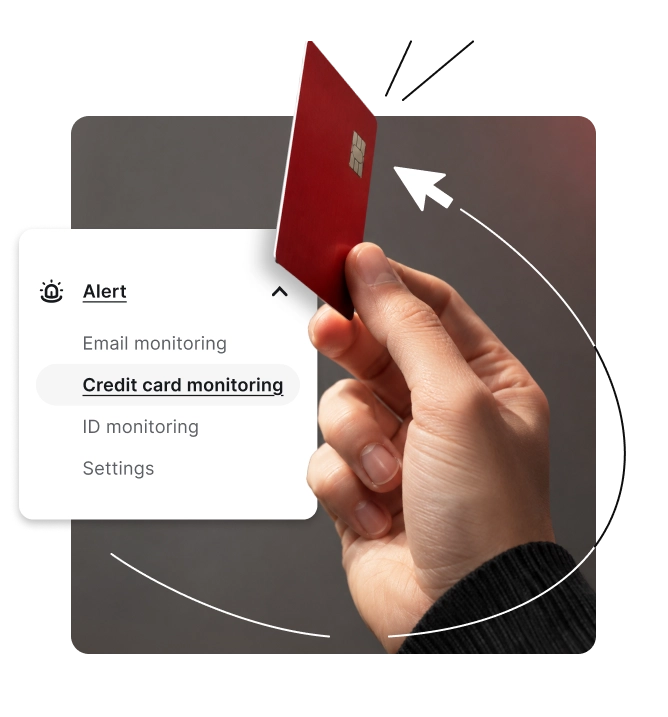
What to do if your credit card information is leaked
Credit card leaks happen through data breaches, phishing, or compromised websites, and the clock starts the moment your details are exposed. Fast action is what stands between a leak and an unauthorized charge:
- Contact your bank or card issuer and free the card if necessary;
- Review recent transactions and report anything unauthorized;
- Request a replacement card if your number has been compromised;
- Keep monitoring your accounts and card information for further exposure.
Here’s the problem: most people only find out about a leak after the damage is done, usually when a charge they don’t recognize shows up. Ongoing dark web monitoring that covers credit card details can catch the exposure before it turns into a drained account or a dispute that takes weeks to settle.
Monitor credit card leaks with Surfshark’s data leak monitoring
Surfshark’s data leak monitoring checks web databases for your credit card number and notifies you if it appears in data leaks, so you don’t have to search breach databases yourself. You can even monitor multiple cards at one time.
Continuous monitoring
Surfshark keeps checking for your card details in known leaks 24/7.
Timely alerts
Get notified when your information is detected.
Broader coverage
Surfshark also monitors email addresses, passwords, and IDs.
How does credit card leak monitoring work?
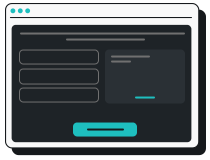
1. Add your credit card information
Enter a card number and select Check for leaks to run a one-time check — your card number won’t be stored unless you turn on monitoring.
2. Save it for ongoing monitoring
Want to keep watching this card long-term? Select Monitor and we’ll keep checking this card against new leaks.
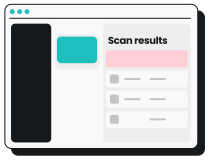
3. Get alerted if your information is exposed
If your credit card information is detected in a leak, you’ll receive an alert so you can take appropriate action.
Why choose Surfshark?
Monitoring your credit card for leaks is only a small part of staying safe online. Surfshark One offers a full suite of privacy and security tools, so you’re covered from more angles than just data leak alerts.
Secure connection
Browse with greater privacy using Surfshark VPN to encrypt your web traffic, mask your IP address, protect sensitive data on public Wi-Fi, and block ads and malicious domains.

Device protection
Protect your devices from malware, spyware, and other online threats with Surfshark Antivirus — real-time protection, scheduled scans, and more.
Scam detection
Stay one step ahead of scams with our scam text protection, email scam checker, and web content blocker working together to help you spot threats before you interact with them.
Identity protection
Shield your digital identity with personal data masking, monitor for data leaks, reduce your online exposure with Incogni, and get support for identity theft recovery.

Choose your level of protection
Detect leaks before they cost you
Get ongoing credit card leak monitoring
Frequently asked questions
Which credit card companies have been hacked?
Card issuers themselves are rarely hacked directly, since they use strong security measures. Most credit card data breaches happen at retailers, hotel groups, bars, and payment platforms that process or store card information, not at the card networks or banks.
How do you tell if your credit card is hacked?
There are usually warning signs, such as unfamiliar charges, declined transactions despite available credit, or a fraud alert from your bank. You can also find out through a breach notification from a company you’ve used, or through credit card leak monitoring tools like Surfshark’s data leak monitoring, which checks whether your details appear in known leaks.
Can someone scan your credit card in your wallet?
In theory, yes, since contactless cards use short-range wireless technology that a nearby scanner could read. In practice, this is uncommon because it requires specialized equipment and close proximity, and it typically only exposes limited information, not enough on its own to complete a purchase.
Is tapping your card safer than inserting?
Not really, since tapping and inserting a chip card both rely on the same chip-based encryption, so neither is inherently less secure in terms of data protection. Tapping can reduce your exposure to card skimming devices, which more commonly target the magnetic stripe or insertion slot.
What’s the difference between a credit card leak and credit card fraud?
A credit card leak means your card information has been exposed, for example, through a data breach or phishing attempt. In contrast, credit card fraud means someone has actually used that information to make unauthorized transactions. Detecting a leak early with a tool like Surfshark’s Data Leak Checker gives you a chance to act before it turns into fraud.