With Surfshark’s double VPN, you can:
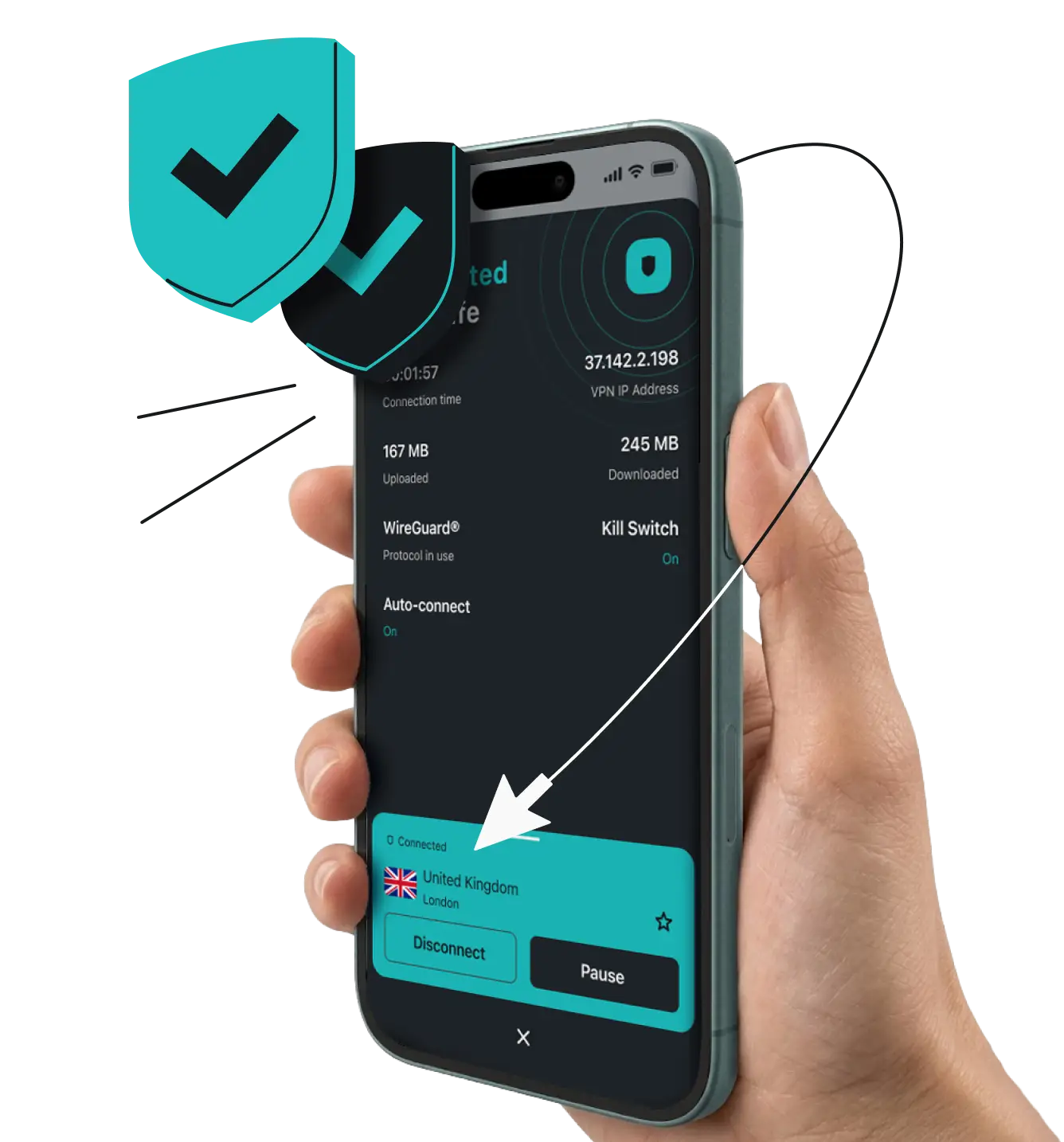
Double VPN for double the privacy and security
-
Connect via two VPN servers
-
Create your own server duos
-
Add an extra layer of security
What is a double VPN, and how does it work?
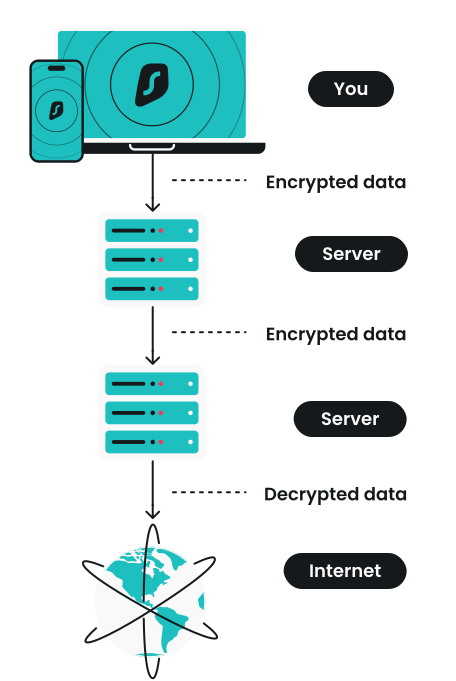
A double VPN is an advanced security feature that routes online traffic through two VPN servers, encrypting your data twice and providing a higher privacy level.
It works by initially encrypting data from your device and routing it via a remote VPN server. Then, the data is sent through a second VPN server and re-encrypted. This process shields your online activity behind two servers, doubling the security of your data.
Surfshark’s double VPN feature is called Multi Hop. You can either choose preselected VPN server pairs located in different countries or manually select server locations from Surfshark’s server fleet to make up your own pairs.
Is a double VPN safer than a regular VPN connection?
A double VPN is safer and more private than a regular VPN, thanks to the additional encryption layer.
The second server has no information about you because the first VPN server already changed your IP address and encrypted your data.
However, a double VPN isn’t always necessary, and there are times when you shouldn’t use it — but more on that later.

How do I use a double VPN?
Learn how to use Surfshark’s double VPN feature, Multi Hop, in three easy steps:

1. Get Surfshark
Sign up for Surfshark and download the app, or simply log in if you already have it.

2. Open the Multi Hop tab
Navigate to Multi Hop — under the Advanced tab in the iOS app, and home screen under the search bar everywhere else.

3. Connect
Choose a location set or create your own server pairs, and connect to them.
Double VPN benefits you’ll love
Pick entry and exit IPs
Multi Hop lets you select any server you want and create your own server pairs, fully adapting to your security needs.
Increase untraceability
The more servers between you and whoever wants to track you, the harder it is for them to reach you or for data leaks to occur.
Double your security
A double VPN lets you enjoy the internet more freely and securely, thanks to double traffic encryption.
See why millions trust Surfshark
Check out what users and tech experts around the world have to say about Surfshark.



The reviews highlighted in this section were selected from publicly available posts on social media platforms. They reflect the opinions of individual users at the time of posting and may not represent the full range of our product features and qualities.
The reviews quoted on this page have been published by media outlets associated with Surfshark through affiliate partnerships. Their recommendations are based on their own independent research and insights to ensure value for the readers.
I have been using Surfshark since I got it and I love it!

When I am traveling, I use Surfshark to access the internet quickly and securely, works like a treat in China.

We love Surfshark because it is an easy-to-use app that you can download on all your devices.

The reviews quoted on this page have been published by media outlets associated with Surfshark through affiliate partnerships. Their recommendations are based on their own independent research and insights to ensure value for the readers.
“This is my first year and I absolutely love it. The fact I can have a good antivirus, great VPN, and incognito for like $120 a year is great.”
“I’ve been using Surfshark for 4 years on Android and ChromeOS with zero issues, it’s an absolute bargain”
“I’ve had it for 3 years and just renewed it for the next 2 years. I never have any issues with it and get my full internet speed…”
The reviews highlighted in this section were selected from publicly available posts on social media platforms. They reflect the opinions of individual users at the time of posting and may not represent the full range of our product features and qualities.





When should you use a double VPN like Surfshark’s Multi Hop?
Use it if:
- You want to increase your online security and anonymity;
- You want to avoid online tracking and profiling;
- You’re a political activist who wants to access information securely and privately;
- You’re a journalist protecting your sources, and you’re sending sensitive information over the web.

Don’t use it if:
- You’re browsing casually — a single VPN server is enough;
- You’re streaming — routing your traffic via multiple servers may decrease your speed.

The difference between a multi-hop double VPN and a VPN over VPN
There are two major differences between using a VPN over VPN (sometimes called layered VPN) and using a multi-hop double VPN: the servers used and the complexity of the data journey.
|
|
Multi-hop double VPN
|
VPN over VPN
|
|
Servers used
|
Two servers from the same VPN provider
|
One server each from two different VPN providers
|
|
Data flow
|
Your device → 1st VPN server → 2nd VPN server → the website → back
|
Your device → 1st VPN provider’s server → 2nd VPN provider’s server → the website → back
|
|
Speed
|
More efficient routing within the same server infrastructure
|
A VPN tunnel within a tunnel significantly reduces the speed of data routing
|
|
Encryption layers
|
Multilayered encryption (via two servers)
|
Multilayered encryption (via two servers)
|
|
Potential issues
|
Generally reliable
|
May lead to VPNs malfunctioning or not working at all
|
Can I use two separate VPNs instead of a multi-hop VPN?
You can, but we don’t recommend using two separate VPNs.
Using two separate VPNs (VPN over a VPN) creates a VPN tunnel within another VPN tunnel.
They may conflict with each other, significantly slow down your internet speed, cause data leaks, or even crash both VPNs.
Separate VPNs aren’t built to run alongside each other. Running a second VPN can cause a routing error and trigger the kill switch.
Such errors arise when two VPNs create conflicting routing entries on the user’s device, misdirecting internet traffic from the intended gateway. A VPN may then pick that up and interpret it as a connection drop, triggering the kill switch and shutting down your internet connection altogether.
We recommend using a multi-hop double VPN, which is designed to ensure double data encryption is as smooth as possible.


Frequently asked questions
Is VPN chaining with Multi Hop safe?
Yes, it is safe. Our industry-leading encryption secures your traffic even without Multi Hop (double VPN). This feature only enhances your online security and privacy.
Is a double VPN overkill?
A double VPN can be overkill because of the double encryption — a single layer of AES-256 or ChaCha20 encryption provides enough security for most users. However, a double VPN isn’t overkill for those who need a higher level of security and are okay with a drop in internet speed.
Is a double VPN better than regular VPN servers?
A double VPN connection usually increases privacy and security by doubling the encryption. However, in most cases, it reduces your overall speed. A double VPN is a better choice than a regular VPN when you need the highest level of privacy and want to send sensitive information. Regular VPN servers are better for casual browsing, streaming, etc.
What are the different types of double VPN configurations?
There are four primary ways to configure a double-layered VPN connection:
- Provider-side multi-hop (single app): you select a double VPN option within a single app, and the provider routes your traffic through two of their own servers;
- Nested VPN (router + app): a DIY setup where you install one VPN on your router and a second VPN app on your device, allowing you to use two different VPN providers for “trustless security”;
- Cascading VPN (app + browser extension): you run a system-wide VPN for your whole computer, then use a VPN browser extension for your web traffic, providing a double hop for browsing while keeping other apps on a single hop;
- Onion over VPN: you connect to a VPN first, then access the internet through the Tor browser. This layers the anonymity of the Tor network (three hops) on top of your VPN tunnel.
What is the difference between obfuscated and double VPN?
An obfuscated VPN makes it much harder for anyone to tell that you’re using a VPN in the first place. A double VPN sends your traffic via two VPN servers, adding a double layer of encryption, but it doesn’t hide VPN use.
Is it safer to use an onion over a VPN or a double VPN?
Onion over a VPN and a double VPN are both generally safe. Onion over a VPN routes traffic through at least three nodes, providing more layers of encryption than a double VPN.
However, Onion over a VPN is designed to access the Onion network; the process is more complex and significantly slows connection speeds, while a double VPN is meant for regular internet use with an extra layer of protection.
What is the difference between double VPN and VPN chaining?
VPN chaining is a general concept of using multiple VPN servers to route traffic. It can describe a double VPN when two servers from the same VPN provider are used. However, VPN chaining can also mean VPN over VPN or using three (or even more) VPNs from different providers.