digital democracydigital privacy
Pregnancy and baby trackers collect more than milestones
For millions of families, pregnancy and baby tracker apps have become part of daily life — logging kicks during pregnancy, tracking feeding schedules at 3 a.m., saving milestone photos, and helping exhausted new parents feel a little more in control.
But how private are these apps really? This Chart of the Week explores what kinds of data pregnancy and baby tracker apps collect, and how intimate family data is quietly used to feed a much larger data economy.
Key insights
- The apps used to track your pregnancy and monitor your baby are doing more than just assisting with parenting — they are sharing your data. Our research found that 80% of the most popular apps in this category share user information with third parties. In some cases, this includes highly sensitive data such as uploaded photos or videos, health information like medical records and symptoms, and even a list of other apps installed on your device. This data is then often used to fuel targeted advertising aimed at parents and, increasingly, to train the AI models built into some of the apps themselves¹.
- AI-related functionality adds another layer of concern. In fact, 3 out of 10 analyzed apps have already embedded AI tools directly into the parenting experience. Glow Nurture markets itself as leveraging advanced AI to provide advice and predictions, claiming that the more data you enter, the smarter it becomes. However, its privacy policy is silent on how these models are trained or whether user data is used in the training process. Kinedu and Huckleberry both feature in-app AI assistants that can process deeply personal prompts and interactions, with no disclosure of how their models are trained either. The result is that intimate parenting moments may be used as AI training data without parents ever being clearly informed.
- On average, the pregnancy and baby-tracking apps we analyzed collect 11 out of the 38 possible data types listed on the Google Play Store. BabyCenter stands out as the most data-hungry, collecting 16 different data types and sharing every single one with third parties. This level of data collection enables detailed profiling: BabyCenter gathers app interactions, in-app search history, health information, and user-generated content, alongside personal details such as names, email addresses, locations, and nine other data types. Combined with data from other apps and services, this is enough to construct a detailed picture of a family's daily routines, health concerns, and purchasing decisions — often before the baby is even born.
- Some of the data being collected is far more intimate than parents might expect. Among the apps we analyzed, eight collect photos, five collect user-generated content, four collect location, and three collect health and medical information. Glow Nurture is an outlier as the only app that collects race and ethnicity, while The Wonder Weeks stands out for collecting purchase history and a list of installed apps. Meanwhile, device or other IDs and email addresses are collected by almost every app in the sample, leaving the door open for this information to be cross-referenced with data from other apps and services.
- Looking at why these apps collect data reveals how commercialized the parenting experience has become. All ten analyzed apps collect data on user activity or app performance. Nine also collect data to personalize the experience through recommended content or suggestions, with The Wonder Weeks as the only exception. Eight go further still, using data to display ads, push promotional notifications, or share information with advertising partners, with only The Bump and Huckleberry not reporting these advertising-related uses. In other words, for most of these apps, parenting has also become a monetization opportunity.
Methodology and sources
We analyzed 10 prominent pregnancy and baby-tracking apps curated from three 2025–2026 ‘’Best of’’ lists published by Forbes Health², Photo Baby³, and Good Housekeeping⁴. Together, these lists reflect the apps most likely to be discovered and downloaded by new and expecting parents in English-speaking markets.
For each app, we measured data collection and sharing practices as declared in the Google Play Store Data Safety section⁵ in May 2026, with particular attention to sensitive categories such as photos, health records, and lists of installed apps. For the apps that advertise AI functionality in their descriptions, specifically Glow Nurture, Kinedu, and Huckleberry, we additionally examined which AI tools are available inside the app and whether their official privacy policies define how AI models are trained and how user data is retained.
For the complete research material behind this study, click here.Data was collected from:
Google. Play Store.References:
¹Pybus, J., Matheson, K.N., & Lachmansingh, A. (2026). Extraction-by-design: Auditing infrastructures of datafication in baby-tracking apps. Internet Policy Review, 15(1). ²Forbes. Best Pregnancy Apps Of 2026.³Photo Baby. Top 10 Baby Apps Every Parent Needs.⁴Good Housekeeping. 14 Best Baby Apps for New Parents to Download.⁵Google. Understand app privacy & security practices with Google Play's Data safety section.Related articles:
 Sep 28, 2026
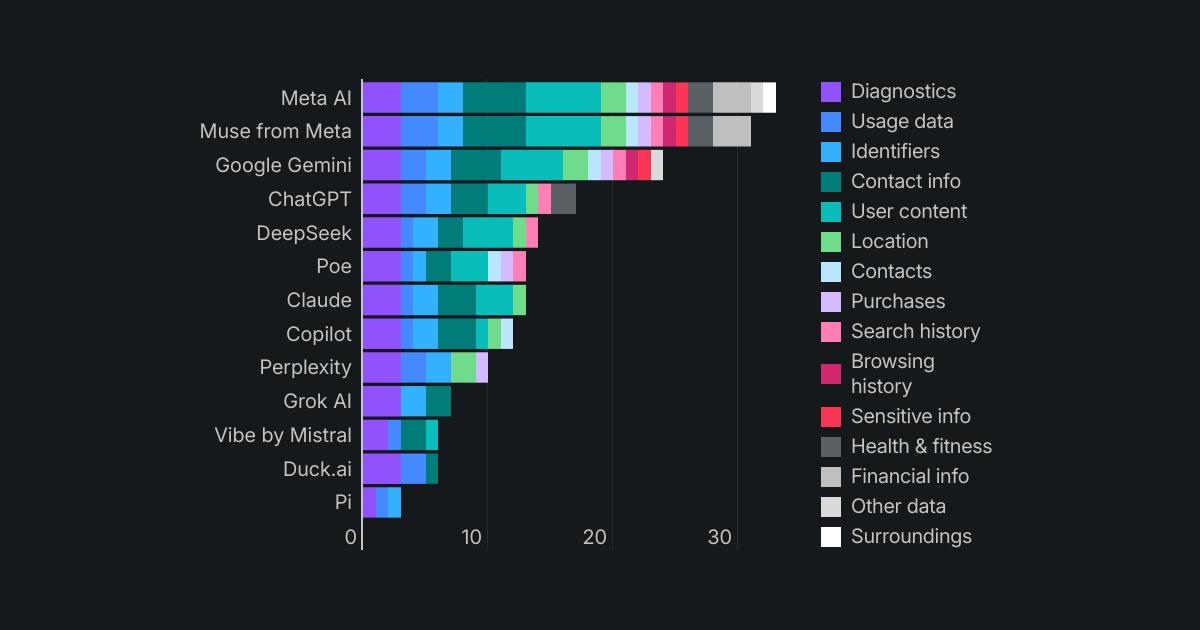
Meta Muse surpasses its competitors in data collection
A Surfshark review of data collection practices across 12 top AI chatbots and the newly launched Meta Muse agent reveals that both Meta’s products are the most data-hungry.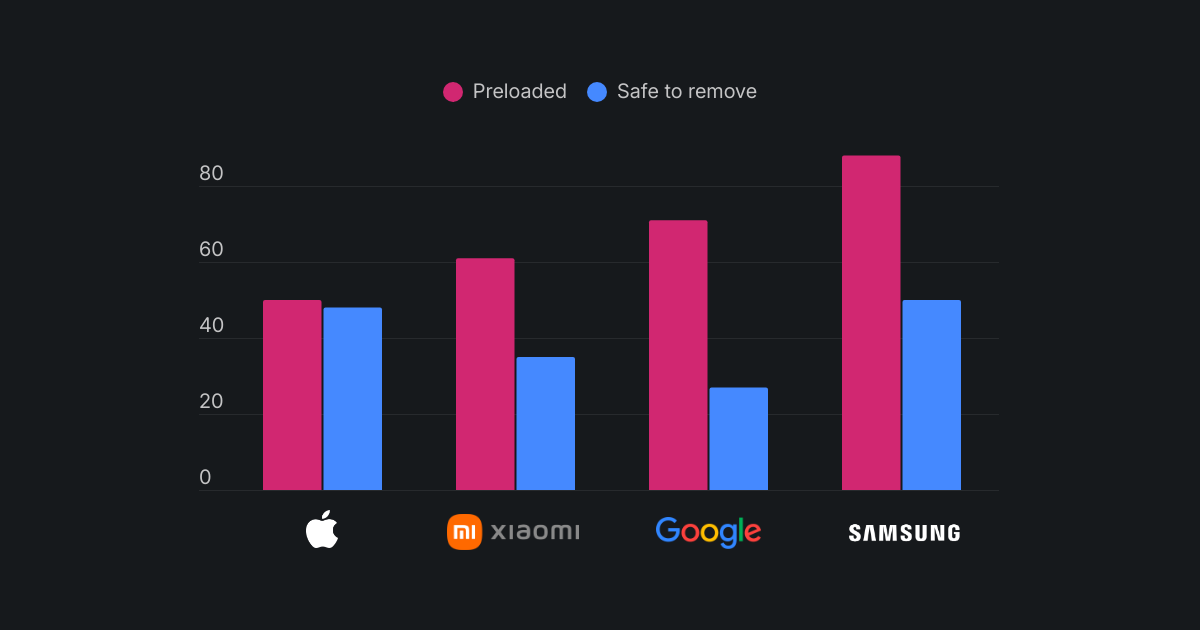 Sep 8, 2026
Pre-installed apps: privacy risks on Apple, Samsung, Xiaomi, Google
Smartphones come with a high number of pre-installed apps: 50 apps on iPhone, 88 on Samsung, 71 on Google, and 61 on Xiaomi. Our research reveals how these pre-installed apps may compromise privacy and harvest your data.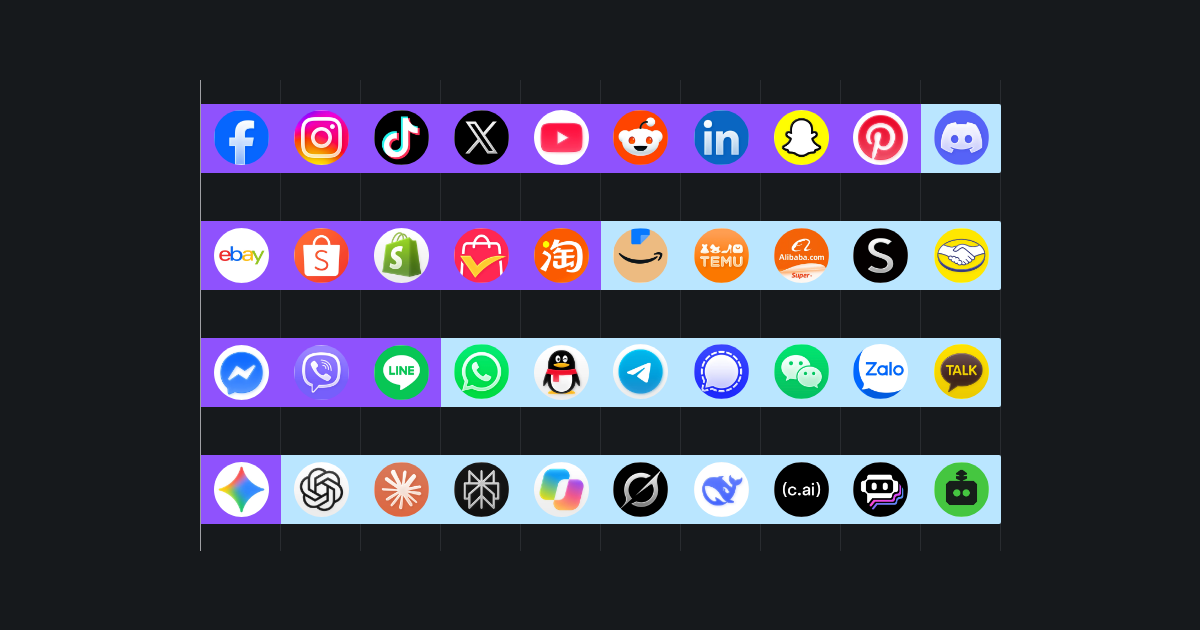 Sep 1, 2026
Which popular apps secretly monitor your browsing history?
Surfshark’s analysis of 40 leading apps found that half monitor web browser activity. Browsing history collection is most common among social media apps.