digital democracydigital privacy
Back from Asia? Time to delete those data-hungry apps
If you’re traveling to Asia, you’ll likely need to download a few local apps since the ones you usually rely on might not work there. It’s a smart move, but there’s a catch: many of these apps can keep collecting your data even after your trip is over. To stay on the safe side, it’s a good idea to delete any apps you only needed for that trip as soon as you’re back home.
Key insights
- Travelers following recommendations by TravelReddi¹ will find themselves downloading an average of 21 apps to ensure full coverage and be prepared for a trip within a single Asian country. Japan tops the list with 26 essential travel apps, followed closely by South Korea with 24, while China and Thailand each list 22. At the other end of the spectrum, the Philippines requires the fewest, with 18 apps needed to be fully prepared for a trip. Since many of these apps may be single-use and privacy-invasive, it is best practice to review and delete those no longer needed upon returning home.
- An analysis of 65 essential travel apps for Asia across categories such as Food, Ride, Maps & Transit, Messaging, Money, and Translate found that 97% (63) may collect user data and 72% (47) may use it for tracking. As defined by Apple, “tracking” refers to linking data collected by the app about a particular end user or device — such as a user ID, device ID, or profile — with third-party data. This data is typically used for targeted advertising, advertising measurement, or sharing data collected from the app about a particular end user or device with data brokers.²
- Over half (52%) of essential travel apps collect above the average of 14.6 data types. This indicates that these apps may harvest from 15 to 35 data types listed in the Apple App Store, often exploiting this information for purposes beyond app functionality. While the analyzed apps require an average of 13 data types for functionality, user data is also frequently diverted to supplementary purposes, with averages of 8 for analytics, 5 for product personalization, 4 for self-promotion, and 2 for third-party advertising.
- When looking at the recommended apps by country, Thailand and the Philippines top the list, with apps collecting an average of 17 data types. Following closely are Indonesia, Malaysia, and Vietnam, with apps gathering an average of 16 data types. China, India, and Japan follow with 15; Turkey and South Korea with 14. Notably, Turkey is the only country with essential travel apps — specifically Metro Istanbul and TCDD — that collect no user data.
- Exploring data collection practices by app category shows that data collection volume varies substantially between the highest and lowest collectors. This indicates that companies offering similar services maintain different data-collection practices and varying degrees of user privacy invasiveness. The most notable difference is in the Ride category, where the top app may collect seven times as many data types as the bottom app. Within the Ride category, Grab collects 27 out of 35 data types, whereas Rapido collects only 4.
- A similar pattern persists also across other categories; for instance, a five-fold difference exists in Translate, where Baidu Translate collects the most data types (18) and the Pleco Chinese Dictionary collects the fewest (4). This is followed by a four-fold difference in Food between Yemeksepeti (21) and Find Me Gluten Free (6), and a two-fold disparity in both Messaging, with Messenger (32) versus KakaoTalk (14), and Money, with Wise (18) versus Revolut (10). The Maps & Transit category is an exception and was excluded from the top-to-bottom and comparison, since some apps don’t collect any data at all.
Methodology and sources
This study analyzed 65 essential travel apps recommended by TravelReddi¹ that ensure a smooth trip in Asian countries: Japan, South Korea, Thailand, China, Vietnam, Turkey, Malaysia, Indonesia, India, and the Philippines. All apps were classified into six categories: Food, Ride, Maps & Transit, Messaging, Money, and Translate. Six apps listed on TravelReddi were excluded from the analysis because they did not fit into any defined category and were too few to justify a separate one.
An analysis of data collection practices was conducted for every app on the list. Data was sourced from the Apple App Store on April 23, 2026. The evaluation focused on the total volume of data types collected, the stated purposes for processing, and the presence of user tracking practices.
For the complete research material behind this study, click here.Data was collected from:
Apple (2026). App Store.References:
¹ TravelReddi (2026). Essential apps by country;² Apple (2026). User privacy and data use.Related articles:
 Oct 20, 2026
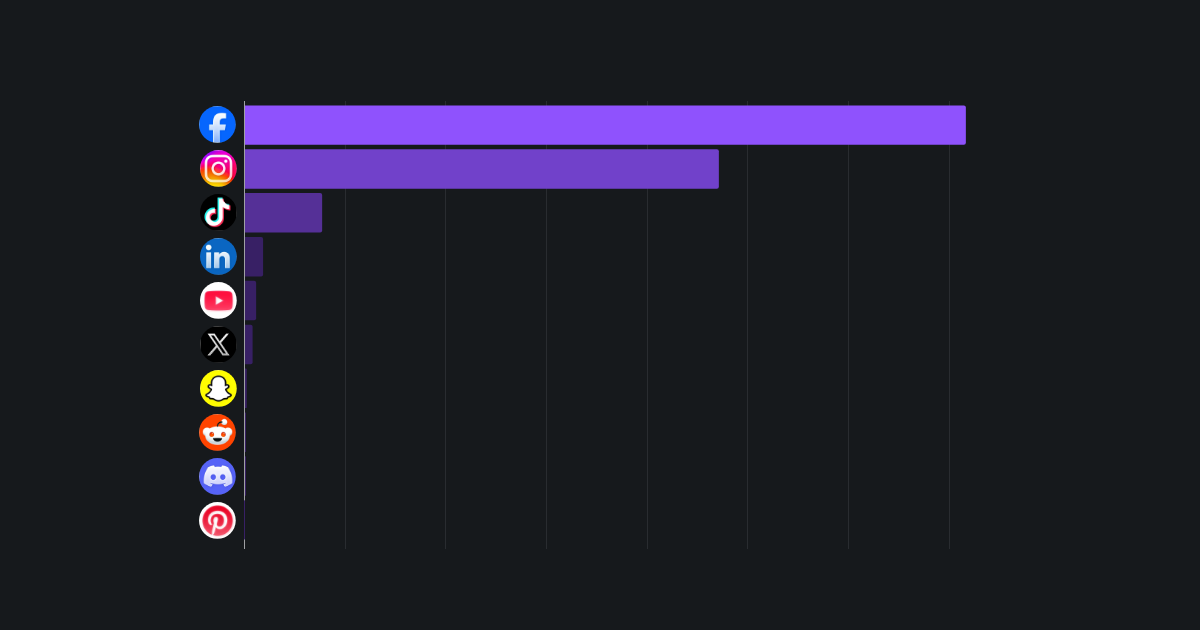
Social media giants paid $26B for privacy violations
Since 2020, popular social media platforms have faced more than $26 billion in privacy-related fines and settlements. Meta-owned platforms accounted for 91% ($23.7B) of the total.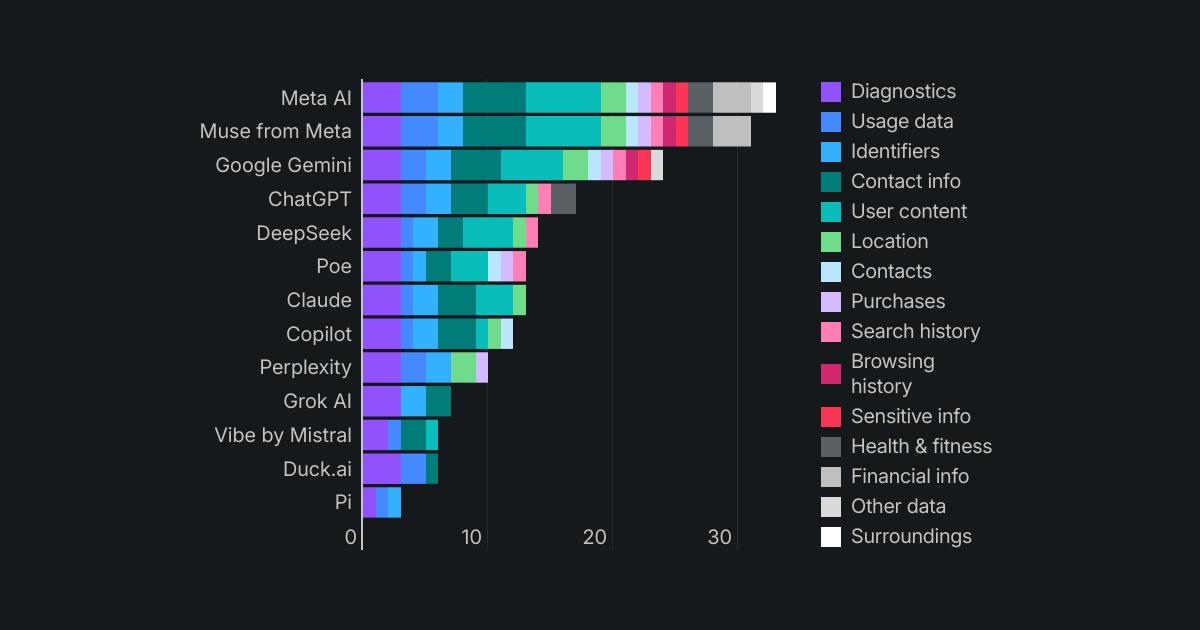 Sep 28, 2026
Meta Muse surpasses its competitors in data collection
A Surfshark review of data collection practices across 12 top AI chatbots and the newly launched Meta Muse agent reveals that both Meta’s products are the most data-hungry.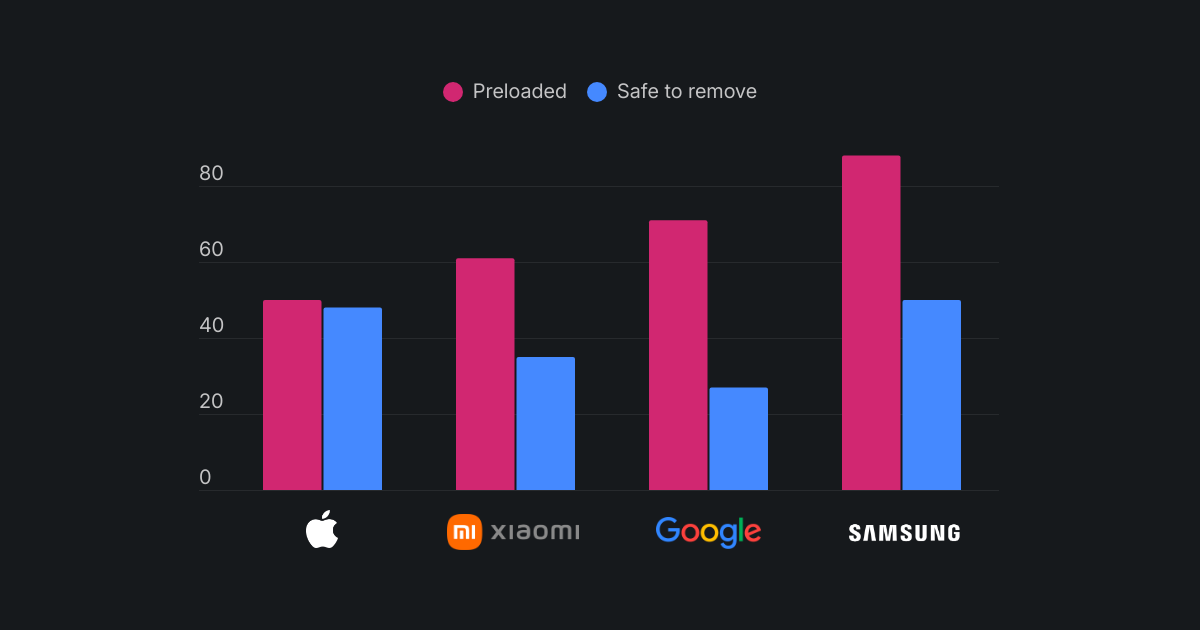 Sep 8, 2026
Pre-installed apps: privacy risks on Apple, Samsung, Xiaomi, Google
Smartphones come with a high number of pre-installed apps: 50 apps on iPhone, 88 on Samsung, 71 on Google, and 61 on Xiaomi. Our research reveals how these pre-installed apps may compromise privacy and harvest your data.