digital democracydigital privacy
Amazon needs up to 7x more taps for privacy than rivals
Downloading a shopping app takes just a few taps, but that convenience has a price. Users often become the product, handing companies large amounts of personal data. Some of it is needed for the app to work, but much of it is also used for targeted advertising or even AI training. For shoppers who want to take back control, how much effort do the most popular online marketplaces demand to limit privacy risks?
Surfshark analyzed the five most popular shopping apps to find out how many screen taps it takes to limit their data collection.
Key insights
- Limiting data collection and permissions for the Amazon Shopping app on an iPhone can take up to 128 screen taps, about four to seven times as many as the other apps tested. The exact tap count depends on which features and permissions a shopper has previously activated. More than a fifth of those taps (28) are spent changing default settings tied to Alexa, the built-in AI assistant. Others include ad preferences or access to contacts, the microphone, location, and more. That total covers both the app and the smartphone itself, since changing settings inside the Amazon Shopping app is not enough, and several permissions must also be adjusted in the iPhone’s Settings app, for example, camera access.
- Protecting privacy for Etsy on an iPhone takes up to 34 taps across both the app and smartphone settings. That spans blocking cookies used to personalize content, opting out of the “sale” or “sharing” of personal information, clearing recently viewed listings, and more. Unlike the other online marketplaces tested, Etsy sets user profiles to public by default, and clearing this information accounts for nearly half of that total (16 taps). Users also face limited control over their profile picture, which can only be replaced once uploaded, never removed.
- Limiting data collection and permissions for the AliExpress Shopping app can require users to tap 28 times. A useful control option that stops recording browsing history was found in this app as well as in the Amazon Shopping app, while other apps would require users to visit and delete records periodically.
- Managing privacy for the eBay marketplace app means navigating up to 22 taps. However, this may be related to the limited options available in the app. For example, AI Training Preferences can be controlled only by signing in to the account through the web, even though this setting is enabled by default.
- Adjusting privacy settings across both the Temu app and a shopper’s phone takes at least 19 taps. Even though advertising cookies can be managed with a single toggle (or customized in 27 taps), personalized recommendation settings are hidden behind a faint gray “here” link. At the same time, users are flooded in the app with privacy reassurances, including “All data is safeguarded,” “Your information and privacy will be kept secure and uncompromised,” “Your account is protected,” “We DO NOT access the following device features,” and “Your Temu account is protected by advanced security.” This pattern suggests an effort to mitigate public concern and negative online sentiment surrounding data privacy.¹
- Out of the five marketplaces analyzed, only Etsy and AliExpress request permission to track users across apps and websites owned by other companies. According to the Apple App Store, the Etsy app may collect seven data types for tracking, including purchase history, email address, user ID, device ID, product interaction, advertising data, and other usage data, whereas the AliExpress Shopping app lists one: device ID.² Granting tracking permission also means data can be shared with data brokers.
Methodology and sources
This study evaluated the iOS apps of five major online marketplaces: Amazon, Temu, eBay, Etsy, and AliExpress. Based on Similarweb traffic data from October 2026, these platforms ranked most frequently among the top visited marketplaces across the world’s 10 largest democratic economies by GDP.³
Testing was conducted in November 2026 on an iPhone running iOS 27.2.1 with an EU region setting. After downloading each app and creating a user account, assuming a shopper accepts every default prompt presented during setup, we mapped the available privacy controls both inside the app and in the iPhone’s Settings app. Screen tap counts cover the path from opening the app and navigating to each specific setting, excluding extra navigation steps such as going back.
For the complete research material behind this study, click here.References:
¹ Reuters (2026). Chinese online retailer Temu agrees to data privacy curbs to settle Texas lawsuit;² Apple (2026). App Store;³ Worldbank (2025). GDP ranking.Related articles:
 Oct 20, 2026
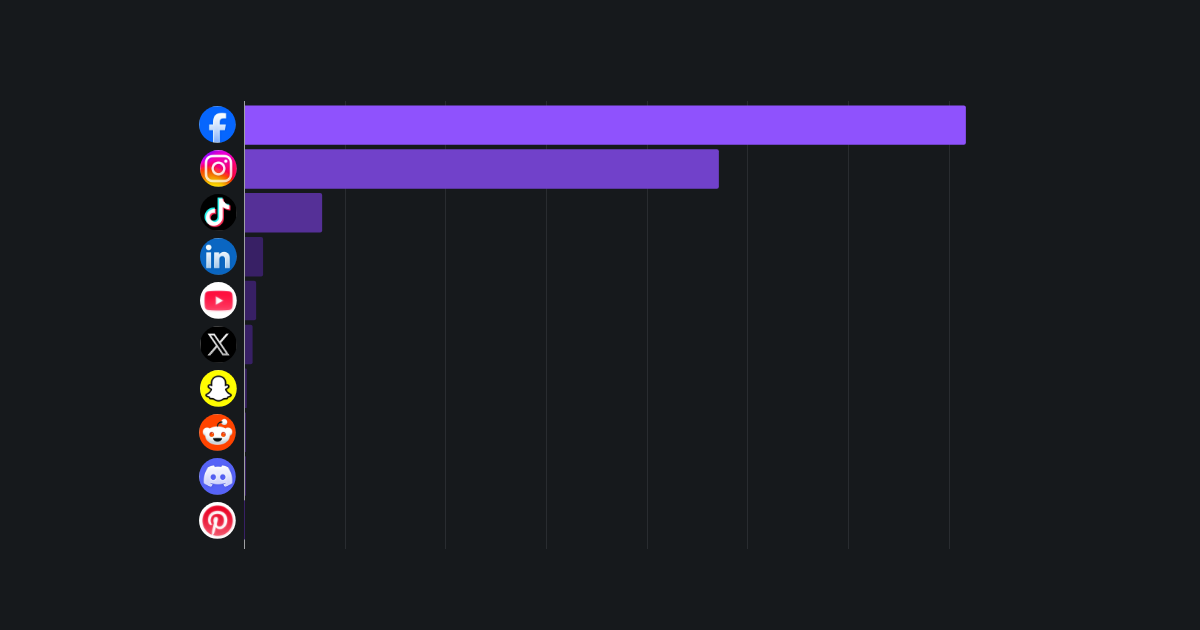
Social media giants paid $26B for privacy violations
Since 2020, popular social media platforms have faced more than $26 billion in privacy-related fines and settlements. Meta-owned platforms accounted for 91% ($23.7B) of the total.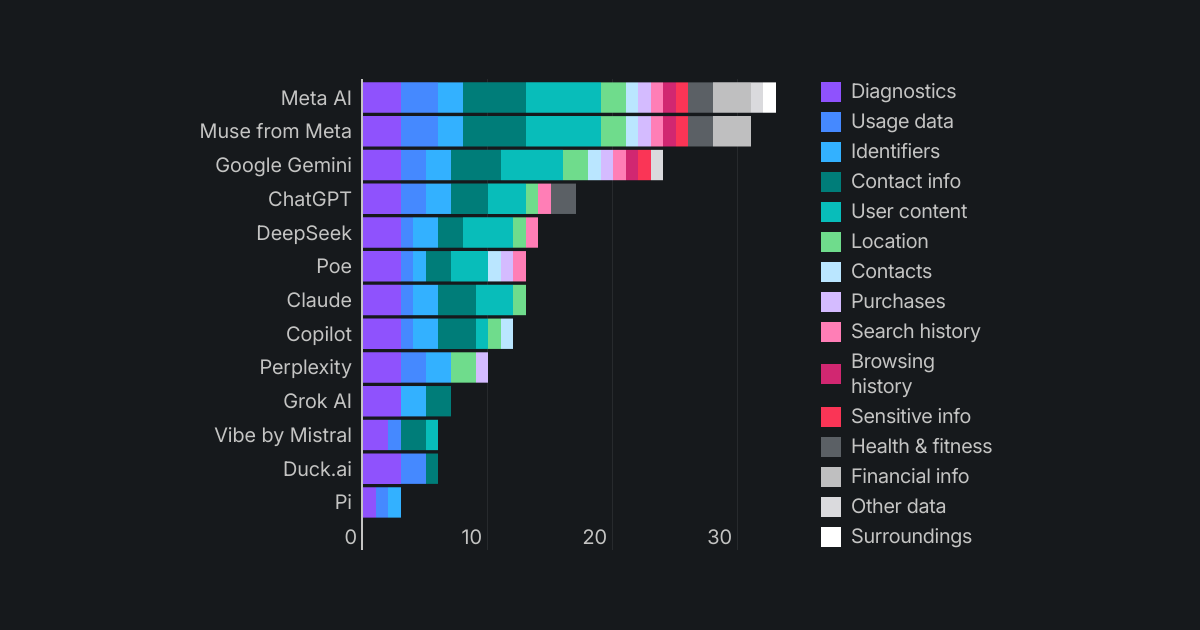 Sep 28, 2026
Meta Muse surpasses its competitors in data collection
A Surfshark review of data collection practices across 12 top AI chatbots and the newly launched Meta Muse agent reveals that both Meta’s products are the most data-hungry.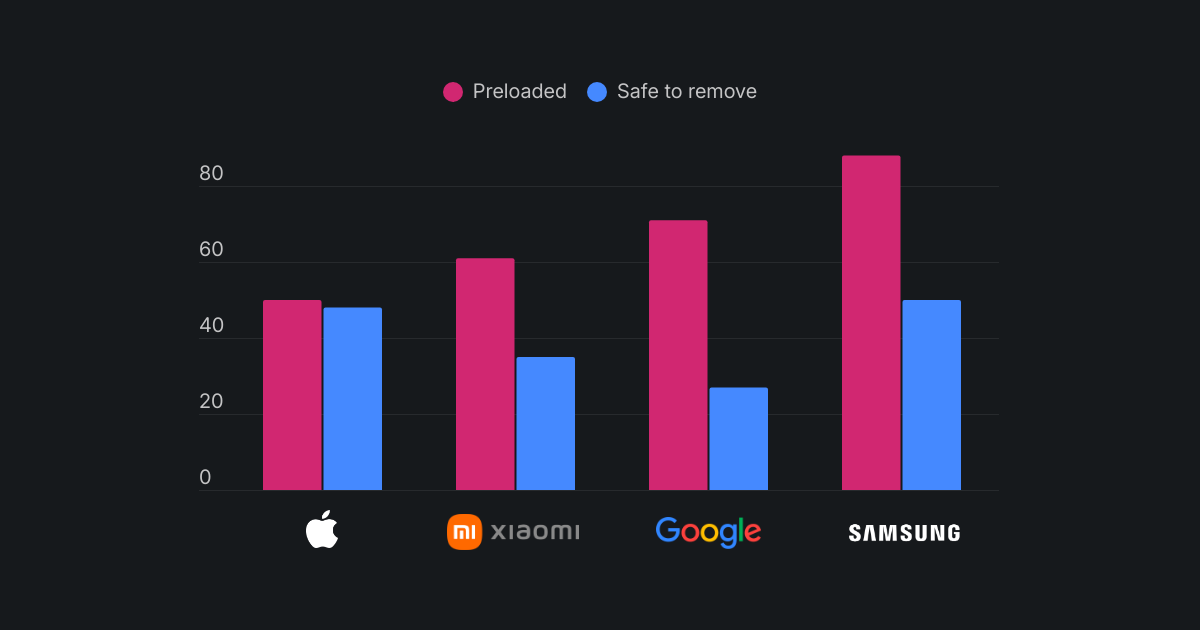 Sep 8, 2026
Pre-installed apps: privacy risks on Apple, Samsung, Xiaomi, Google
Smartphones come with a high number of pre-installed apps: 50 apps on iPhone, 88 on Samsung, 71 on Google, and 61 on Xiaomi. Our research reveals how these pre-installed apps may compromise privacy and harvest your data.