digital democracydigital privacy
Meta Muse surpasses its competitors in data collection
Meta recently introduced its newest AI tool, Meta Muse, which overtook ChatGPT to claim the top spot among free iOS apps in the US during its first week. However, the extensive data collection practices of these AI applications remain a major concern for online privacy. To evaluate how Meta's new AI agent compares with other widely used AI chatbots in terms of data collection, we examined their data practices of 12 top AI chatbots alongside Meta Muse.
Key insights
- AI chatbot apps collect an average of 13 out of 35 data types listed in the Apple App Store, but collection practices vary widely. Meta AI collects the most user data among the analyzed apps, gathering 33 data types — nearly 95% of the total. By contrast, Pi collects the fewest at three data types (user ID, product interaction, and crash data), representing an 11-fold difference.
- However, regarding data collected without being linked to a user’s identity (such as via account or device details), Duck.ai stands out. It is the only chatbot that gathers six data types — primarily from diagnostics and usage categories — none of which are tied to users. Meanwhile, Microsoft Copilot is the only app that discloses collecting data for user tracking. As defined by Apple, “tracking” refers to linking data collected by the app about a particular user or device with third-party data, typically used for targeted advertising or data broker sharing.¹
- Beyond AI chatbots, AI agents are surging in popularity — Muse from Meta, for example, recently topped the download charts.² These agents are potentially more invasive by design: to execute actions on a user’s behalf, they require access to other apps and services, such as calendars, email accounts, or financial tools. This pattern is also reflected in Muse’s privacy practices, which place it second overall among AI chatbots, collecting 31 out of 35 listed data types. Additionally, Meta uses Muse interactions for AI training by default, though users can manually opt out in the app’s settings.³
- Google Gemini now collects 24 data types — an increase of one data type, audio, compared to the previous review. Gemini’s data collection spans across multiple categories, including contact details, user content, search and browsing histories, etc. This also includes precise location data, which only Gemini, Meta AI, Muse, and Perplexity collect (whereas Microsoft Copilot switched to coarse location data). Alongside Meta AI and Muse, it also collects sensitive information, which includes racial or ethnic data, sexual orientation, pregnancy or childbirth information, disability, religious or philosophical beliefs, trade union membership, political opinion, genetic information, or biometric data.¹
- ChatGPT may collect 17 out of 35 data types, as reported by its developers. First disclosed in a March 2026 analysis⁴, this represents a 70% increase from the 10 data types recorded in last year's AI chatbots review, indicating a notable broadening in the extent of user data collection. The additional data types collected include coarse location, health and fitness, search history, audio data, advertising data, and customer support.
- DeepSeek currently collects 14 types of data — also an increase of one data type, audio, compared to the previous review. However, DeepSeek, like ChatGPT, states that audio data is collected exclusively for functionality purposes. This supports activities such as authenticating users, enabling features, preventing fraud, implementing security measures, maintaining server uptime, reducing app crashes, improving scalability and performance, and delivering customer support.¹ In contrast, Google Gemini, Meta AI, and Muse reserve the right to use audio data for other purposes, such as product personalization or analytics.
Methodology and sources
This study compares the 12 best AI chatbots identified by Zapier⁵, alongside Muse from Meta, which was added following its recent surge to the top of app store charts ahead of several major AI chatbots.² Privacy practice details for each app were sourced from the Apple App Store on September 22, 2026, which outlines 35 unique data types categorized into 16 categories. The analysis focused on the total volume of data types collected, the stated purposes for processing, and the presence of user tracking practices.
For the complete research material behind this study, click here.Data was collected from:
Apple (2025). App Store.References:
¹ Apple (2026). App privacy details on the App Store;² CNBC (2026). Meta’s Muse AI agent downloads are surging. Here’s how it compares to ChatGPT, Grok and Claude;³ Meta (2026). Muse Privacy Policy;⁴ Surfshark (2026). Meta AI, Google Gemini, and ChatGPT are top data collectors;⁵ Zapier (2026). The best AI chatbots in 2026.Related articles:
 Sep 8, 2026
Pre-installed apps: privacy risks on Apple, Samsung, Xiaomi, Google
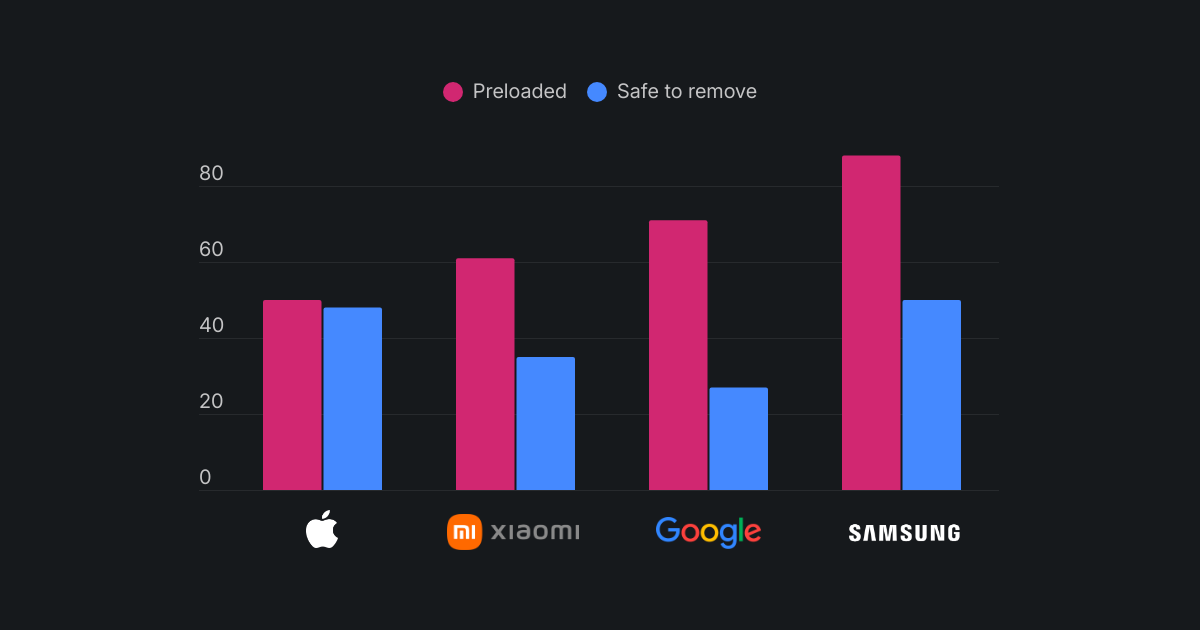
Smartphones come with a high number of pre-installed apps: 50 apps on iPhone, 88 on Samsung, 71 on Google, and 61 on Xiaomi. Our research reveals how these pre-installed apps may compromise privacy and harvest your data.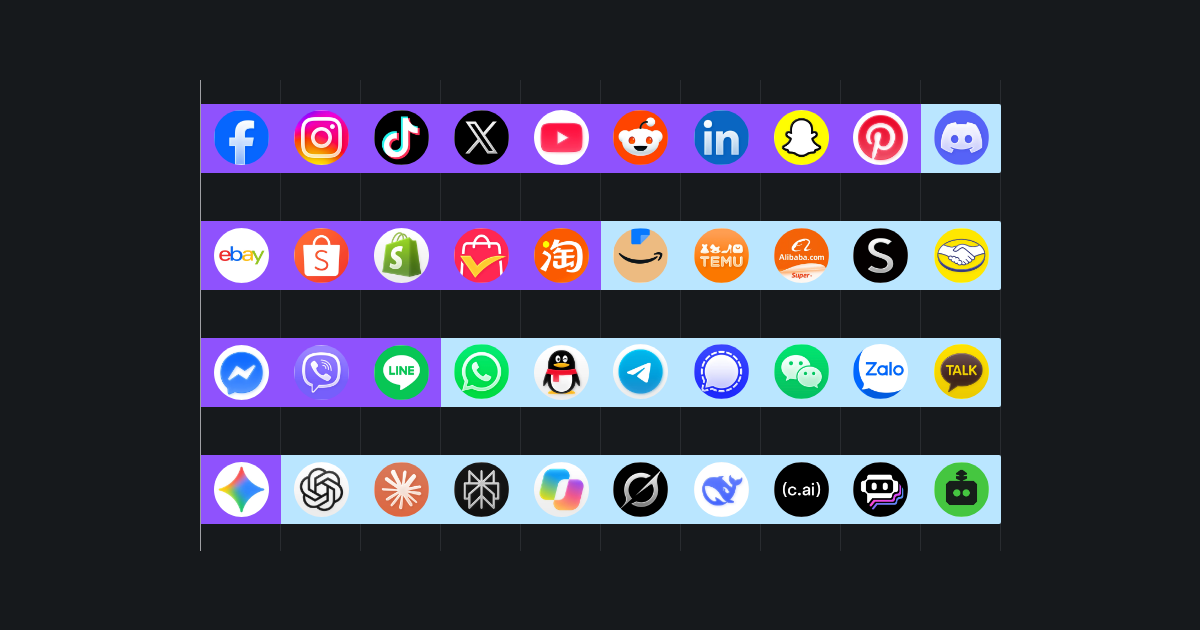 Sep 1, 2026
Which popular apps secretly monitor your browsing history?
Surfshark’s analysis of 40 leading apps found that half monitor web browser activity. Browsing history collection is most common among social media apps.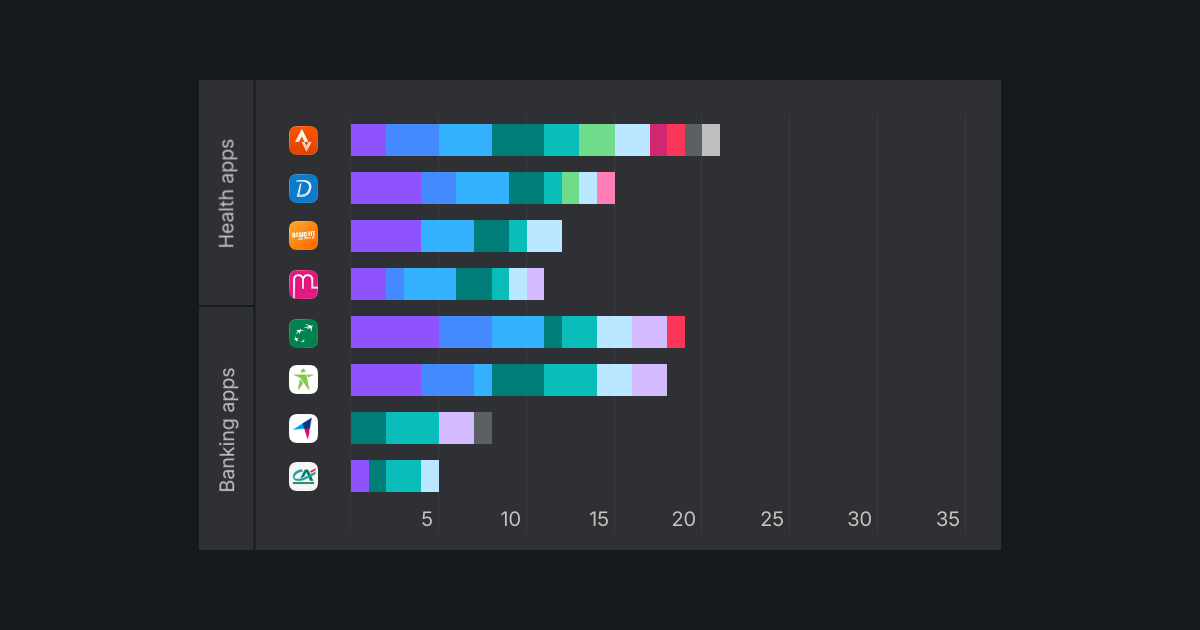 Jun 9, 2026
How France’s most popular banking and health apps harvest your personal data
Surfshark’s study of top French banking and health apps shows they collect an average of 13 and 15 data types. Most track precise location, all health apps access photos, and some banking apps even collect private emails and texts.