digital democracydigital privacy
AI security cameras are collecting data they don’t need
AI features in consumer security cameras became an industry standard in 2025, but they arrive with substantial and underappreciated privacy risks. Beyond video capture and alerts, many devices now include smart facial recognition and vehicle detection, raising the stakes for biometric and metadata exposure. Despite claims of enhanced safety, most popular models require companion apps for setup, notifications, and cloud storage – apps that often collect additional information unrelated to core camera functionality.
This study examines eight leading camera ecosystems and their companion apps to assess the prevalence of AI capabilities and the scope of disclosed data collection.
Key insights
- We analyzed the eight most popular security camera brands and found that AI features have become a standard in the industry. All the cameras we reviewed use AI to distinguish between people and animals, sending intelligent notifications accordingly. Six out of eight offer facial recognition capabilities, while seven out of eight include vehicle detection using AI. Notably, models from Google Nest, TP-Link Kasa, Arlo, and Vivint also feature AI sound analysis, which can detect and categorize specific sounds, such as breaking glass, providing enhanced security.
- As these features become more prevalent, particularly facial recognition, manufacturers must navigate increasingly complex global privacy regulations. Facial recognition features are strictly regulated in the EU and UK, with high privacy standards enforced by the GDPR.¹ In contrast, requirements in the US, Canada, and Australia are less comprehensive and vary by region. For example, Google Nest’s familiar face detection is available in the US, Canada, Japan, and Australia, but not in Europe, due to stricter privacy laws in the region.²
- Every AI camera we analyzed has a companion app available on the Apple App Store. After reviewing the privacy policies, we found that TP-Link Kasa was the most privacy-friendly, collecting no data linked to the user while still offering a full range of advanced AI features. In contrast, Amazon Ring was the most data-hungry, collecting 15 unique data types linked to the user, followed by Google Nest with 14, Arlo, SimpliSafe, and Vivint with 11 each, Frontpoint with 10, and ADT with 9.
- The Amazon Ring app collects data, including location, device or user ID, email address, name, phone number, photos or videos, physical address, product interactions, purchase history, and other types of data. The purpose of such data collection is not clearly stated in all cases. For example, Amazon Ring collects 10 data types under the vague ‘’Other Purposes’’ category, which is defined only as ‘’any other purposes not listed.’’ The only other analyzed security camera that also collects data for this vague purpose is ADT, which collects seven such data types. Additionally, Amazon Ring collects the most data for product personalization purposes, and the collected data is also vague. One collected data type is simply listed as "other data types," and no other company collects such a vague data type.
- Arlo stands out by collecting and sharing device IDs specifically for third-party advertising purposes. It also gathers more data types for developer advertising purposes than any of its competitors, with five data types collected. Vivint and Google Nest each collect four data types for this purpose, SimpliSafe collects three, and Amazon Ring and ADT each collect only one.
- TP-Link, while being the most privacy-friendly among the security cameras in our analysis, also offers the option to connect to third-party services. This feature is disabled by default, as enabling it can reduce device security and increase privacy risks. Generally, camera manufacturers recommend using the native camera ecosystem and avoiding third-party connections unless you thoroughly understand the potential risks associated with them.
Methodology and sources
For this study, we selected eight security camera brands (TP-Link Kasa, Arlo Secure, Google Nest, Ring Alarm, ADT, SimpliSafe, Vivint, and Frontpoint) based on their frequent mention in leading technology news articles and industry reports. We gathered information from their official websites regarding the following AI features:
- Person Detection
- Facial Recognition
- Vehicle Detection
- Animal Detection
- Sound Detection
- AI Alerts
Additionally, we analyzed facial recognition policies in different countries, such as the UK, the US, Australia, and others.
We also reviewed the publicly available privacy policies on the Apple App Store to better understand what data the official apps of these security cameras collect. We gathered only data types linked to the user and determined the total number of data types collected by each app. We also evaluated the stated purposes for data collection and compared these practices across the different apps.
For the complete research material behind this study, visit here.Data was collected from:
Apple (2025). App Store.References:
¹GDPR Advisor. GDPR and Facial Recognition: Privacy Implications and Legal Considerations.²Google Nest Help. Learn about familiar face detection.Related articles:
 Oct 20, 2026
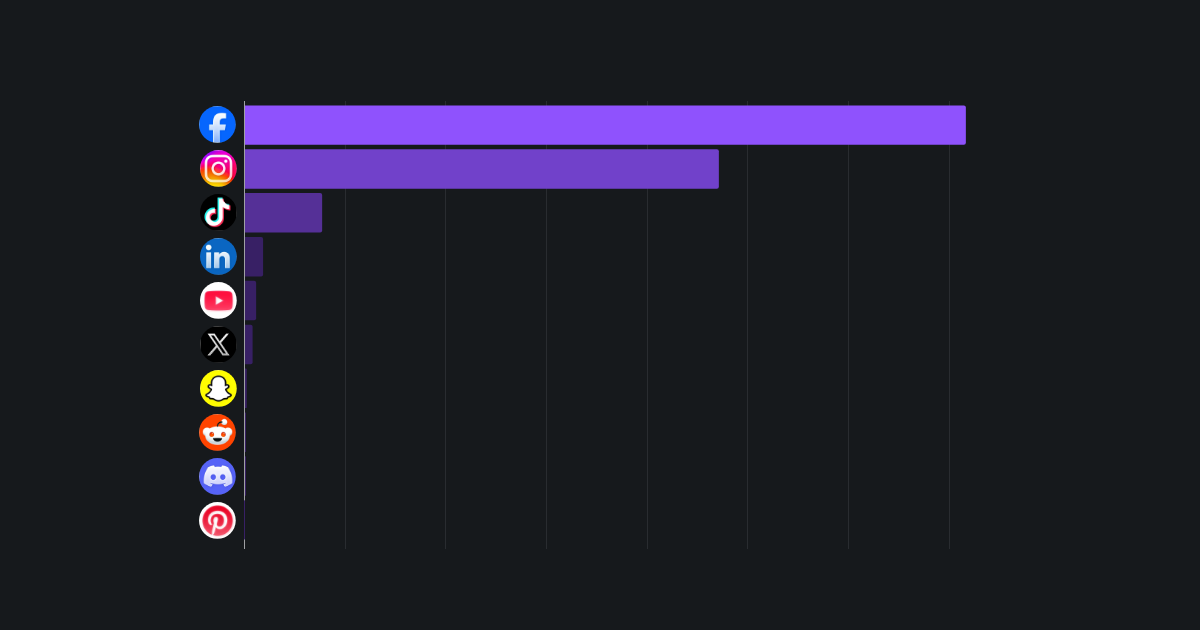
Social media giants paid $26B for privacy violations
Since 2020, popular social media platforms have faced more than $26 billion in privacy-related fines and settlements. Meta-owned platforms accounted for 91% ($23.7B) of the total.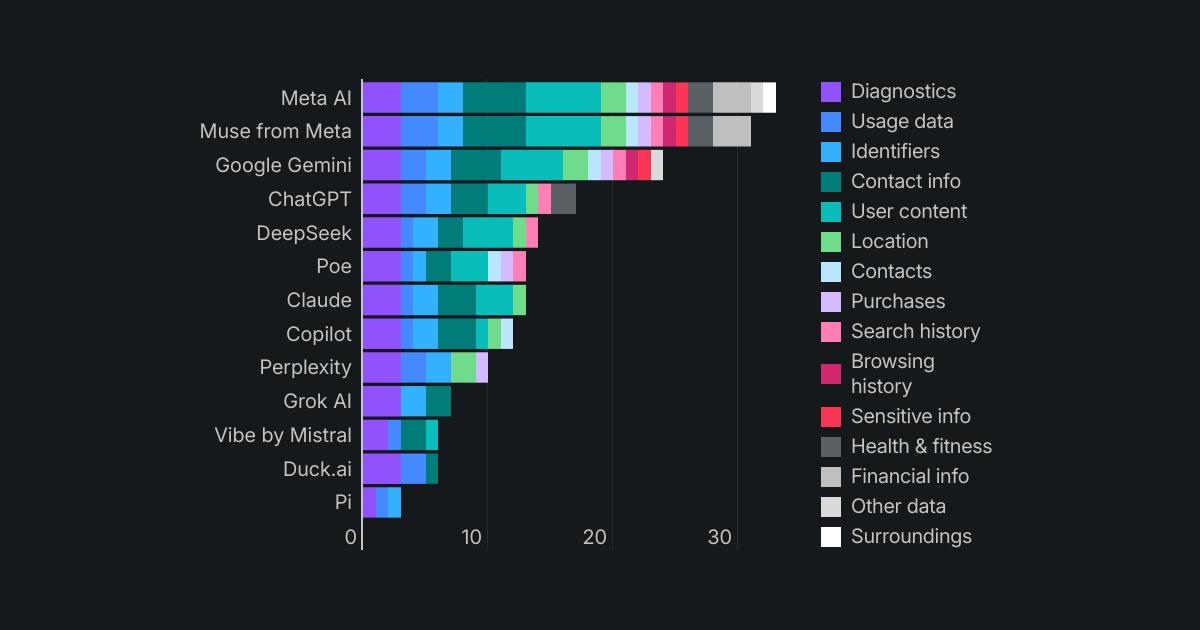 Sep 28, 2026
Meta Muse surpasses its competitors in data collection
A Surfshark review of data collection practices across 12 top AI chatbots and the newly launched Meta Muse agent reveals that both Meta’s products are the most data-hungry.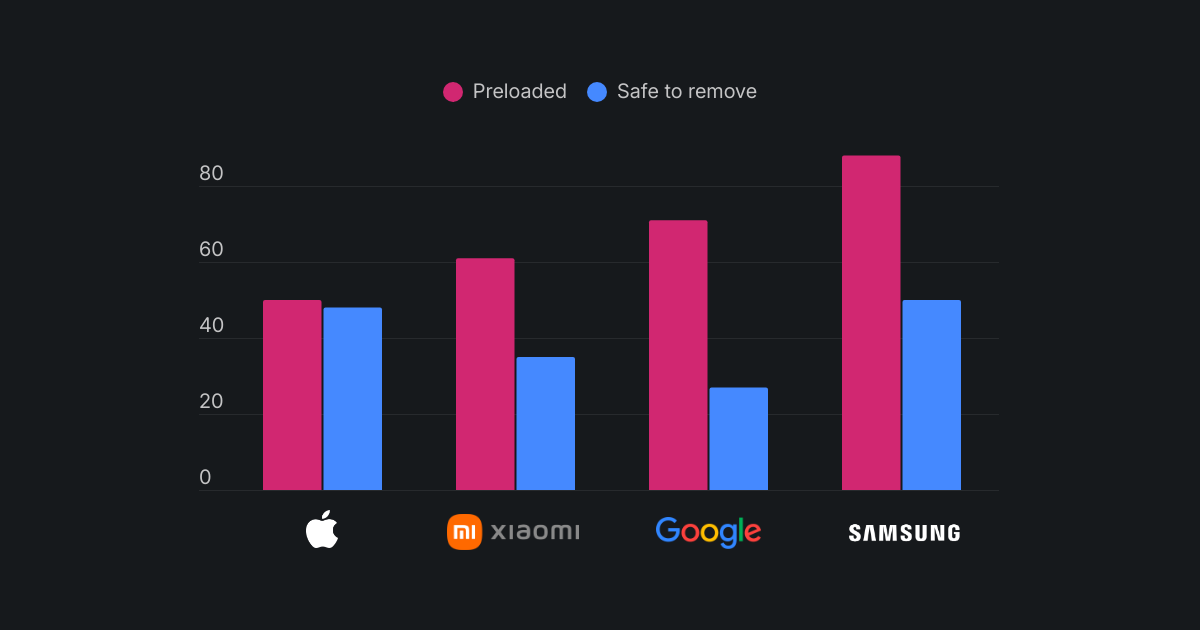 Sep 8, 2026
Pre-installed apps: privacy risks on Apple, Samsung, Xiaomi, Google
Smartphones come with a high number of pre-installed apps: 50 apps on iPhone, 88 on Samsung, 71 on Google, and 61 on Xiaomi. Our research reveals how these pre-installed apps may compromise privacy and harvest your data.