digital democracy|artificial intelligence
DeepSeek is the most frequently restricted chatbot worldwide
AI usage is growing worldwide, with high-income countries at the forefront, having the highest share of their populations engaging with AI tools. These countries show an average AI tool usage of 30%, which is double the 15% in upper-middle-income economies, nearly triple the 11% in lower-middle-income countries, and four times the 8% in low-income economies.¹
As AI spreads rapidly, so do public concerns about its risks. A call with nearly 135,000 signatures — including those of Nobel laureates, AI scientists, and non-profit organizations — calls for a prohibition on the development of superintelligence until there is a broad scientific consensus that it can be achieved safely and controllably, along with strong public support.² Governments are also responding, with several countries beginning to restrict AI chatbots. This week’s chart maps these restrictions worldwide and highlights the main reasons behind them.
Key insights
- Among the four leading AI chatbots worldwide, three have faced bans at least once: ChatGPT, Grok, and DeepSeek. These AI chatbots have already faced government-ordered bans 14 times in 13 countries, excluding cases where their developers (e.g., Google) were previously restricted, preventing new products from being introduced to those markets. AI chatbots faced restrictions in various regions, regardless of their country of origin. DeepSeek is the most frequently restricted chatbot worldwide, followed by Grok. While these bans are often associated with security concerns, the consistent absence of US chatbots in authoritarian countries hints at political reasons.
- ChatGPT became the first AI chatbot to be temporarily blocked by a Western government. In March 2023, Italy imposed a ban that lasted nearly a month, with its data protection authority citing unlawful data collection and the lack of an age verification system as reasons.³ OpenAI provides a list of supported countries and territories, clearly indicating where ChatGPT is unavailable. This includes authoritarian regimes such as China, Russia, Belarus, Iran, Venezuela, North Korea, Syria, and Cuba, as well as areas like Hong Kong, Macao, and Kosovo. In total, at least 40 territories or countries are absent from this list. Accessing or providing access to ChatGPT from unsupported countries may result in accounts being blocked or suspended.⁴
- Google Gemini, initially launched as Bard in March 2023, has expanded into new markets without encountering any bans. The rollout began in the US and the UK, and by May, had grown to cover 180 territories total. However, entry into EU countries was postponed until Google addresses privacy concerns raised by the Irish Data Protection Commission.⁵ Gemini is currently accessible in nearly 240 countries and territories. Still, it remains unavailable to regular customer users in areas such as China, Russia, Belarus, Iran, Afghanistan, North Korea, Syria, Cuba, Hong Kong, and Macao.
- Grok was recently banned in Indonesia, Malaysia, and the Philippines over concerns about its potential to generate sexually explicit deepfakes. These bans resulted in access restrictions that lasted several weeks. As investigations continue in other countries, additional sanctions may be forthcoming. Additionally, Turkey also ordered a ban on some of the content shared by Grok back in 2025, making it the first country to officially censor this chatbot.⁶ At the time this study was conducted, an official list of Grok-supported countries was not identified, which would have helped to clarify where else it might be inaccessible.
- However, it is noted that “Grok is available in all countries where X is available,” indicating that if X is blocked, Grok is also blocked, particularly when accessed through integration with X.⁷ According to data from Surfshark’s Internet Shutdown Tracker⁸, X has been restricted at least 16 times since Grok's launch, in countries such as the Democratic Republic of the Congo, Mauritius, Uganda, Tanzania, India, Nepal, Pakistan, Turkey, Brazil, and Venezuela. Overall, X (formerly Twitter) has experienced 78 restrictions globally, with restrictions currently ongoing in eight countries: Uganda, Tanzania, China, North Korea, Iran, Myanmar, Turkmenistan, and Russia.
- DeepSeek, a leading AI chatbot from a Chinese company, has faced frequent bans in at least nine countries — including Italy, South Korea, Australia, Taiwan, Belgium, Czechia, the Netherlands, Canada, and several US states. These regions have banned or partially restricted DeepSeek due to security risks. This aligns with the AI Safety Index, where DeepSeek ranks near the bottom.⁹ However, only Italy and South Korea have imposed a nationwide ban, while others have restricted its use only on government systems or devices. Despite these challenges, DeepSeek seems popular not only in its country of origin, China, but also in other territories where US chatbots are unavailable.
Methodology and sources
This study aimed to identify where top AI chatbots are unavailable or banned, focusing on country or government-ordered access restrictions. The data was sourced on February 5, 2026. The process began with Google searches using the query “X” AND “ban” — where X represents the name of the AI chatbot. Since Google's AI chatbot was rebranded, searches were done using both its original name, “Bard”, and its new name, “Gemini”. This involved reviewing the top 10 pages of search results for each year, starting with 2022, when the first AI chatbot was introduced to the market. Additionally, lists of supported countries and territories from official company sources, if available, were reviewed to determine which countries were not listed. In cases where lists were unavailable, the Apple App Store was used to verify the availability of the chatbot apps in each country's store.
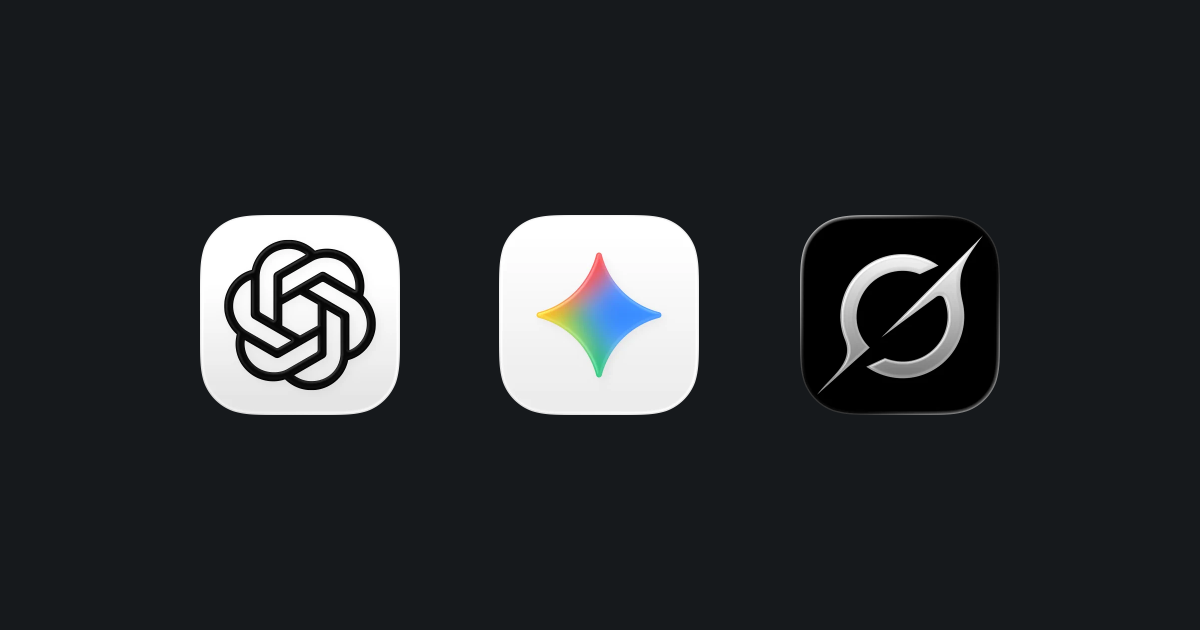
The most popular AI chatbots worldwide were selected for the study using the latest Similarweb data from January 2026, which tracks the number of active users engaging with AI chatbot apps at least once a month. The top three positions are held by products from US companies: ChatGPT, the clear market leader, followed by Google Gemini in second place, and Grok by xAI in third. Additionally, the study includes DeepSeek, the most popular AI chatbot introduced by a Chinese company, which ranks fourth globally.
For the complete research material behind this study, visit here.